Why Topping a Tree Is Dangerous
Introduction
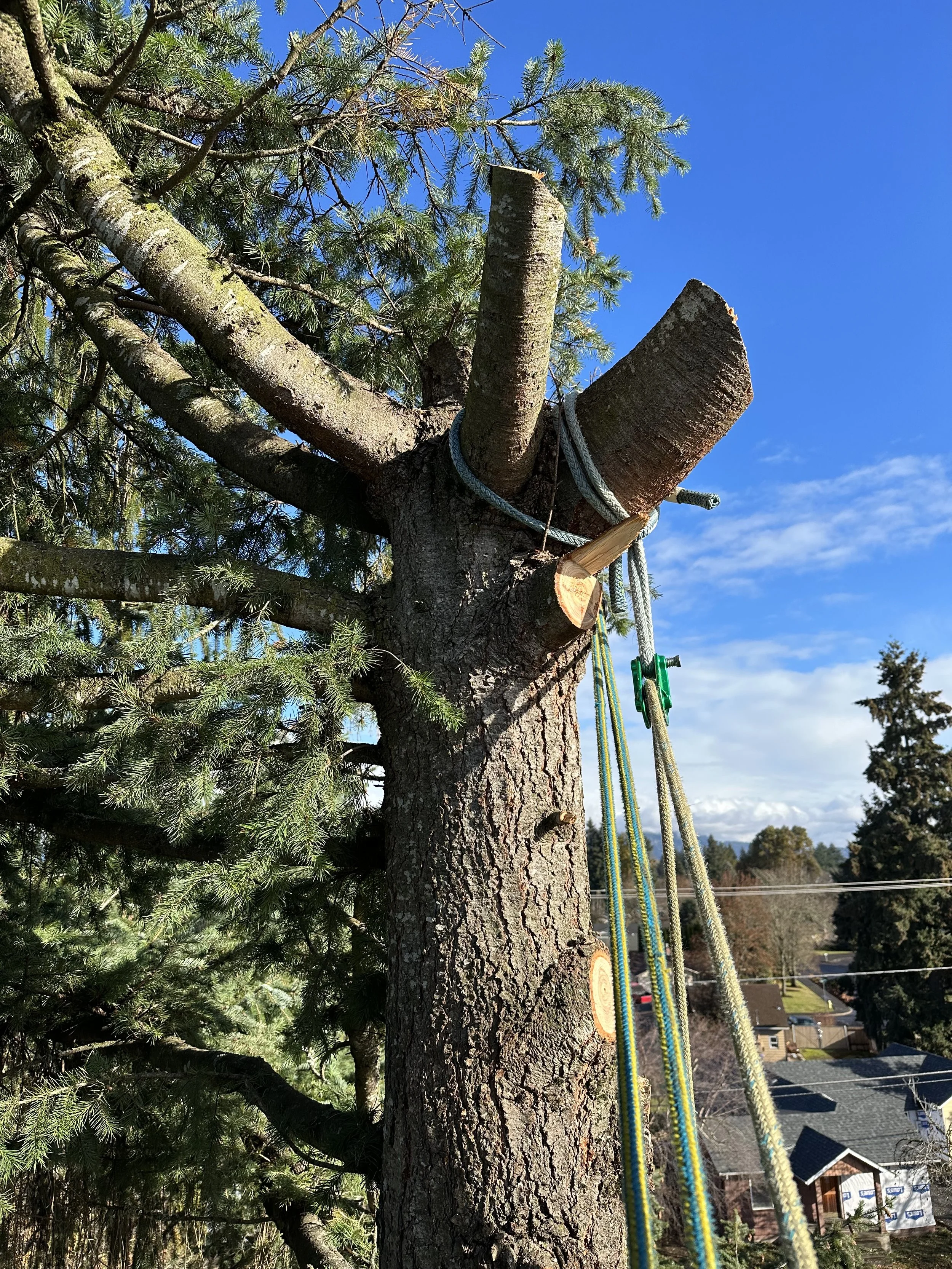
Topping, or cutting back large branches to stubs, is a harmful practice that weakens trees. While some homeowners think topping reduces height or risk, it actually creates long-term health problems and safety hazards. Learn why certified arborists never recommend topping and what you should do instead.
The Dangers of Topping
1. Weak Regrowth
Topped trees respond by rapidly producing weak, poorly attached shoots that are more likely to break.
2. Increased Disease & Decay
Large stubs are slow to heal and invite decay and pests.
3. Stress and Starvation
Removing too much canopy reduces the tree’s ability to produce energy, causing stress and decline.
4. Aesthetic Damage
Topped trees lose their natural shape and often become unsightly as they regrow chaotically.
Healthier Alternatives
Crown Reduction: Selective pruning to reduce size while maintaining structure.
Thinning: Removing select branches to lighten the canopy.
Proper Pruning: Using correct cuts to maintain health and aesthetics.