Why Addressing Hazardous Trees and Branches Matters
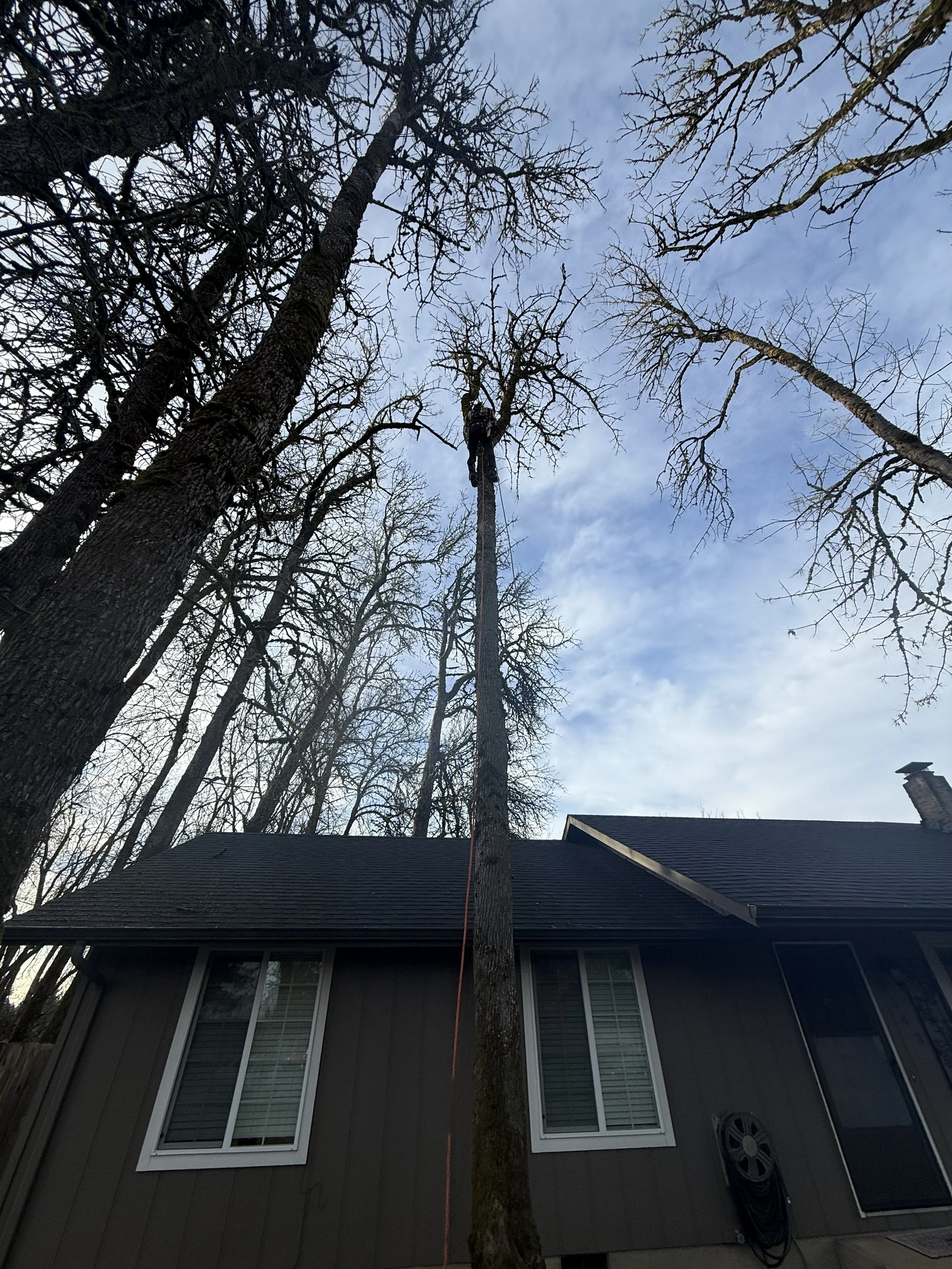
Hazardous trees and overextended branches are one of the most common—and preventable—sources of property damage and personal injury around homes. A tree doesn’t have to be dead to be dangerous. Weak branch unions, internal decay, excessive end weight, or roots compromised by construction and saturated soils can all turn a healthy-looking tree into a serious liability.
Branches that overhang roofs, driveways, walkways, or power lines pose an elevated risk, especially during storms, heavy snow, or high winds. Even a moderate weather event can cause failure when a limb is already structurally compromised. The result can be damaged roofing, crushed vehicles, blocked access points, or worse—injury to people below.
Proactive tree care is the best defense. Regular inspections by a qualified arborist can identify warning signs such as cracks, cavities, included bark, fungal growth, or sudden canopy dieback. Addressing these issues early often allows for corrective pruning rather than full removal, preserving the tree while reducing risk.
In cases where a tree or limb presents an immediate hazard, removal may be the safest option. Hazard mitigation pruning focuses on reducing weight, improving structure, and increasing clearance from structures. When removal is necessary, controlled dismantling ensures nearby homes, fences, and landscaping are protected throughout the process.
Ignoring hazardous trees doesn’t make the risk go away—it compounds it. As defects worsen over time, failures become more unpredictable and more destructive. Investing in proper assessment and maintenance not only protects your property but also supports the long-term health of your landscape.
When it comes to trees, safety and stewardship go hand in hand. Addressing hazards early is always safer, more cost-effective, and far less stressful than reacting after damage has already occurred.
Not all tree work is the same—and not everyone offering tree services is qualified to assess risk. Hiring a certified arborist is critical when dealing with hazardous trees or branches because true risk mitigation requires more than cutting what looks dangerous. Certified arborists are trained to evaluate tree biology, structural integrity, load distribution, and failure potential, allowing them to distinguish between a tree that needs corrective pruning and one that poses an unacceptable risk.
Certification indicates formal education, ongoing training, and adherence to industry safety and pruning standards. A certified arborist understands how improper cuts, topping, or excessive removal can actually increase failure risk over time by creating decay pathways and weak regrowth. They also know how to reduce hazards while preserving tree health whenever possible.
Equally important, certified arborists are equipped to work safely around homes, power lines, and high-value targets. Hazardous tree work often involves advanced rigging, controlled dismantling, and precise decision-making—skills that directly protect people and property.
When it comes to hazardous trees, the cheapest option is rarely the safest. Choosing a certified arborist provides peace of mind that risks are properly identified, addressed responsibly, and resolved with both safety and long-term tree health in mind.
