What to know about trees and proximity to your house
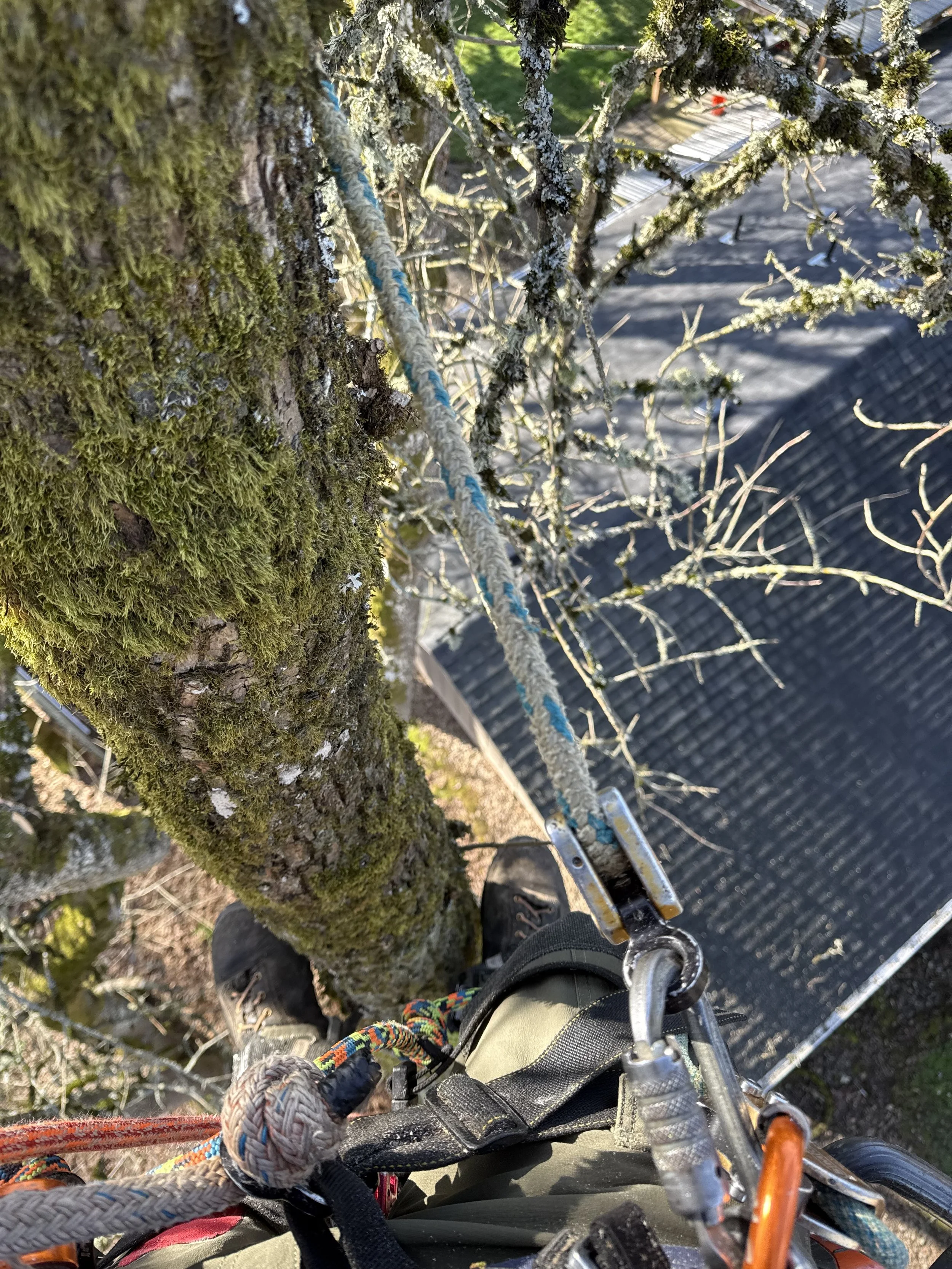
Maintaining trees so that branches and foliage are well clear of your roofline is a simple but critical part of responsible property care. Overhanging limbs can drop leaves, needles, and twigs onto your roof and into gutters, where they trap moisture and accelerate roof deterioration. During windstorms, heavy branches can scrape shingles, break off and cause direct damage, or even fall through the roof — a risk that is especially high in older trees or after storms.
Beyond structural concerns, vegetation that touches or hangs close to roofs can significantly increase fire risk. In Oregon and other fire-prone regions, creating a defensible space around your home is recommended — and in many communities, effectively required — as part of wildfire safety efforts. Defensible space means managing vegetation so that flames and embers have a harder time spreading to your home. Fire safety guidance from the Oregon State Fire Marshal recommends keeping flammable vegetation and ladder fuels removed within the first 5 feet of your structure, and planning tree placement so that the mature canopy stays at least 10 feet from walls and roofs.
In some Oregon municipalities, local codes explicitly reinforce these practices. For example, many local wildfire hazard area ordinances instruct homeowners to prune back tree branches within 10 feet of roofs and exterior walls to reduce ignition risk. While there isn’t a statewide tree-to-roof distance in the residential building code, fire safety regulations and defensible space standards effectively function as a requirement to maintain adequate separation between vegetation and structures.
Keeping trees properly pruned not only helps protect your investment in your home, it reduces long-term maintenance, improves tree health, and enhances safety for your family and neighbors. Regular inspections — especially before dry seasons — can help you catch potential hazards before they become costly problems.
When branches are too large, too close, or structurally unsound, homeowners generally have two professional options: clearance trimming or selective removal. Clearance trimming focuses on reducing limb length and weight to establish safe separation from the roofline while preserving the tree’s overall structure and health. This approach is often ideal when trees are otherwise healthy but have outgrown their space. In cases where a tree is poorly placed, severely decayed, storm-damaged, or unable to be pruned without creating long-term risk, removal may be the safest and most cost-effective solution. Removing high-risk trees near structures eliminates repeated maintenance costs and significantly reduces the chance of roof damage, fire exposure, or emergency failures. A certified arborist can assess which option best balances safety, tree health, and long-term property protection — especially in fire-prone or high-wind areas common throughout Oregon.