V-Shaped vs. U-Shaped Tree Unions: Why Structure Matters for Tree Removal Decisions
When evaluating a tree’s safety and long-term health, one of the most important structural features an arborist looks at is the branch union—the point where two stems or leaders join. Not all unions are created equal. The difference between V-shaped unions and U-shaped unions often plays a major role in whether a tree can be preserved or ultimately requires removal.
U-Shaped Unions: Strong and Stable
U-shaped unions form a wide, rounded connection between stems. This shape allows for proper development of branch bark ridges and connective wood, which distribute mechanical stress evenly. Trees with U-shaped unions are generally more stable, better able to handle wind loading, and less prone to splitting. In many cases, these unions can be safely retained with routine pruning and monitoring rather than removal.
V-Shaped Unions: High Risk
V-shaped unions create a narrow angle between stems, often leading to included bark—a condition where bark becomes trapped between two growing stems instead of forming strong wood fibers. Included bark prevents proper structural bonding, making the union significantly weaker. Over time, weight, wind, snow, or ice can cause these unions to crack or fail suddenly.
How This Impacts Tree Removal
Trees with severe V-shaped unions—especially large, codominant stems—are a common reason for tree removal. If the defect is high in the canopy, near structures, or combined with decay, removal may be the safest option. In some cases, early intervention such as structural pruning or cabling can reduce risk, but once the union reaches a certain size, failure becomes increasingly likely.
Bottom Line
U-shaped unions signal strength and longevity. V-shaped unions signal risk. Understanding the difference helps property owners make informed decisions about pruning, risk management, and when tree removal is the responsible choice.
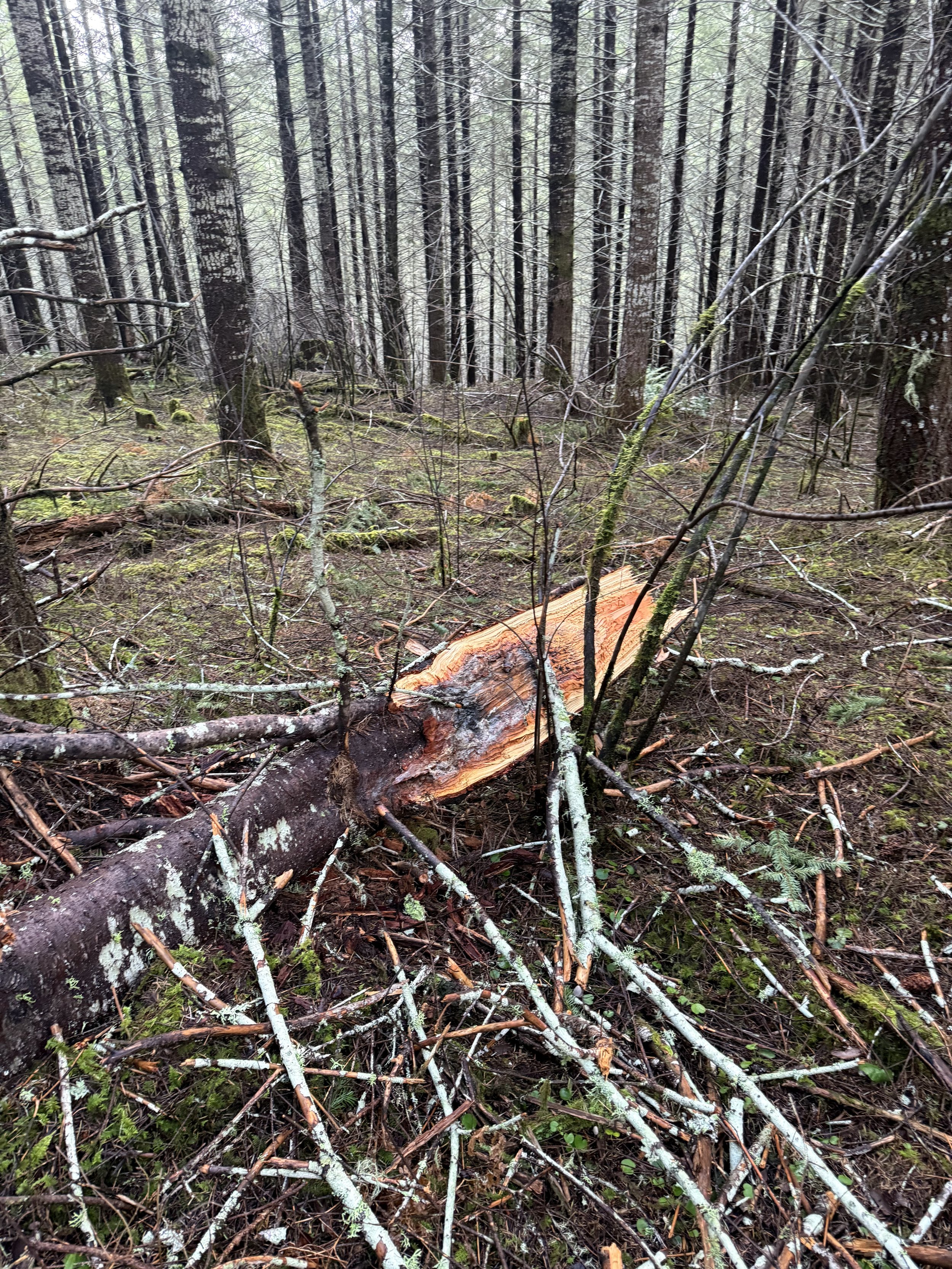
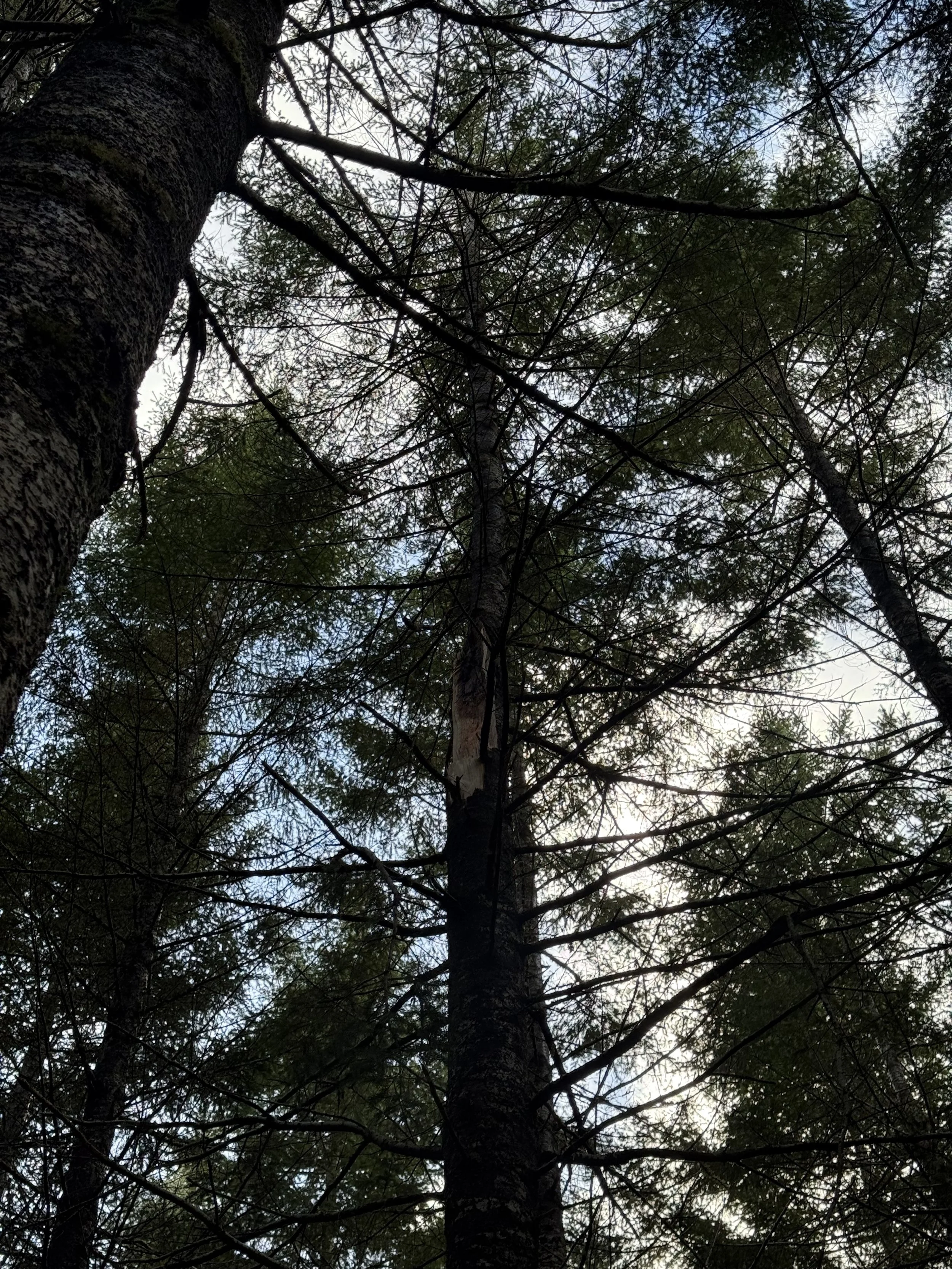
Example of a failed “V” shaped union with included bark
