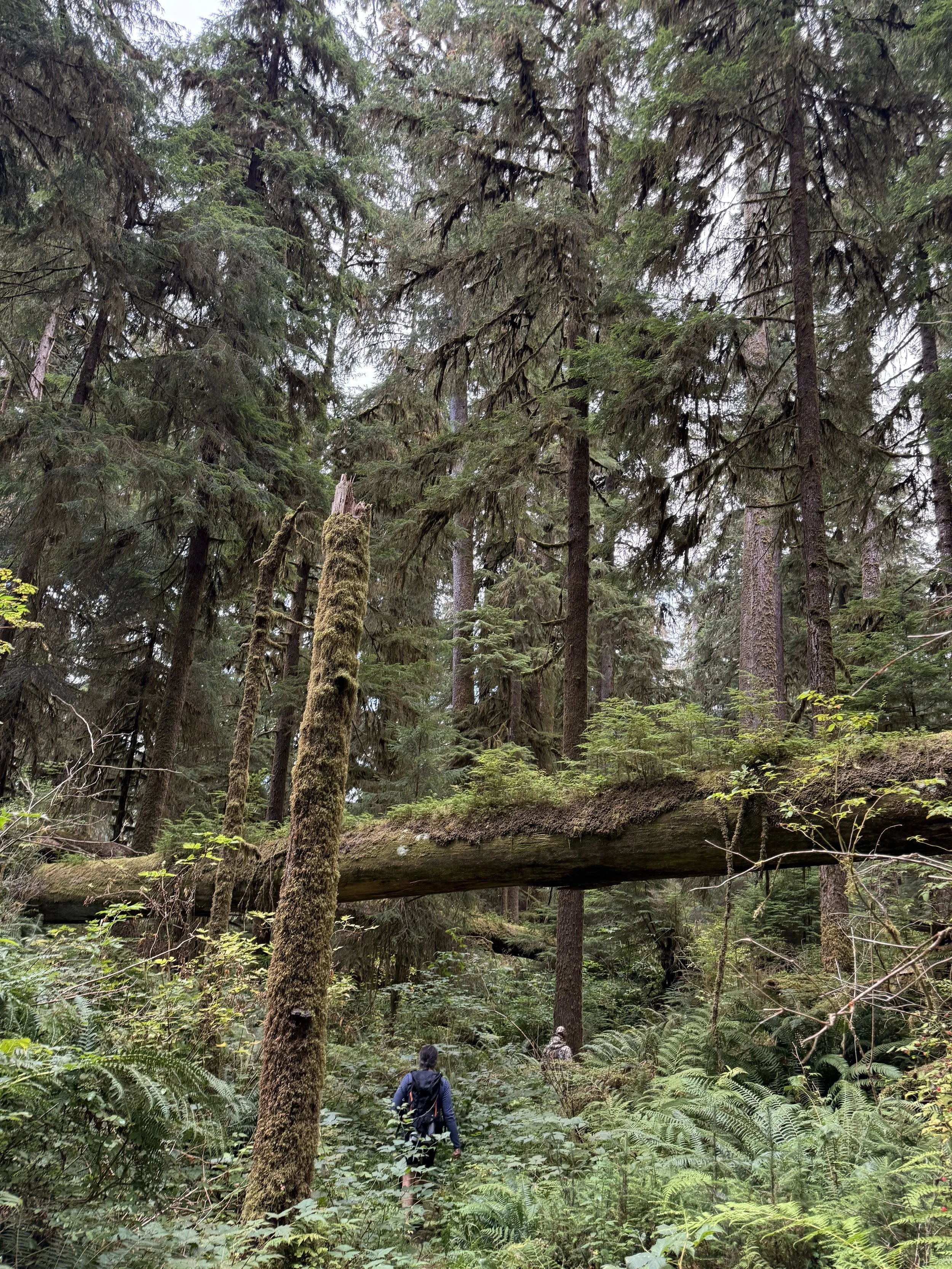
Moss, Maple Trees, and Nitrogen: A Quiet Ecological Partnership
Moss and maple trees are often seen together in temperate forests, especially in cool, moist environments. While moss does not draw nutrients directly from maple trees, the relationship between the two is deeply connected through nitrogen cycling and soil health.
Maple trees play a key role in supplying nitrogen to the forest floor. Each autumn, their leaves fall and begin to decompose. Maple leaves are relatively high in nitrogen compared to many conifers, and as microbes break them down, nitrogen is released into the soil in forms that plants and microorganisms can use. This creates a nutrient-rich surface layer, especially in shaded areas beneath the canopy.
Moss thrives in exactly these conditions. Because mosses lack true roots, they absorb nutrients directly from water, dust, and organic matter at the soil surface. Nitrogen released from decomposing maple leaves, along with nitrogen deposited from rainfall and airborne particles, becomes readily available to moss colonies. In this way, maple trees indirectly fertilize moss by enriching the environment around them.
Moss, in turn, helps stabilize nitrogen within the ecosystem. Dense moss mats slow water runoff, reducing nitrogen leaching during heavy rains. They also trap organic debris and airborne nitrogen, gradually releasing nutrients back into the soil as the moss grows and dies. This creates a slow, steady nutrient cycle rather than sharp spikes or losses.
The moss–maple relationship is a subtle example of forest efficiency. Maples contribute nitrogen through leaf litter, moss conserves and redistributes that nitrogen, and the soil beneath becomes more biologically active and resilient. Together, they support healthier understory conditions, improved moisture retention, and a more stable forest nutrient cycle—quietly reinforcing the long-term health of the ecosystem.