
How Oregon Forestry Practices Contribute to Poor Air Quality
Oregon is known for its forests, but it is also increasingly known for smoke-filled summers, unhealthy air quality, and prolonged periods of haze—especially in the Willamette Valley and southern Oregon. While wildfires often take center stage in discussions about air pollution, forestry practices themselves play a significant and often overlooked role in degrading air quality across the state.
Slash Burning and Prescribed Fire
One of the most direct links between forestry and air pollution is slash burning. After logging operations, branches, tops, and unusable wood—collectively known as slash—are often piled and burned to prepare sites for replanting. While this practice is legal and widespread, it releases large amounts of fine particulate matter (PM2.5), carbon monoxide, and volatile organic compounds into the air.
Prescribed burns are sometimes framed as a preventive tool to reduce wildfire risk, but when conducted at scale or under marginal weather conditions, they can significantly degrade air quality for nearby communities. In valleys like the Willamette, smoke can become trapped by temperature inversions, lingering for days and pushing air quality into unhealthy or hazardous ranges.
Clear-Cutting and Increased Wildfire Intensity
Clear-cutting alters forest structure in ways that can increase future fire severity. Young, even-aged plantations often have dense spacing, uniform fuels, and reduced moisture retention compared to older, structurally diverse forests. These conditions can contribute to faster-spreading, higher-intensity fires that produce enormous amounts of smoke.
When wildfires burn through previously logged areas, they often burn hotter and more completely, generating thicker smoke plumes that travel hundreds of miles. This smoke doesn’t stay in rural forests—it drifts into cities, towns, and agricultural regions, affecting millions of people.
Loss of Natural Air Filters
Forests play a quiet but important role in maintaining air quality. Trees intercept particulate matter on their leaves and needles, absorb pollutants like ozone precursors, and regulate local microclimates. When large areas are logged, that filtering capacity is lost.
Clear-cut landscapes reflect more heat, dry out faster, and contribute to dust generation from exposed soils and logging roads. Heavy equipment and truck traffic further add diesel exhaust and airborne particulates, compounding local air pollution during and after logging operations.
Cumulative Smoke Exposure
A key issue in Oregon is not a single smoke source, but cumulative exposure. Slash burns, prescribed fires, industrial logging operations, and wildfires often overlap seasonally. Communities may experience weeks or even months of degraded air quality each year, increasing risks of asthma, cardiovascular disease, and other respiratory conditions.
Children, elders, outdoor workers, and people with preexisting health issues are especially vulnerable. For these populations, forestry-related smoke is not an abstract environmental concern—it is a daily health hazard.
Children are especially vulnerable to poor air quality. Their lungs are still developing, they breathe more air per pound of body weight than adults, and they spend more time outdoors. Repeated exposure to smoke and fine particulates can impair lung growth, worsen asthma, and increase lifelong respiratory risk.
Rethinking Forest Management for Air Quality
Forestry does not have to be synonymous with poor air quality. Practices such as reduced slash burning, longer harvest rotations, selective logging, and improved fuel management can lower smoke output while maintaining forest productivity. Incorporating air quality impacts into forestry planning—especially near population centers—would help protect public health.
Oregon’s forests are an invaluable resource, but how they are managed matters. When forestry prioritizes short-term efficiency over long-term ecosystem health, the air we all breathe pays the price. Improving air quality means recognizing that forest management decisions extend far beyond the tree line—and into our lungs.
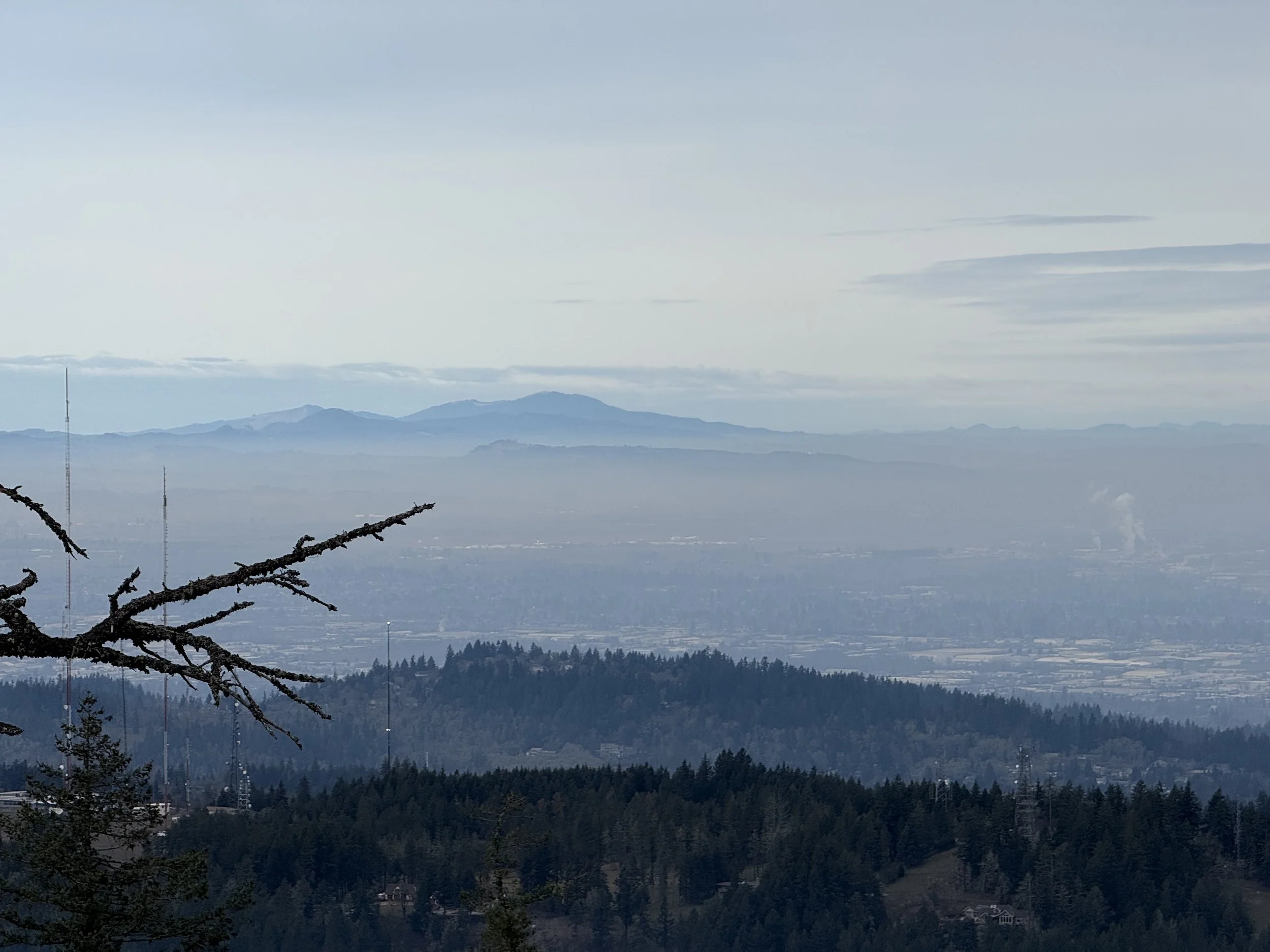
Pollution PM2.5 pink layer: photo taken January 26th, 2026
