
Trimming Apple Trees for Health and Productivity
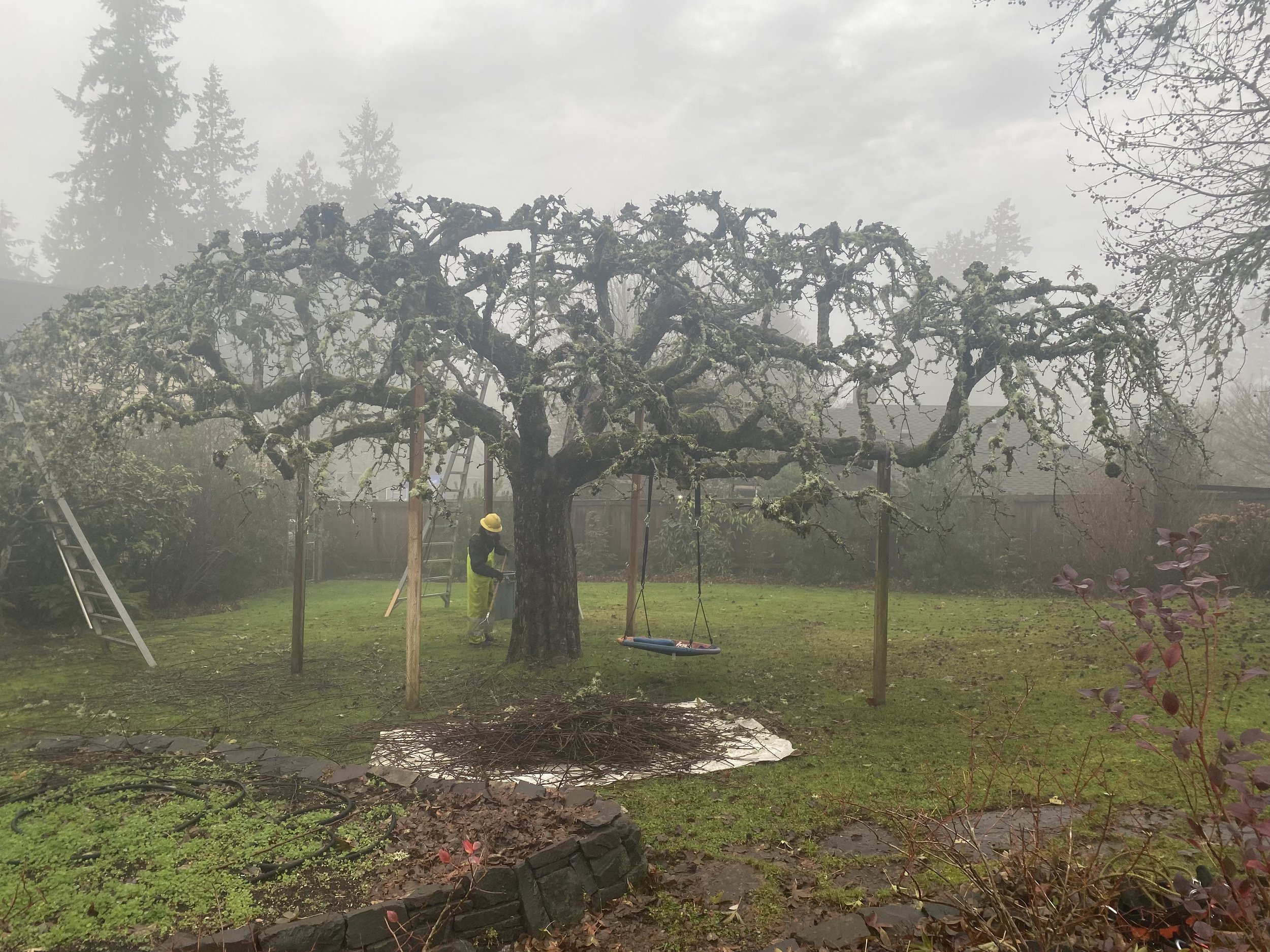
Properly trimming apple trees is essential for maintaining tree health, improving fruit quality, and supporting long-term structure. Apple trees naturally produce dense canopies, and without regular pruning they can develop crowded branches that reduce sunlight penetration and airflow. Poor airflow increases the risk of fungal diseases such as apple scab and powdery mildew.
Strategic pruning focuses on removing deadwood, crossing branches, and upright water sprouts while maintaining a strong scaffold structure. Opening the canopy allows sunlight to reach interior fruiting wood, which improves fruit size, color, and overall yield. Most structural pruning is best performed during dormancy in late winter when the tree’s structure is clearly visible and energy reserves are stored in the roots.
Light summer pruning can also help manage vigorous growth and redirect energy into fruit production. Using proper pruning cuts just outside the branch collar supports natural compartmentalization and wound closure.
When done correctly, routine apple tree trimming keeps trees productive, structurally sound, and easier to manage for many years.
