Understanding CODIT in Tree Biology
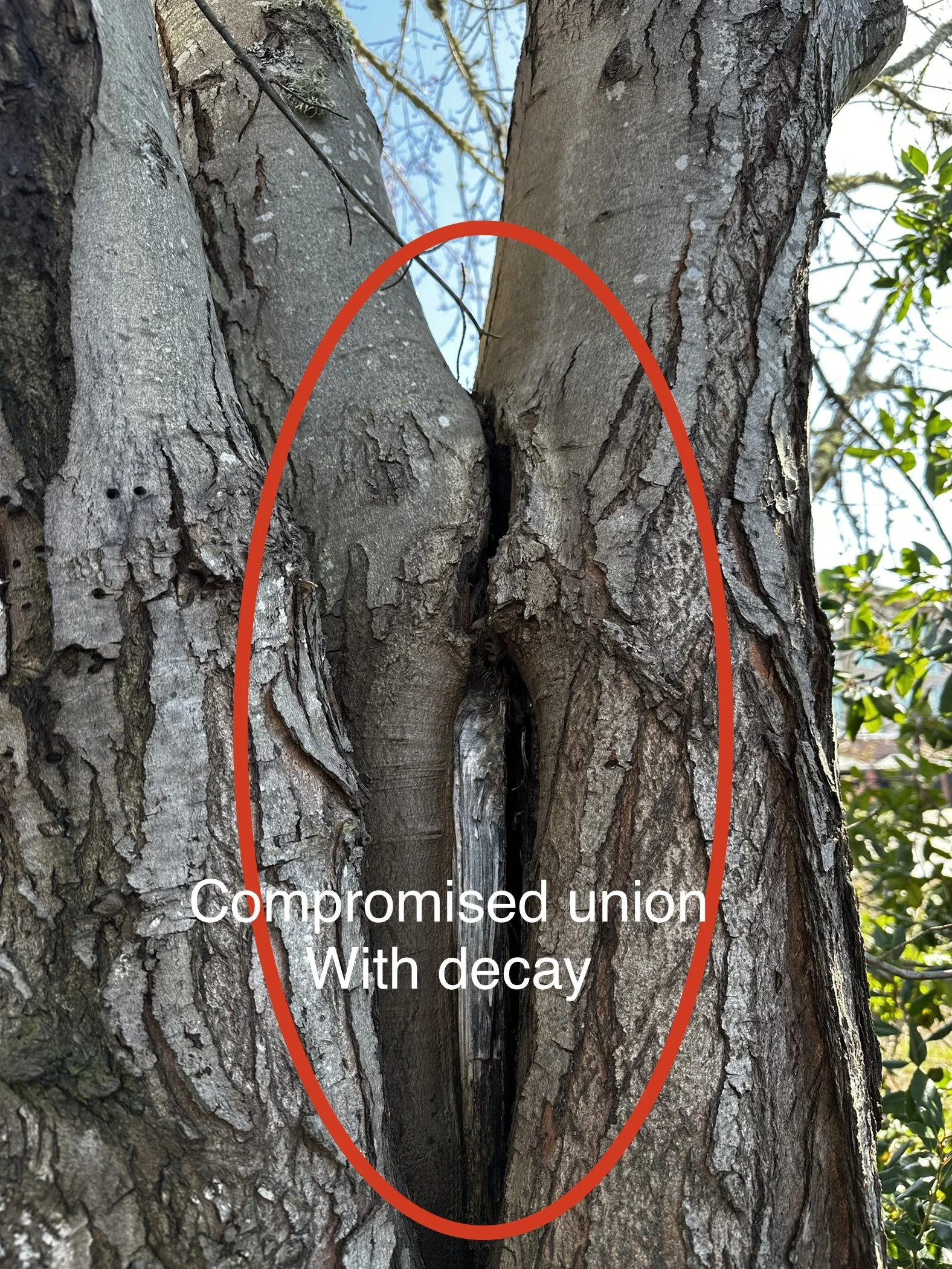
CODIT, or Compartmentalization of Decay in Trees, is a fundamental concept in arboriculture that explains how trees respond to injury and decay. First described by plant pathologist Dr. Alex Shigo, CODIT refers to the natural defense process trees use to isolate damaged or infected wood.
When a tree is wounded—whether from pruning, storm damage, or mechanical injury—it cannot heal in the way animals do. Instead, it compartmentalizes the affected area. The tree creates chemical and structural barriers that slow or stop the spread of decay organisms. These barriers form what arborists refer to as the four walls of CODIT, which resist decay moving inward, upward, downward, and outward through the wood.
Over time, the tree also produces new growth called woundwood, which gradually seals over the injury.
Understanding CODIT is important when pruning trees. Proper pruning cuts made just outside the branch collar allow the tree to compartmentalize effectively. Poor cuts or flush cuts can damage these defense systems and increase the likelihood of internal decay.