
Natural “Cables” in Trees: Strength Built by Growth
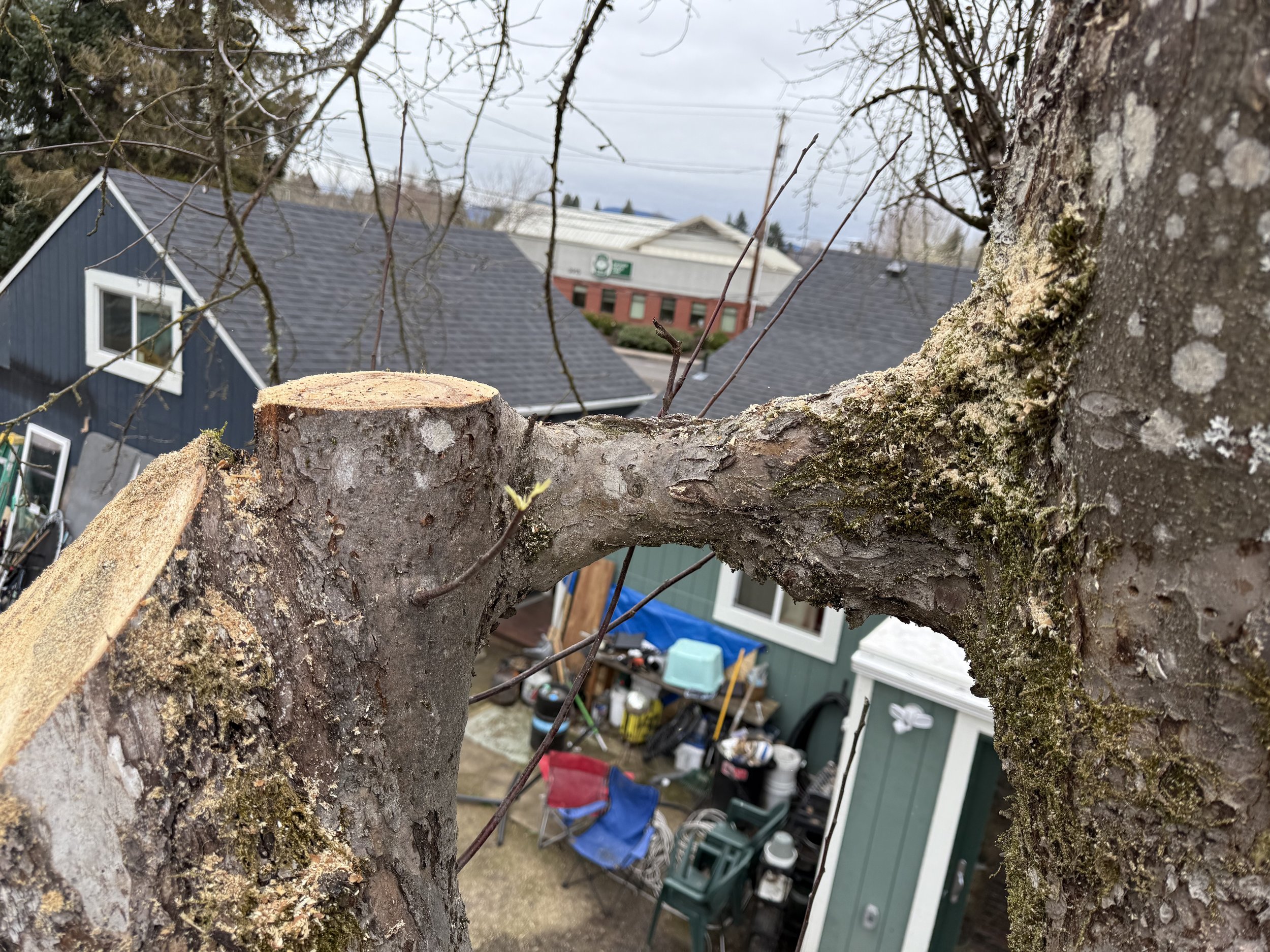
Trees have an incredible ability to strengthen themselves through a process arborists sometimes refer to as natural cabling. When two branches grow close together and rub or press against one another over time, their cambium layers can fuse. This biological grafting process, called inosculation, allows the two branches to share vascular tissue and structural support.
Once fused, the branches effectively act like a living cable system, redistributing weight and reducing stress on a single limb union. Instead of relying on one attachment point, the load is shared across multiple connected stems. This natural reinforcement helps trees withstand wind, snow loads, and the weight of mature canopies.
Arborists often see this in mature maples, apples, and ornamental trees where branches have grown in tight proximity. In some cases, these natural unions can provide support similar to installed steel cables or dynamic bracing systems used in professional tree care.
However, not every crossing branch should be left to fuse. Poorly attached limbs, included bark, or structural defects may still require corrective pruning or artificial support.
Understanding how trees naturally reinforce themselves highlights the remarkable self-engineering abilities of living wood and helps arborists make informed decisions when managing tree structure and long-term stability.
