Tree Removal: When It’s Necessary, How It’s Done, and Why Expertise Matters
Tree removal is one of the most misunderstood aspects of tree care. For many homeowners, the idea of removing a tree feels extreme, emotional, or even irresponsible. Trees provide shade, beauty, habitat, and value to a property—so why would anyone remove one?
The reality is that tree removal, when done thoughtfully and professionally, is sometimes the safest and most responsible option. Understanding when removal is necessary, how it should be performed, and why experience matters can help homeowners make informed decisions that protect people, property, and the surrounding landscape.
When Is Tree Removal Necessary?
Tree removal is rarely the first recommendation of a qualified arborist. In many cases, trees can be preserved through proper pruning, soil improvement, pest management, or structural support. However, removal becomes necessary under certain conditions:
1. Structural Failure or Advanced Decay
Trees with extensive internal decay, hollow trunks, compromised root systems, or severe lean may no longer be structurally sound. Root decay, in particular, is dangerous because it is often hidden below ground until failure occurs. A tree that appears healthy above ground can still be unstable at its base.
2. Irreversible Decline
Some trees enter a stage of decline from which recovery is no longer possible. Causes may include disease, girdling roots, invasive plants like ivy, drought stress, or age-related decline. When a tree is no longer able to support healthy growth, removal can prevent future hazards.
3. Storm Damage
High winds, saturated soils, ice, and snow can cause trees to split, uproot, or lose major limbs. Storm-damaged trees may pose immediate danger, especially when failures involve homes, vehicles, power lines, or walkways.
4. Construction or Site Conflicts
In some cases, trees interfere with necessary construction, utility access, or infrastructure. While preservation is always preferred, removal may be unavoidable when conflicts cannot be resolved safely.
5. Safety and Risk Management
Trees located within fall distance of structures, play areas, or high-traffic zones require a higher level of scrutiny. Even moderate defects can become unacceptable risks when targets are present.
Tree Removal Is Not Just “Cutting a Tree Down”
One of the biggest misconceptions is that tree removal is simple. In reality, professional removals—especially in residential environments—are complex, technical operations.
Rigging and Controlled Dismantling
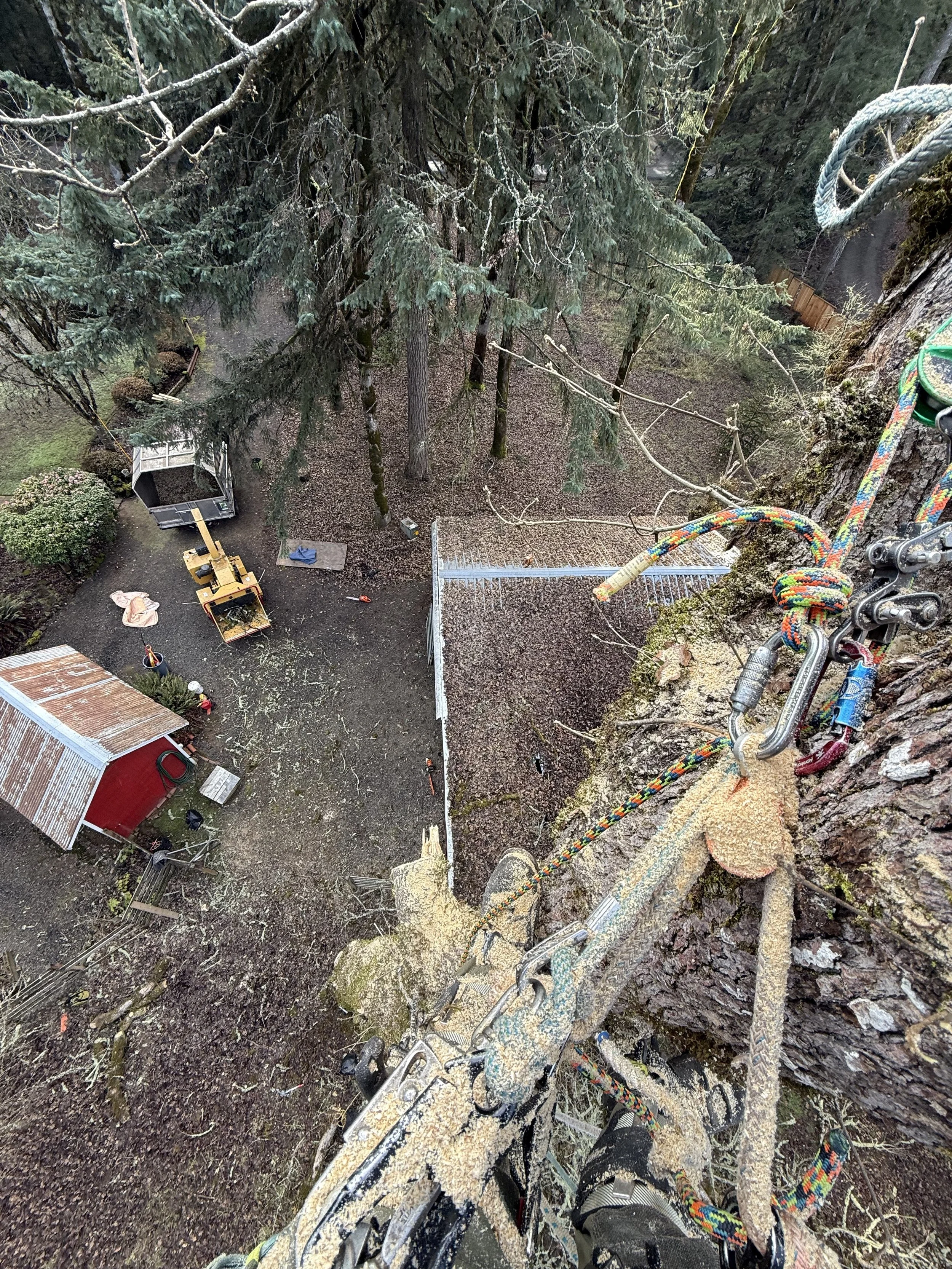
Most urban tree removals involve sectional dismantling, not felling a tree in one piece. Limbs and trunk sections are carefully cut and lowered using ropes, pulleys, and friction devices to avoid damage to nearby structures, fences, landscaping, and utilities.
Climbing vs. Equipment Access
Not all sites allow for cranes or aerial lifts. Narrow driveways, soft soils, slopes, or limited access may require a skilled climber to access the canopy safely. A competent arborist evaluates access constraints and chooses the safest method—not just the fastest.
Ground Protection
Professional crews often install plywood, mats, or other ground protection to reduce damage to lawns, soil, and hardscape. While some disturbance is unavoidable due to the weight and volume of material, experienced crews take steps to minimize impact.
Why Professional Expertise Matters
Tree removal is one of the most hazardous professions in the country. Mistakes can result in severe injury, property damage, or worse. Hiring qualified professionals is not just about convenience—it’s about safety and liability.
Training and Standards
Certified arborists are trained in tree biology, biomechanics, cutting techniques, and risk assessment. Many follow standards established by organizations like the International Society of Arboriculture, which promote best practices and ongoing education.
Insurance and Liability
Reputable tree care companies carry proper insurance, including workers’ compensation and liability coverage. This protects both the homeowner and the crew if something goes wrong.
Accurate Risk Assessment
An experienced arborist can distinguish between a tree that needs removal and one that simply needs pruning or management. Over-removal and under-removal are both costly mistakes.
Understanding the Cost of Tree Removal
Tree removal costs vary widely, and homeowners are often surprised by pricing. Several factors influence the final cost:
Tree size and species
Degree of decay or structural complexity
Proximity to houses, fences, and utilities
Access limitations
Equipment requirements
Disposal and hauling of debris
Time and crew size needed
A higher price often reflects risk, skill, and time, not just labor. Complex removals involving rigging, tight spaces, or multiple days of work require careful planning and experienced personnel.
Environmental Responsibility After Removal
Removing a tree does not mean disregarding the environment. Responsible tree care companies consider what happens next:
Material Recycling
Wood can be chipped into mulch, logs can be reused or milled, and organic material can be diverted from landfills whenever possible.
Replacement Planning
In many cases, planting a new, well-suited tree in a better location is encouraged. The right species, planted correctly, can provide long-term benefits with fewer risks.
Soil Restoration
After removal, soil may be compacted or disturbed. Aeration, mulching, and soil amendments can help restore site health and support future plantings.
Tree Removal as Part of Long-Term Tree Care
Tree removal should never be viewed in isolation. It is one tool within a broader approach to landscape and tree management. When done for the right reasons and executed professionally, removal can:
Improve overall site safety
Protect remaining healthy trees
Prevent costly emergency situations
Make room for better-adapted plantings
The goal is not fewer trees—it’s healthier, safer, and more resilient landscapes.
Final Thoughts
Deciding to remove a tree is never easy, and it shouldn’t be taken lightly. A professional assessment, clear communication, and a thoughtful plan make all the difference. When removal is necessary, choosing a qualified arborist ensures the work is done safely, responsibly, and with respect for both the property and the surrounding environment.
If you’re unsure whether a tree should be removed, a consultation with an experienced arborist is the best place to start. Often, the right answer isn’t removal—but when it is, doing it right matters.