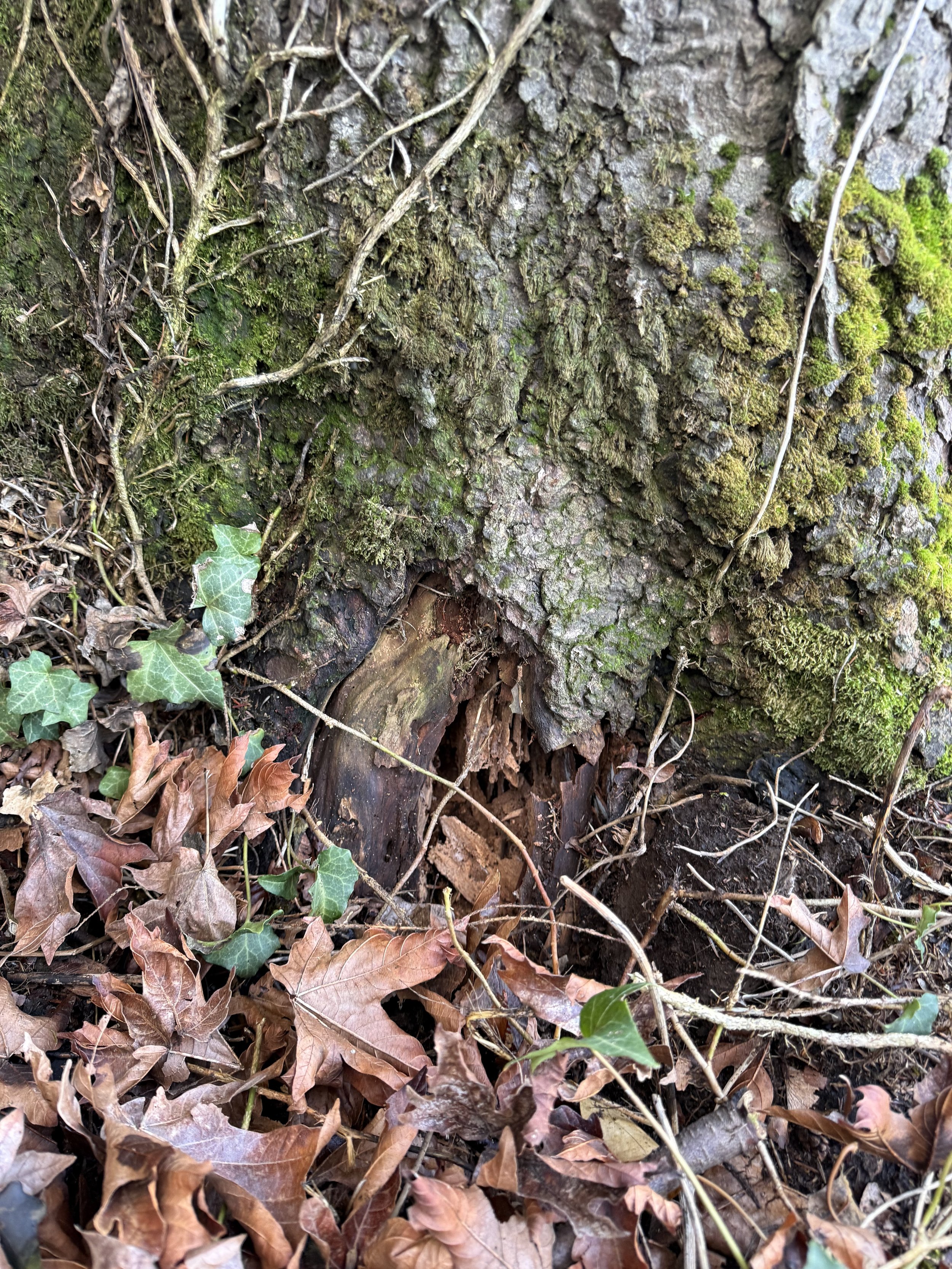
The Hidden Danger Beneath the Surface: Understanding Root Decay in Trees
When people think about dangerous trees, they usually picture dead branches, hollow trunks, or dramatic lean. What’s often overlooked—and far more dangerous—is what’s happening below ground. Root decay is one of the leading causes of unexpected tree failure, and it’s also one of the hardest problems for homeowners to recognize before it becomes a serious safety risk.
A tree with advanced root decay can look healthy right up until the moment it falls. Understanding how root decay develops, why it’s so dangerous, and what warning signs to look for can help prevent costly damage—or worse, injury.
What Is Root Decay?
Root decay occurs when fungi or pathogens break down the structural roots that anchor a tree to the soil. These roots are responsible not only for absorbing water and nutrients, but also for providing the mechanical stability that keeps a tree upright in wind, rain, and saturated soil conditions.
Unlike branch or trunk decay, root decay is hidden underground. By the time symptoms are visible above ground, the structural integrity of the tree may already be severely compromised.
Why Root Decay Is Especially Dangerous
Root decay is dangerous because it undermines the foundation of the tree. A tree doesn’t need a fully solid trunk to remain standing—but it absolutely needs functional roots.
Here’s why root decay is one of the most serious tree defects:
1. Failure happens without warning
Trees with root decay often fail suddenly. There may be no cracking sounds, no gradual leaning, and no visible dieback beforehand. One storm, one saturated soil event, or one strong gust of wind can cause complete uprooting.
2. Entire trees fall, not just branches
Root decay typically leads to whole-tree failure, meaning the entire tree can tip over. This greatly increases the likelihood of damage to homes, vehicles, fences, and people.
3. Trees can appear healthy
Some trees with advanced root decay still have full canopies and green foliage. The tree may be biologically alive while structurally unsound—a dangerous combination.
Common Causes of Root Decay
Root decay doesn’t happen randomly. It usually follows stress, injury, or long-term site conditions that favor fungal growth.
Soil Saturation and Poor Drainage
Constantly wet soils reduce oxygen availability, stressing roots and creating ideal conditions for decay fungi. Prolonged rainy seasons, compacted soils, or poor grading can all contribute.
Mechanical Damage
Construction, trenching, driveway installation, or repeated mower and vehicle traffic can sever or crush roots. Wounds allow fungi to enter and colonize root tissue.
Girdling Roots
Roots that wrap around the trunk or other roots can slowly restrict vascular flow and weaken structural support, eventually leading to decay.
Fungal Pathogens
Certain fungi specialize in breaking down lignin and cellulose in roots, destroying their load-bearing capacity. These fungi often spread underground from tree to tree.
Age and Environmental Stress
Older trees or trees stressed by drought, flooding, or soil disturbance are more susceptible to decay organisms.
Warning Signs of Root Decay
Because roots are underground, signs of decay are often subtle and indirect. Pay attention to the following indicators:
Soil heaving or cracking near the base of the tree
Leaning that suddenly appears or worsens
Mushrooms or fungal conks at the base of the trunk or nearby soil
Sparse canopy or dieback despite adequate water
Premature fall color or leaf drop
Exposed, soft, or hollow-sounding roots
Water pooling around the trunk after rain
One sign alone doesn’t always mean a tree is unsafe—but multiple signs together warrant professional evaluation.
Wind, Rain, and Root Failure
Root decay is especially dangerous in regions that experience heavy rainfall, saturated soils, or strong winds. Wet soil loses cohesion, reducing friction that normally helps hold roots in place. When decay has already weakened the root system, this combination can be catastrophic.
Many tree failures blamed on “windstorms” are actually root failures waiting to happen. The storm simply reveals the problem.
Why Visual Inspections Aren’t Enough
Homeowners often assess tree safety by looking up. Unfortunately, you can’t see root decay by inspecting the canopy alone.
Professional arborists use a combination of:
Visual tree assessment
Root collar excavation
Sounding and probing
Soil evaluation
Advanced diagnostic tools (when necessary)
These methods help determine whether a tree still has enough functional root mass to remain stable.
The Risk to Property and People
Trees with root decay pose a high level of risk because of the scale of failure. When a tree uproots, it doesn’t just drop vertically—it falls with leverage and momentum.
Common damage includes:
Roof and structural impact
Broken foundations or retaining walls
Crushed vehicles
Fence and utility line damage
In public or residential spaces, root-decayed trees are a significant liability concern.
Management Options
Not all root decay means immediate removal. The appropriate response depends on severity, location, and risk tolerance.
Monitoring
Early-stage decay in low-risk areas may be monitored over time.
Soil and Site Improvements
Improving drainage, reducing soil compaction, and correcting grade issues can slow progression in some cases.
Crown Reduction
Reducing canopy weight can lower wind load on compromised roots, though this is a mitigation—not a cure.
Removal
When structural roots are significantly compromised, removal is often the safest and most responsible option.
Why Early Assessment Matters
The most dangerous trees are often the ones that “look fine.” Root decay doesn’t announce itself loudly—it whispers until it doesn’t.
Regular tree inspections, especially for large trees near structures or play areas, are one of the most effective ways to reduce risk. Early detection allows for more options, lower costs, and safer outcomes.
Final Thoughts
Root decay is a silent, underground threat that accounts for a large percentage of catastrophic tree failures. Because it’s hidden from view, it’s easy to underestimate—until the consequences are unavoidable.
If a tree is large, close to valuable targets, or showing any signs of instability, it’s worth having it evaluated by a qualified professional. When it comes to trees, the roots tell the real story—even when we can’t see them.