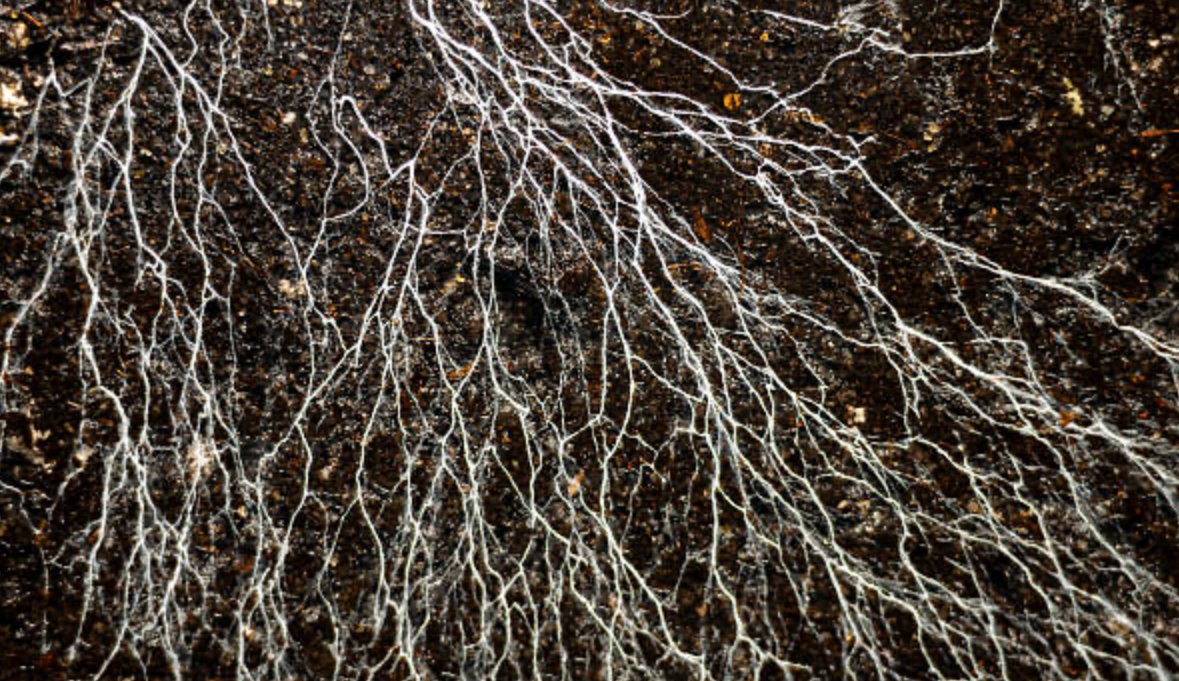
The Role of Mycorrhizae in Tree Health in Eugene & the Pacific Northwest
Introduction
Trees in the Pacific Northwest thrive in a unique environment defined by wet winters, dry summers, volcanic and clay-heavy soils, and dense native forests. Beneath the surface, one of the most important contributors to tree health is often invisible: mycorrhizae. These beneficial fungi form symbiotic relationships with tree roots, helping trees absorb nutrients and water, improve soil structure, and withstand environmental stress.
In natural forests surrounding Eugene, mycorrhizal networks are abundant and largely undisturbed. In residential and urban landscapes, however, construction, soil compaction, lawn practices, and synthetic inputs can disrupt these vital fungal systems. Understanding how mycorrhizae function in our regional soils allows homeowners to better support long-lived, resilient trees.
What Are Mycorrhizae?
Mycorrhizae are beneficial fungi that live in direct association with tree roots. The term comes from Greek, meaning fungus root. This partnership benefits both organisms:
Trees provide sugars created through photosynthesis
Fungi provide water and soil nutrients that roots alone cannot efficiently access
Most Pacific Northwest trees—including Douglas-fir, western red cedar, bigleaf maple, Oregon white oak, alder, and hemlock—depend heavily on mycorrhizal relationships for long-term health.
There are two main types common in our region:
Ectomycorrhizae, which form a sheath around roots and dominate forest trees like firs, pines, and oaks
Endomycorrhizae (arbuscular mycorrhizae), which penetrate root cells and are common in maples, ornamentals, and understory species
Both types are critical in Eugene’s soils, which often bind nutrients tightly and limit availability without fungal assistance.
Benefits of Mycorrhizal Associations in Pacific Northwest Soils
1. Enhanced Nutrient Uptake in Volcanic and Clay Soils
Many soils in the Willamette Valley are derived from volcanic deposits or heavy clays. While these soils can be fertile, nutrients—especially phosphorus—are often chemically bound and difficult for roots to absorb.
Mycorrhizal fungi release enzymes that unlock these nutrients, dramatically increasing availability. Trees with healthy mycorrhizal associations show stronger root development, improved canopy density, and more balanced growth without excessive fertilization.
2. Improved Water Absorption During Dry Summers
Although Eugene receives significant rainfall, most of it falls between fall and spring. Summers are increasingly dry, placing stress on trees—especially those in lawns or compacted soils.
Mycorrhizal hyphae extend far beyond the root zone, allowing trees to:
Access moisture held deep in the soil profile
Pull water from tiny soil pores roots cannot reach
Maintain hydration during prolonged dry periods
This makes mycorrhizae especially valuable for urban trees that receive irregular irrigation or compete with turf grass.
3. Increased Resistance to Root Diseases Common in Wet Winters
Western Oregon’s wet winters create ideal conditions for soil-borne pathogens such as root rot fungi. Mycorrhizae help protect trees by:
Occupying root space that pathogens might otherwise colonize
Competing for nutrients in the soil
Strengthening the tree’s natural immune response
Trees with intact mycorrhizal networks often show greater resistance to chronic decline, especially in poorly drained or compacted soils.
4. Improved Soil Structure and Drainage
Healthy soil structure is critical in Eugene, where clay soils can compact easily and limit oxygen availability to roots. Mycorrhizal fungi help bind soil particles into stable aggregates, resulting in:
Better drainage during heavy rains
Improved aeration for roots
Reduced erosion on slopes and disturbed sites
Increased organic matter retention
Over time, this leads to healthier soil ecosystems that support not only trees, but shrubs, native plants, and beneficial insects.
Urban Stress and Mycorrhizae in Eugene Landscapes
Residential trees in Eugene face stressors that forest trees do not, including:
Construction and trenching
Lawn competition and frequent mowing
Soil compaction from foot traffic and vehicles
Overuse of synthetic fertilizers
These practices can severely reduce mycorrhizal populations. When fungal networks are damaged, trees become more dependent on irrigation and fertilizer and less resilient to drought, pests, and disease.
How Eugene Homeowners Can Encourage Mycorrhizae
Supporting mycorrhizae does not require expensive treatments—just thoughtful land care practices.
• Avoid Over-Fertilization
Excessive fertilizer, especially phosphorus-heavy blends, can suppress mycorrhizal colonization. Many Eugene soils already contain adequate nutrients that simply need fungal access.
• Use Organic Mulch
Applying wood chips around trees mimics forest floor conditions. Mulch regulates soil temperature, retains moisture, and feeds beneficial fungi as it breaks down.
• Minimize Soil Disturbance
Avoid digging, trenching, or parking vehicles within the root zone. Compaction reduces oxygen and destroys fungal networks.
• Leave Some Leaf Litter
Allowing leaves to decompose beneath trees supports the natural nutrient cycle that mycorrhizae evolved with in Pacific Northwest forests.
Conclusion
Mycorrhizae are a foundational component of tree health in Eugene and throughout the Pacific Northwest. These underground fungal networks enhance nutrient uptake, improve drought tolerance, protect against disease, and build healthier soils over time.
By working with the natural soil biology of our region—rather than against it—homeowners can support stronger, longer-lived trees that require fewer inputs and better withstand environmental stress.