Why Soft, Wet Soil Causes Trees to Fall Understanding Tree Failure During Heavy Rain
Introduction
If you’ve lived through an Oregon winter, you’ve probably seen it: a seemingly healthy tree suddenly tipping over after a stretch of heavy rain. In many cases, the problem isn’t the tree itself—it’s the soil beneath it. Soft, water-saturated soil dramatically increases the risk of tree failure, especially during windstorms. Understanding how wet soil affects root systems can help homeowners recognize danger early and prevent costly damage.
How Trees Stay Upright
Trees rely on root plates—wide, shallow networks of structural roots—to anchor them into the ground. Contrary to popular belief, most trees do not have deep taproots. Instead, the majority of roots are found in the top 12–24 inches of soil, where oxygen and nutrients are available.
When soil conditions change, that anchoring system weakens.
What Happens When Soil Becomes Too Wet
1. Loss of Soil Strength
Dry or moderately moist soil provides friction and resistance that roots can grip. When soil becomes saturated:
Air spaces fill with water
Soil particles lose cohesion
The ground behaves more like mud than earth
This significantly reduces the soil’s ability to hold roots in place.
2. Reduced Oxygen to Roots
Tree roots need oxygen to function. In prolonged wet conditions:
Oxygen levels drop
Root tissue begins to die
Structural roots lose strength
Weakened roots mean weaker anchorage—even if the canopy looks healthy.
3. Root Plate Failure
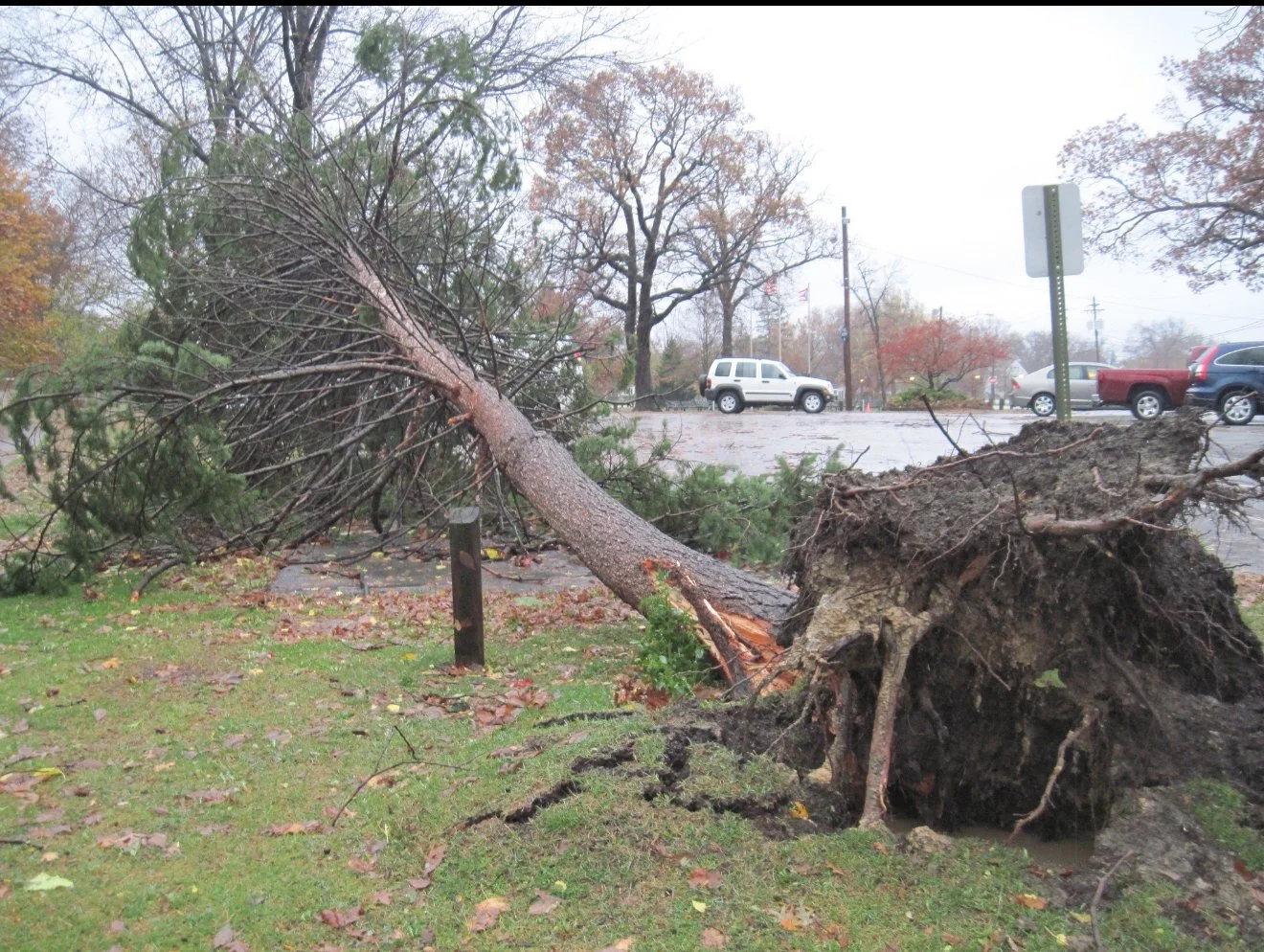
Instead of the trunk snapping, trees in wet soil often fail at the root plate, lifting the entire root mass out of the ground. This is why fallen trees after storms often have a large disk of soil attached to the roots.
This type of failure is sudden and difficult to predict without a professional assessment.
Why Wind Makes It Worse
Wind applies force to the canopy, acting like a sail. In dry conditions, roots resist that force. In wet soil, resistance drops dramatically.
Even moderate wind speeds can cause failure when:
Soil is saturated
Trees have dense winter canopies
Trees are top-heavy or poorly pruned
This is why many tree failures happen after rainstorms, not necessarily during the heaviest winds.
Trees Most at Risk in Wet Soil
Certain trees are more prone to falling in saturated ground:
Shallow-rooted species
Fast-growing trees with weak wood
Recently planted trees
Trees with previous root damage
Trees growing in compacted or clay soils
Urban and residential trees are especially vulnerable due to soil disturbance from construction, driveways, and foot traffic.
Warning Signs of Imminent Failure
Homeowners should watch for these red flags after heavy rain:
Sudden leaning or increased tilt
Cracked or lifting soil around the base
Exposed or broken roots
New gaps between soil and trunk
Canopy shifting more than usual in wind
If you see these signs, the tree may be unstable and dangerous.
Why “Healthy” Trees Still Fall
One of the most common surprises homeowners face is a fallen tree that looked perfectly healthy days earlier. That’s because:
Root damage is hidden underground
Soil conditions change faster than trees can adapt
Failure can occur without rot or disease
Tree health above ground does not always reflect structural stability below ground.
Prevention: How to Reduce Risk
1. Professional Tree Risk Assessment
A certified arborist can evaluate:
Root plate stability
Soil conditions
Tree species risk factors
Lean, load distribution, and exposure
Early intervention is far less expensive than emergency removal.
2. Proper Pruning
Reducing canopy weight lowers wind resistance and stress on roots. Strategic pruning:
Improves balance
Reduces sail effect
Increases storm resilience
3. Improve Soil Conditions
In some cases, soil remediation can help:
Mulching to regulate moisture
Aeration to improve oxygen flow
Correcting drainage issues
4. Cabling or Removal When Necessary
For high-risk trees near homes, power lines, or walkways:
Structural support systems may be installed
Removal may be the safest long-term solution
Safety always comes first.
Why This Matters in Eugene and the Willamette Valley
Our region experiences:
Prolonged winter rainfall
Clay-heavy soils
Sudden windstorms following saturation
This combination makes soft-soil tree failure one of the most common causes of storm damage in Lane County.
Final Thoughts
Soft, wet soil is one of the most underestimated tree hazards. When the ground loses strength, even large, healthy trees can fail without warning. Understanding the relationship between soil moisture and root stability empowers homeowners to act before a tree becomes a threat.
If you’re concerned about a tree on your property—especially after heavy rain—having it assessed could prevent thousands of dollars in damage and protect the people you care about.