
Storms and Trees in Eugene, Oregon: What Homeowners Need to Know
Eugene, Oregon is known for its lush tree canopy, mild climate, and long rainy seasons—but when storms roll through the Willamette Valley, many trees can quickly shift from assets to liabilities. High winds, saturated soils, ice storms, snowfall all pose unique risks to trees common in Eugene neighborhoods.
Understanding how storms affect trees—and how to prepare for them—can help protect your home, your family, and your property.
Eugene’s Storm Patterns and Why Trees Are Vulnerable
Unlike areas prone to hurricanes or tornadoes, Eugene experiences frequent winter windstorms, prolonged rainfall, and occasional ice and snow events. These conditions create a perfect storm for tree failures.
Key local risk factors include:
Saturated soils that weaken root anchorage
South and east wind events funneling through the valley
Ice accumulation adding extreme weight to limbs
Snow loading on evergreen and broad-canopy trees
Many tree failures in Eugene occur not because a tree is dead, but because healthy trees are structurally compromised by weather conditions.
Common Storm-Damaged Trees in Eugene
Certain tree species found throughout Eugene are more prone to storm damage:
Bigleaf maple – Large, spreading limbs can fail in wind or ice
Douglas-fir – Tall stature increases risk of windthrow in wet soil
Black cottonwood – Fast growth and weak wood lead to limb breakage
Alder – Short lifespan and decay make failures unpredictable
Ornamental pears and cherries – Often split at weak branch unions
Improper pruning, past topping, or decay from unnoticed wounds can dramatically increase storm vulnerability.
Most Common Types of Storm Tree Damage
After major Eugene storms, arborists frequently see:
Uprooted trees due to saturated soil
Large limb failures over homes, driveways, and power lines
Split trunks caused by poor structure or co-dominant stems
Hanging limbs (“widowmakers”) posing immediate danger
Hidden root plate movement that may not be obvious at first
Not all storm damage is immediately visible—some trees fail weeks or months later.
How to Prepare Your Trees Before the Next Storm
Proactive tree care is the most effective way to reduce storm damage:
1. Structural Pruning
Proper pruning improves wind flow through the canopy and reduces end-weight on limbs.
2. Deadwood Removal
Dead branches are the first to fall during storms and should be removed promptly.
3. Tree Risk Assessments
An ISA-Certified Arborist can identify decay, weak unions, or root problems before failure occurs.
4. Cabling and Bracing
Some high-value trees can be reinforced to reduce the risk of splitting during wind or ice events.
5. Root Zone Protection
Avoid soil compaction, trenching, or grade changes near trees—especially in Eugene’s wet soils.
What to Do After a Storm
If a storm has already passed through Eugene:
Do not approach downed trees near power lines
Look for cracked trunks or hanging limbs
Document damage for insurance
Schedule a professional inspection, even if the tree is still standing
Attempting DIY storm cleanup can be extremely dangerous—many serious injuries occur after storms, not during them.
Why Local Knowledge Matters
Tree care in Eugene is not the same as tree care elsewhere. Local soil types, native species, rainfall patterns, and wind behavior all affect how trees grow and fail. Working with a local, insured, ISA-Certified Arborist ensures your trees are evaluated with Eugene-specific conditions in mind.
Final Thoughts
Storms are a fact of life in Eugene, but many tree failures don’t have to be. With proper maintenance, risk assessment, and timely care, trees can remain safe, healthy, and beautiful—even through the toughest Oregon weather.
If you’re unsure about the condition of your trees after a storm—or want to prepare before the next one—professional tree care is an investment in safety, longevity, and peace of mind.
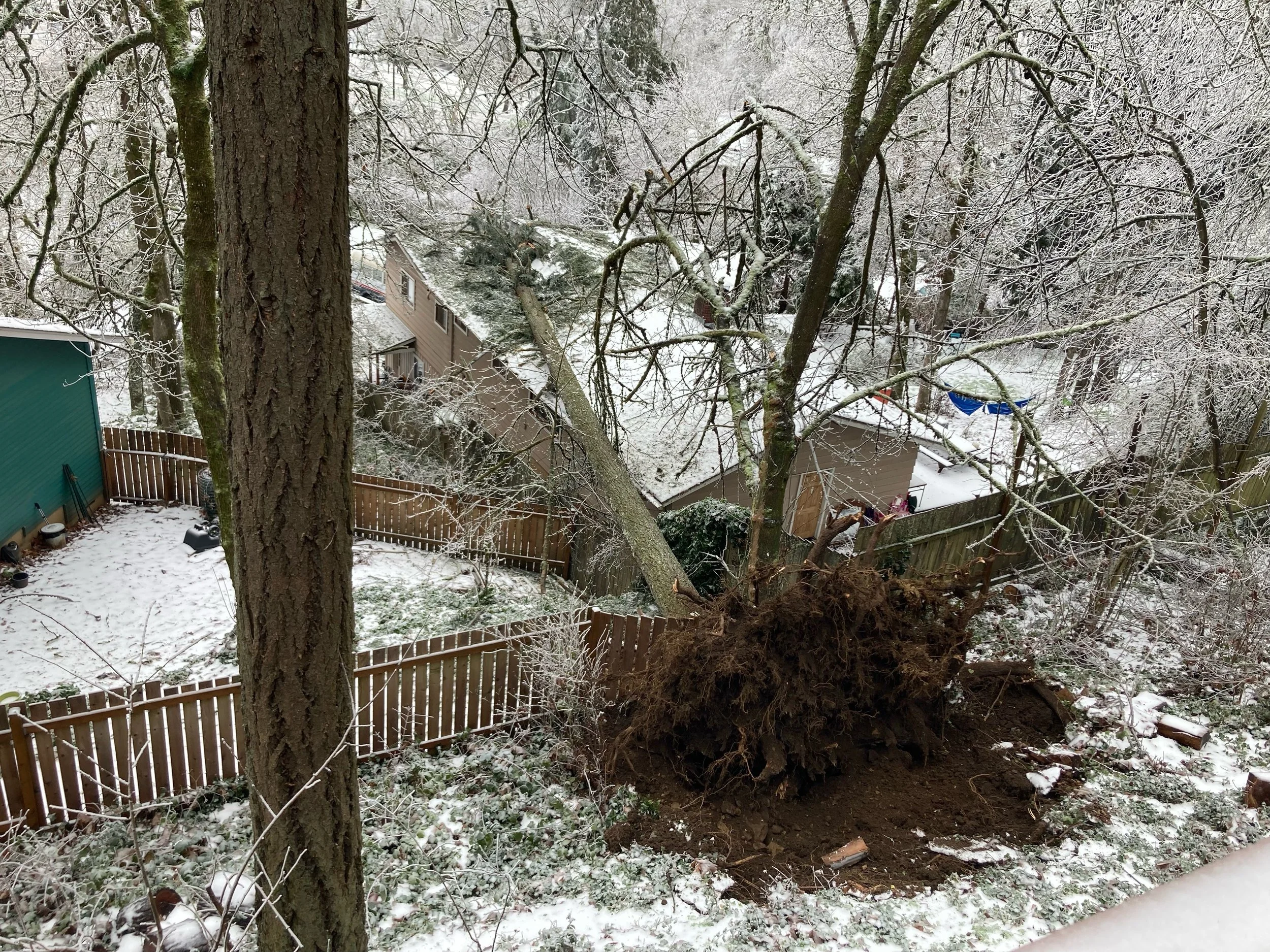
Eugene, near Hendricks park
