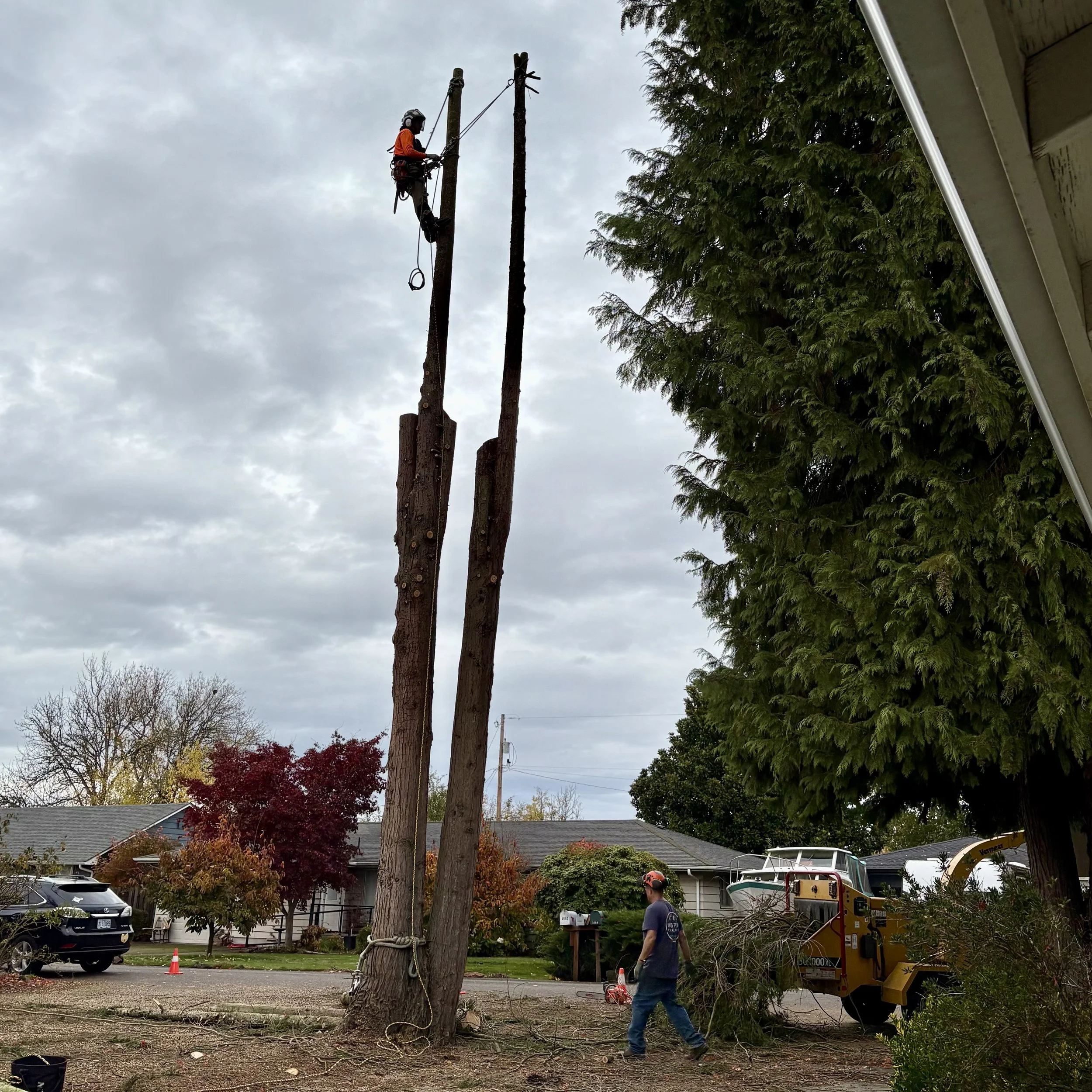
The Importance of Proper Tree Spacing
Introduction
Crowded trees compete for sunlight, water, and nutrients. Improper spacing is one of the most common causes of weak growth, disease, and structural instability. Whether you’re planting new trees or managing existing ones, spacing affects long-term health.
Why Proper Spacing Matters
1. Reduced Competition for Resources
Trees spaced too close:
Compete for canopy space
Develop weak branches
Grow upward too quickly
Have less root stability
2. Improved Airflow
Spacing reduces fungal disease by allowing air and sunlight to dry leaf surfaces.
3. Stronger Root Systems
When roots have space, trees develop better anchorage.
4. Safer Long-Term Structure
Overly dense stands often lead to:
Leaning trees
Thin, weak trunks
Excessive shading
Dead lower branches
Spacing Guidelines (General)
Large species: 20–30+ feet
Medium species: 15–20 feet
Small ornamental trees: 10–15 feet
When Spacing Should Be Adjusted
Near buildings or driveways
In windy areas
On slopes
In tight urban lots
Solutions for Overcrowded Trees
Strategic pruning
Selective thinning
Removal of poorly placed specimens