
Oregon’s Most Common Tree Diseases
Introduction
Oregon’s climate—moist winters, mild springs, and warm summers—creates ideal conditions for many fungal and bacterial tree diseases. Understanding the most common threats helps homeowners protect their landscapes and catch problems early.
1. Anthracnose
Symptoms:
Dark leaf spots
Early leaf drop
Twisted or deformed leaves
Dying shoot tips
Common Hosts:
Ash, dogwood, oak, sycamore.
Treatment:
Pruning infected limbs, improving airflow, and reducing irrigation moisture on leaves.
2. Root Rot (Phytophthora & Armillaria)
Symptoms:
Yellowing leaves
Sudden wilting
Mushrooms on trunk base
Reduced growth
Threat Level:
High — root rot can kill trees silently.
3. Leaf Spot Diseases
Affect maples, willows, cherries, and more.
Symptoms:
Brown or black spots
Speckled leaves
Patchy defoliation
Most leaf spot fungi spread in spring rains.
4. Fire Blight
A bacterial infection primarily affecting fruit trees.
Symptoms:
Blackened, “burned-looking” leaves
Shepherd’s-crook branch tips
Oozing bark lesions
5. Verticillium Wilt
A soilborne fungus that blocks a tree’s vascular system.
Symptoms:
Sudden branch death
Yellowing leaves
Sparse canopy
Stunted growth
Maples are particularly vulnerable.
Prevention & Treatment Overview
Prune during dry weather
Keep trees mulched and watered properly
Avoid wounding bark
Improve soil drainage
Schedule annual inspections
Many diseases can be managed or stopped if caught early.
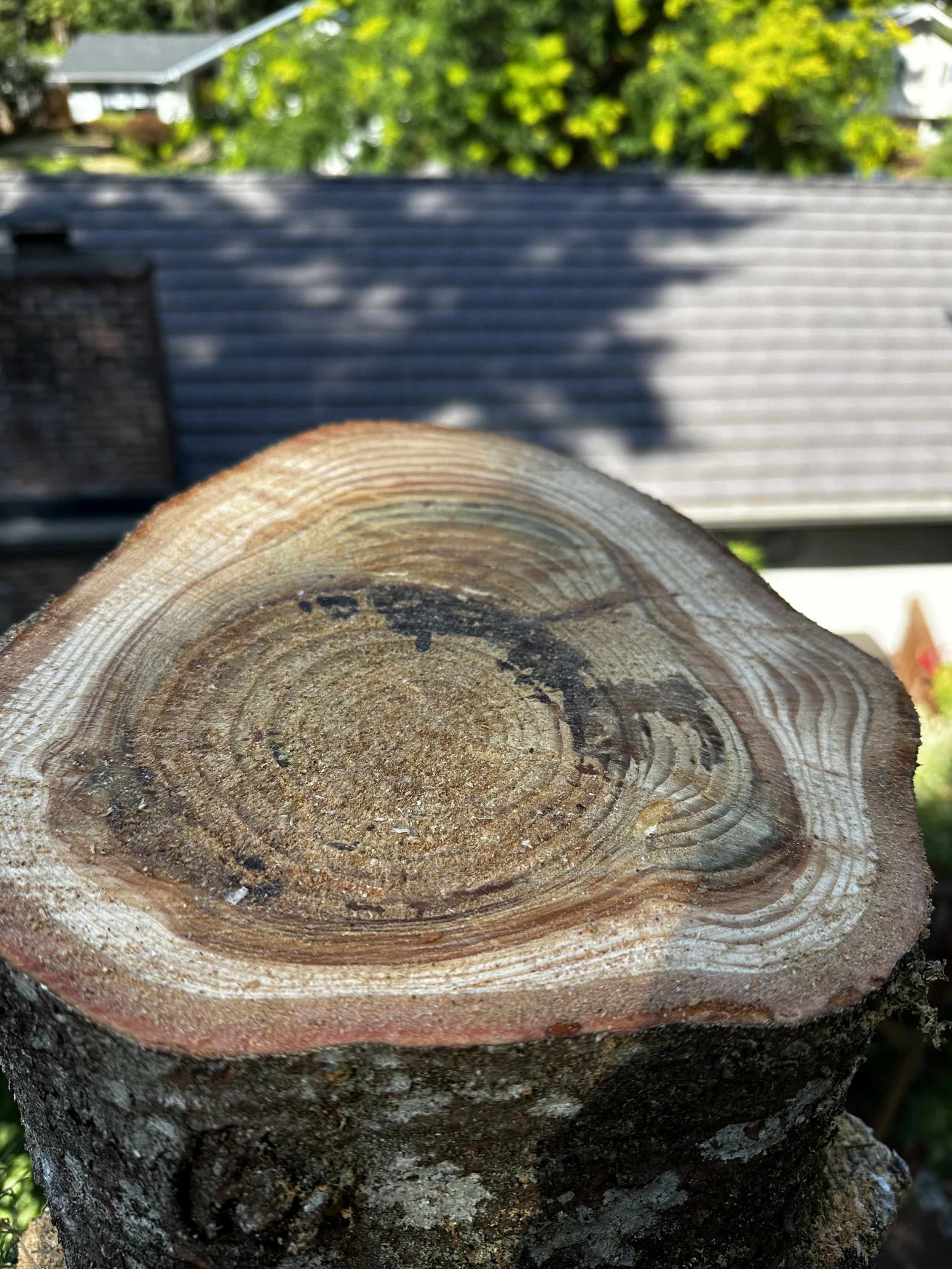
Vascular decay
