
Removing Hazardous Trees Before They Remove Your Peace of Mind
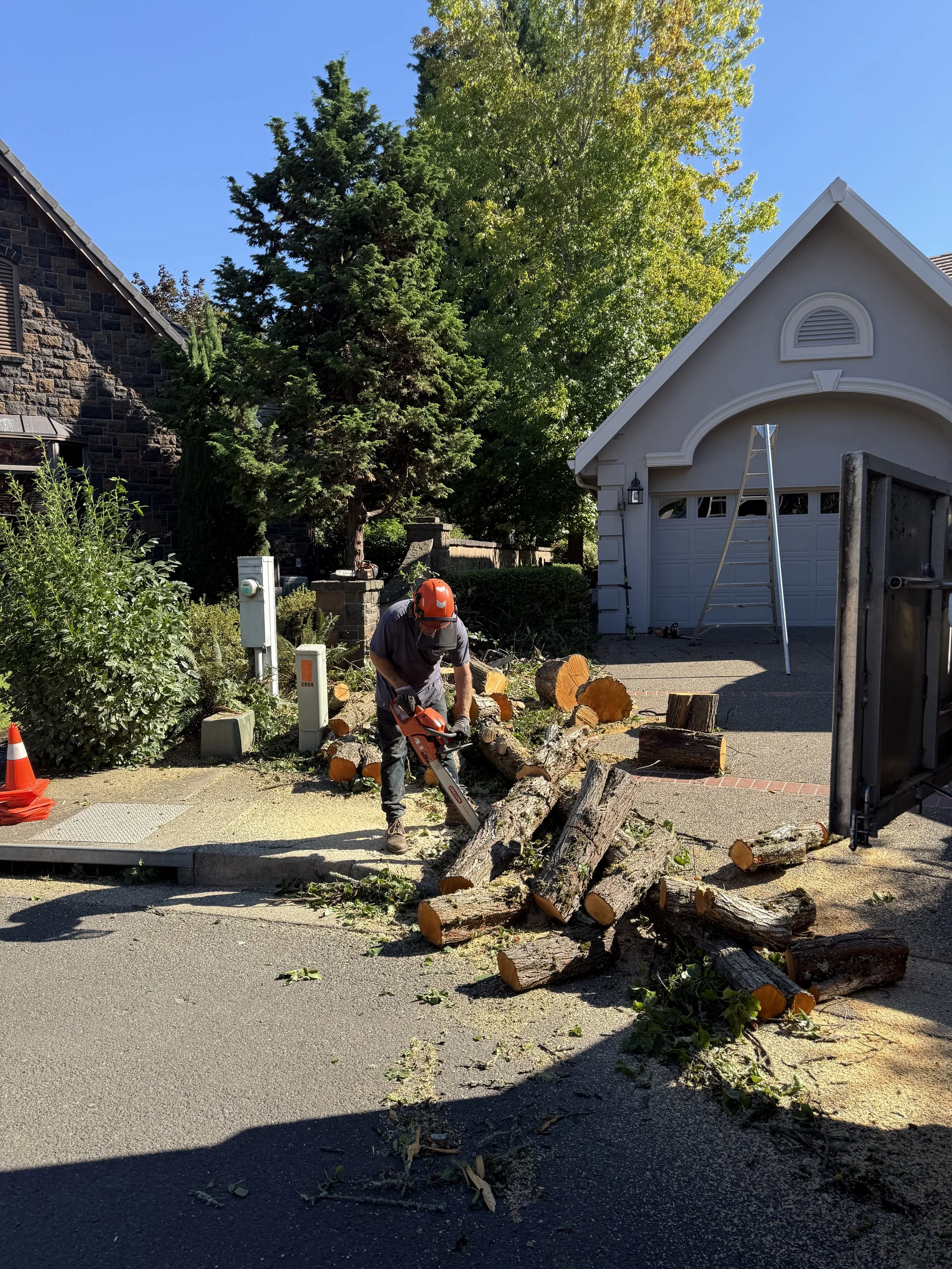
Hazardous trees rarely fail without warning. Cracks in the trunk, dead or hanging limbs, root plate lifting, fungal conks, and excessive lean are all indicators that structural integrity may be compromised. In the Pacific Northwest, saturated soils and wind events significantly increase the risk of failure—especially in trees already stressed by decay, improper pruning, or root disturbance.
A hazardous tree isn’t just a landscaping issue; it’s a liability. When a compromised tree is positioned near a home, driveway, play area, or utility line, the potential for property damage and personal injury rises dramatically. Delaying removal often increases cost. As decay progresses, rigging becomes more complex, access becomes limited, and surrounding targets require more technical precision.
Often the homeowner knows something looks “off” about the health or structural integrity of the tree. Signs such as tip die back on branches, leaning, heaving soil, cracks, bulges, decay, history of failure, weather patterns, soil integrity- these are all aspects of the tree to observe. We often overlook soil. Most tree decline issues can be uncovered in the soil. So don’t forget to look down as well as looking up!
A professional risk assessment by a certified arborist evaluates species characteristics, structural defects, site conditions, and target occupancy. Not every concerning tree requires full removal—sometimes structural pruning, weight reduction, or cabling can mitigate risk. However, when removal is the safest option, it should be performed using proper rigging systems, controlled dismantling techniques, and site protection practices.
Proactive hazard removal protects your home, preserves surrounding trees, and restores peace of mind. Investing in early intervention is always less costly than repairing preventable damage.
