Branch Tip Dieback: When to Prune and When to Remove
Branch tip dieback is often the first visible sign that a tree is under stress. It occurs when the outermost shoots and foliage begin to decline and die, usually starting at the canopy edges. While it may look minor at first, dieback can signal deeper issues within the root system, vascular tissue, or overall tree health.
Common causes include drought stress, compacted soil, root damage, fungal pathogens, boring insects, and nutrient deficiencies. Because trees operate on stored energy reserves, repeated stress can compound over multiple seasons. As dieback progresses, trees lose photosynthetic capacity, which further weakens their ability to compartmentalize decay.
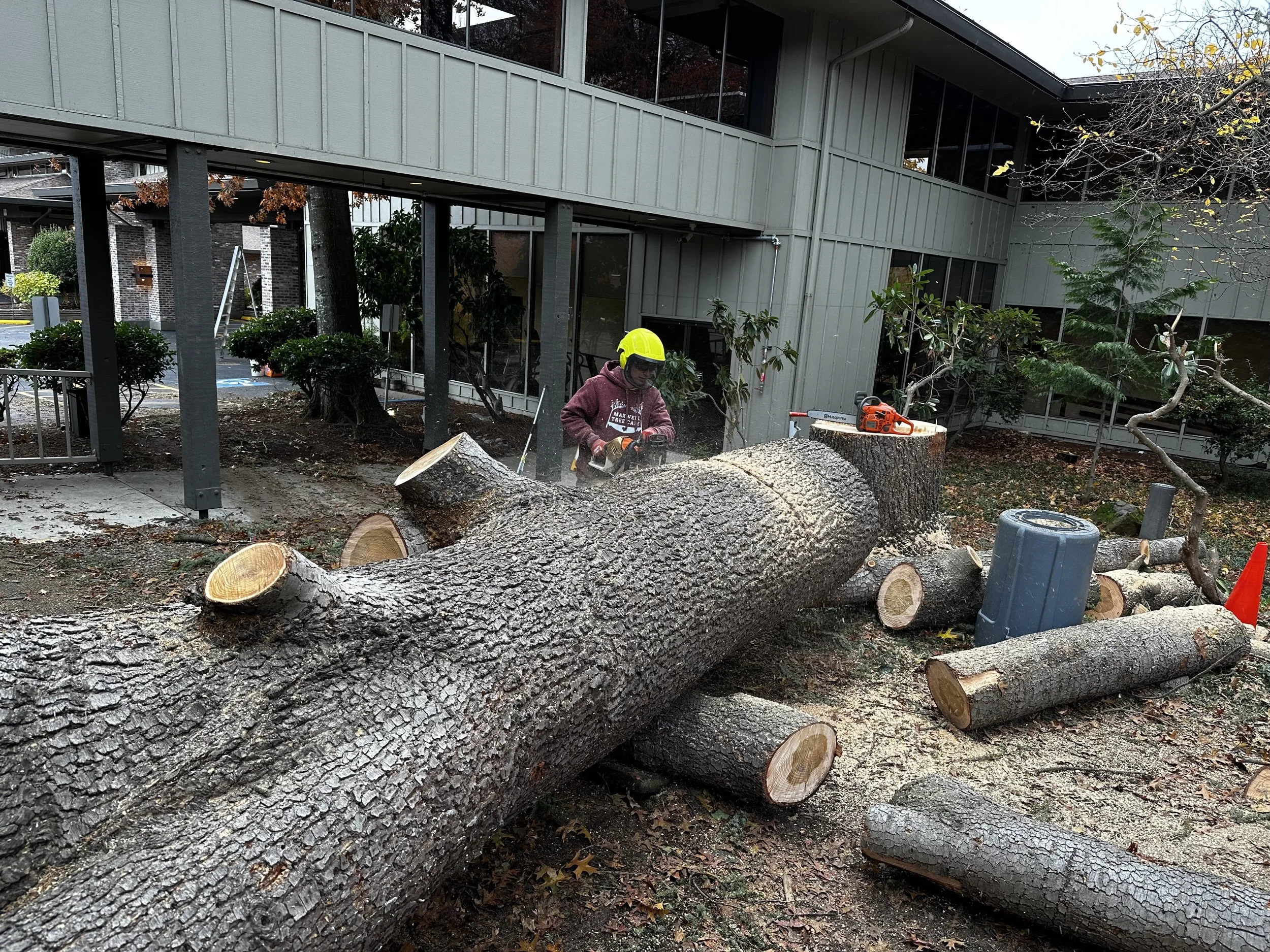
From a structural standpoint, dead branch tips become brittle and prone to failure. Over time, small deadwood can develop into larger hazards, especially during wind or heavy rain events. Strategic pruning by a certified arborist can remove dead tissue, reduce end weight, and improve canopy balance. However, if dieback exceeds 30–50% of the canopy, or if decay extends into scaffold branches or the trunk, removal may be the safest long-term option.
Early assessment is critical. Proactive trimming and pruning can often restore vigor, while delayed action can increase risk and cost.
