
Maple Stumps Sprouting After Removal
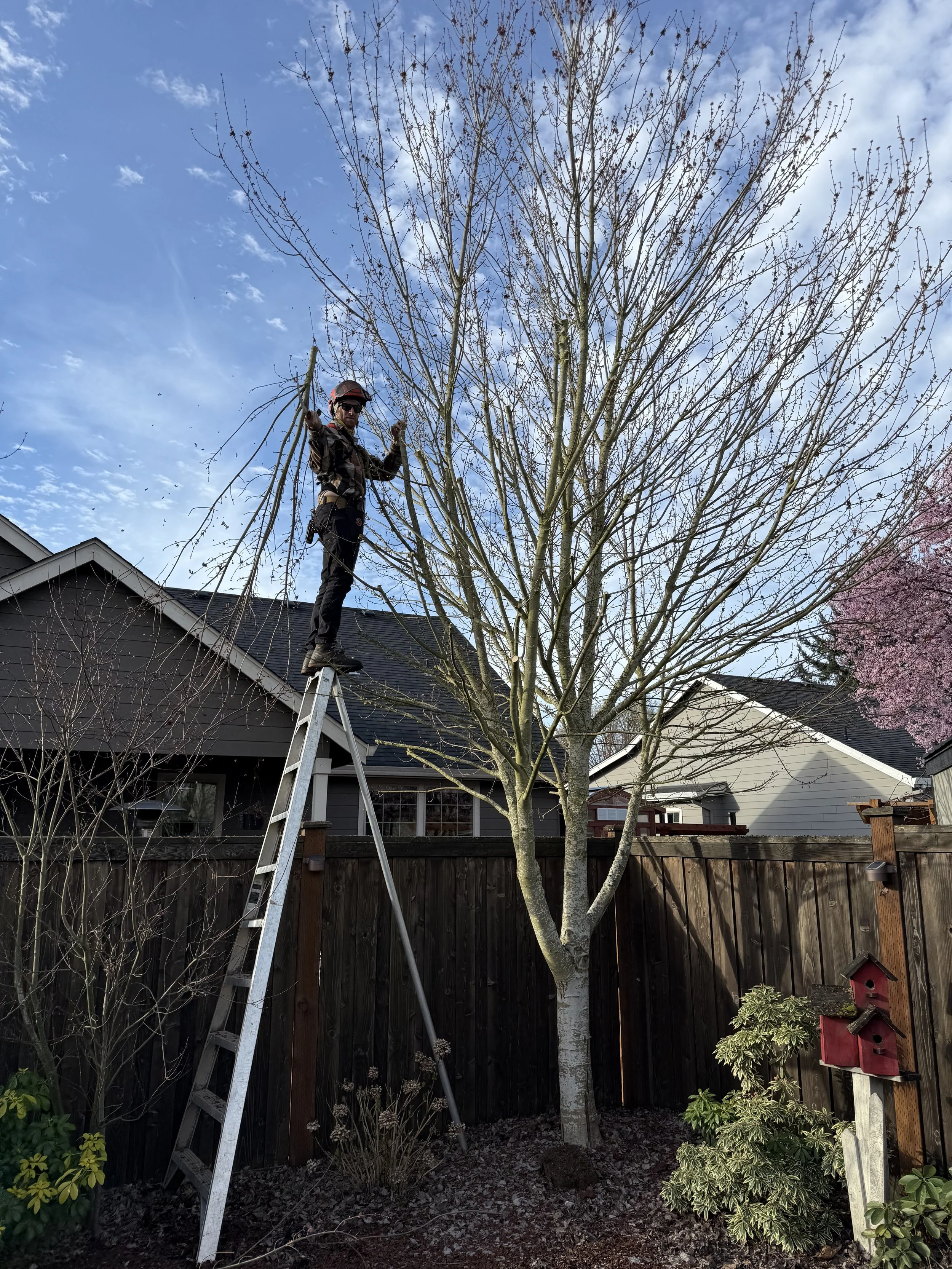
Maple trees are notorious for sending up vigorous new shoots after removal. Even when the trunk is cut down, the stump and root system often remain alive underground, storing enough energy to push out fresh sprouts. These new shoots, commonly called suckers, can emerge directly from the stump or from surface roots several feet away. For property owners, this can be frustrating because it makes the tree seem like it was never fully removed.
The reason maples do this so aggressively is their strong root reserves and dormant buds hidden in the stump flare and major roots. Once the canopy is removed, the tree shifts into survival mode, using stored carbohydrates to regenerate. A simple flush cut at ground level usually makes this worse, often triggering even more sprouting.
The best way to fully remove a maple and prevent long-term regrowth is adequate stump grinding. Grinding should extend at least 6–12 inches below grade, removing the stump crown, root flare, and the cambium tissue responsible for new growth. For highly vigorous maples, grinding deeper and wider around the root collar greatly improves results.
Even with professional stump grinding, some lateral roots may still attempt to sprout. When this happens, quick removal of any new shoots helps exhaust the remaining root energy until it dies off completely. In stubborn cases, selective root excavation may be needed.
A properly ground maple stump leaves the area clean, usable, and ready for replanting, lawn restoration, or new landscape installation—without the ongoing headache of constant stump sprouts returning year after year.
