Common Tree Care Myths — and the Truth Behind Them
Introduction
Tree care is often surrounded by myths, outdated practices, and well-meaning advice that has been passed down for generations. While some of these ideas may sound logical, many are actually harmful to trees and can shorten their lifespan, weaken their structure, or create safety hazards. Believing these myths can also lead to unnecessary expenses, emergency tree removal, and long-term damage to your landscape.
Healthy trees add value, beauty, shade, and environmental benefits to your property—but only when they are cared for correctly. Let’s debunk some of the most common tree care myths and replace them with sound, science-based practices that promote strong, resilient trees.
Myth 1: Trees Should Be Topped to Control Their Height
Truth: Tree topping is one of the most damaging practices in arboriculture.
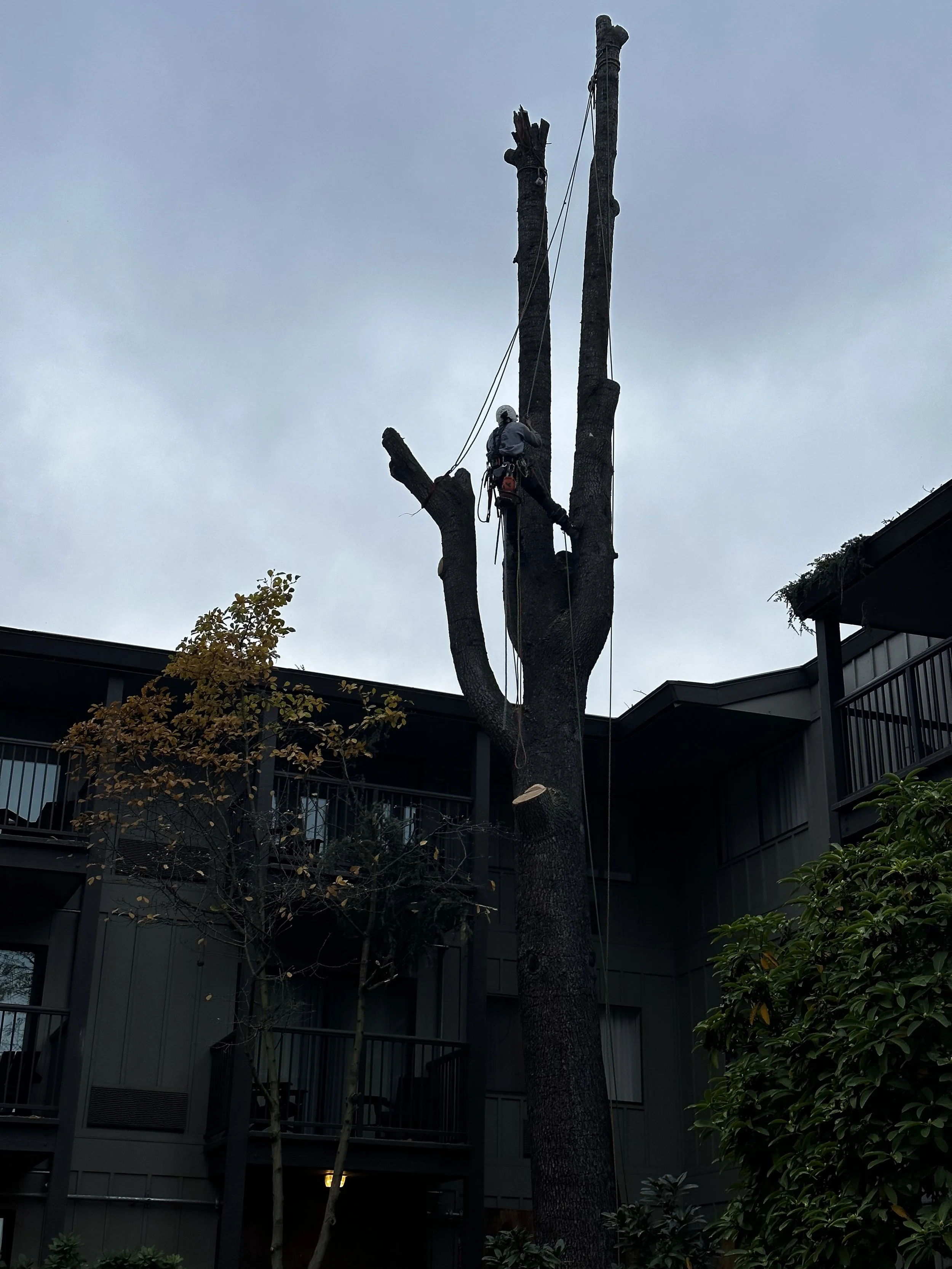
Topping involves cutting large portions of a tree’s canopy to reduce height. While it may seem like a quick solution, it actually creates serious long-term problems. Topped trees respond by producing fast-growing, weakly attached shoots called epicormic growth. These shoots are prone to breaking, especially during storms, increasing the risk of property damage or injury.
Additionally, topping removes a large portion of the tree’s leaf surface, limiting its ability to photosynthesize and produce energy. This stresses the tree, makes it more susceptible to pests and disease, and often leads to decay at the cut sites.
Inevitably topping may be a supportive option when confronted with exceptional circumstances, for example topping a tree below a power line rather than removing it entirely. In these exceptional circumstances it is imperative to initiate a yearly assessment and ongoing maintenance of the topped tree.
Best practice: Proper structural pruning reduces risk while preserving the tree’s natural form and health. When height reduction is necessary, it should be done through selective pruning by a qualified arborist.
ANSI 3000 will provide a reference for best pruning practices in our area. This standard is well adopted throughout the USA and many other nations including most of Europe, Australia, New Zealand.
https://treecareindustryassociation.org/business-support/ansi-a300-standards/
Myth 2: Painting Tree Wounds Helps Them Heal
Truth: Wound paint and sealants often do more harm than good.
For many years, people believed that painting pruning cuts would protect trees from insects and disease. Modern research shows that most wound paints actually trap moisture against the wood, creating ideal conditions for decay and fungal growth.
Trees have evolved natural defense mechanisms known as compartmentalization, allowing them to isolate damaged tissue and prevent decay from spreading internally. Remember “CODIT”, which means Compartmentalization of Decay in Trees.
Best practice: Make clean, correct pruning cuts and allow the tree to seal the wound naturally. Cuts less than 5” inches diameter or 1/3 the diameter of the parent stem are preferred. Avoid wound dressings unless specifically recommended for a particular situation.
Myth 3: All Trees Need Fertilizer Every Year
Truth: Over-fertilizing can damage trees and surrounding soil.
Many landscapes already contain adequate nutrients, especially where leaves and organic matter are allowed to decompose naturally. Applying fertilizer unnecessarily can promote excessive leaf growth, cause dieback, at the expense of root development, weaken structural integrity, and increase vulnerability to pests.
In some cases, excess nitrogen can even burn roots or disrupt beneficial soil microorganisms.
Best practice: Fertilize only when a soil test or visible symptoms indicate a deficiency. Healthy soil biology and proper mulching often provide all the nutrients a tree needs.
Myth 4: Mulch Should Be Piled High Against the Trunk
Truth: “Mulch volcanoes” can suffocate roots and cause trunk rot.
While mulch is beneficial, piling it directly against the trunk traps moisture against the bark and can lead to decay, fungal infections, and pest issues. It can also encourage roots to grow upward instead of outward, reducing stability.
Best practice: Apply mulch in a wide, shallow ring around the tree, keeping it 2–4 inches deep and several inches away from the trunk. Think “donut,” not “volcano.”
Myth 5: Mature Trees Don’t Need Regular Care
Truth: Large, established trees still require maintenance.
Many homeowners assume that once a tree reaches maturity, it can take care of itself. In reality, mature trees benefit greatly from periodic inspections and targeted pruning. Deadwood, cracked limbs, and structural weaknesses often develop slowly and go unnoticed until failure occurs.
Best practice: Schedule regular tree health assessments, especially for large trees near homes, roads, or power lines. Preventive care is far safer and less expensive than emergency removal.
Myth 6: Tree Roots Grow Deep Straight Down”tap root”
Truth: Most tree roots grow wide and shallow.
Contrary to popular belief, the majority of a tree’s roots are located in the top 12–24 inches of soil, spreading outward well beyond the drip line. These roots rely on oxygen, water, and uncompacted soil to function properly.
Construction activity, soil compaction, and trenching near trees can severely damage root systems, even when the trunk itself appears untouched.
Best practice: Protect the soil around trees, avoid heavy equipment near root zones, and plan landscaping or construction with root health in mind.
Myth 7: Removing All Deadwood Harms the Tree
Truth: Deadwood removal improves safety and tree health.
Dead branches no longer contribute to the tree’s energy production and can become hazards as they weaken and fall. Removing deadwood also reduces the likelihood of pests , pathogen, and decay spreading to healthy tissue.
Best practice: Deadwood pruning should be done carefully and strategically, preserving living tissue in the branch collar while improving overall structure and safety.
Conclusion
Tree care myths persist because they often sound intuitive or are rooted in outdated practices. However, modern arboriculture is based on science, observation, and a deeper understanding of how trees grow and respond to stress. By avoiding harmful myths—like topping trees, painting wounds, or over-fertilizing—you can protect your trees, your property, and your investment.
Healthy trees don’t just happen by chance. They thrive when given proper care, informed decisions, and respect for their natural biology. When in doubt, consult a professional arborist who understands the science behind tree health. Your trees will reward you with strength, beauty, and longevity for generations to come.