
Why So Many Large Fir Trees in Eugene Can Be a Hidden Risk
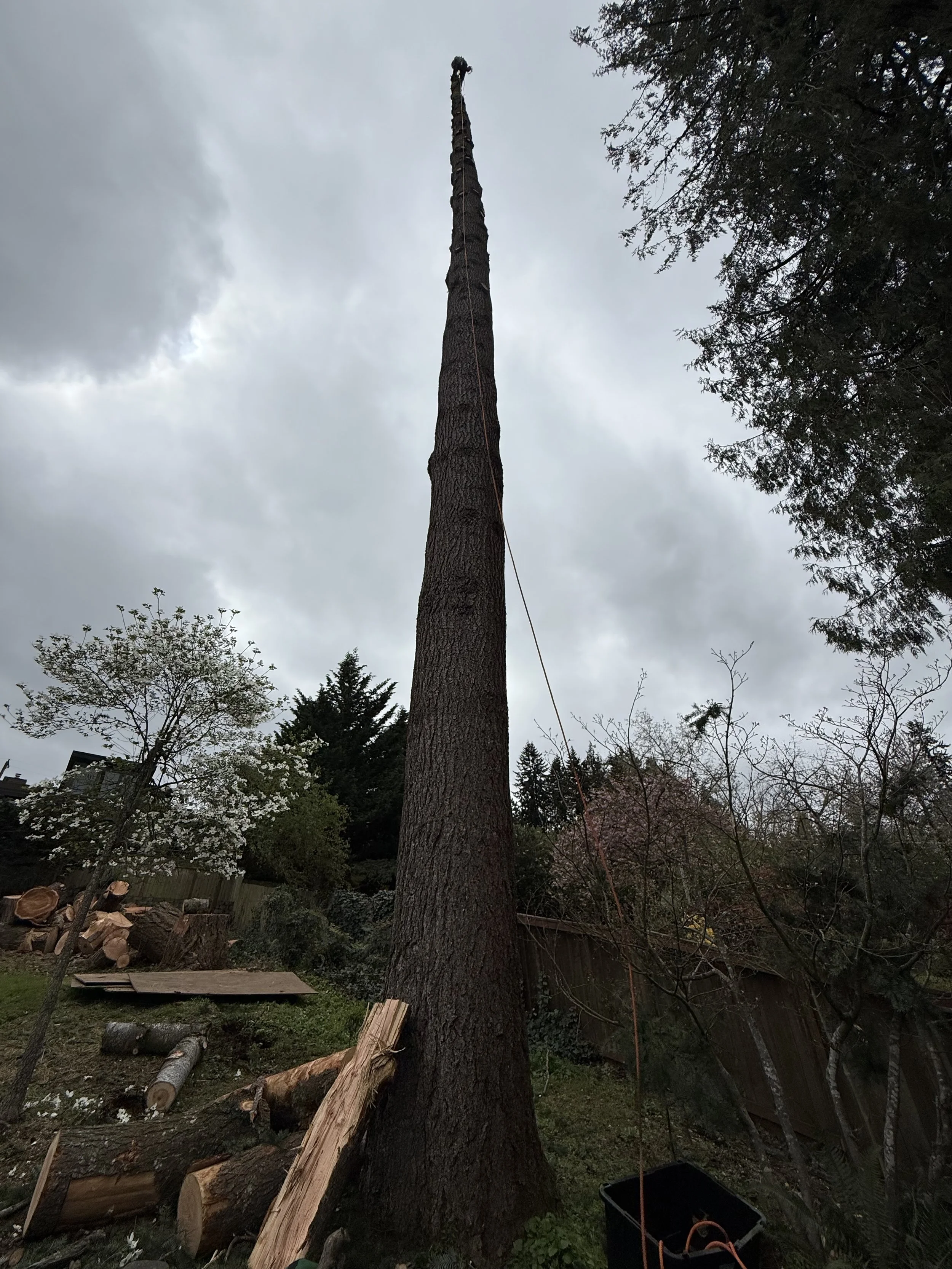
If you live in Eugene or the surrounding hills, there’s a good chance you have—or are near—a very large Douglas-fir tree.
What many homeowners don’t realize is that a large number of these trees were planted by schoolchildren between the 1960s and 1980s, using seedlings distributed by companies like Weyerhaeuser Company.
Those trees are now 50–70 years old… and in many cases, they’ve outgrown the spaces they were planted in.
A Unique Part of Eugene’s History
For decades, local students were given small fir seedlings to plant at home. It was part of a broader push to promote forestry, stewardship, and replanting across Oregon.
At the time, no one was thinking about:
Tree spacing near homes
Long-term structural growth
Soil saturation and slope stability
Now, decades later, those same trees are towering over houses, driveways, and powerlines.
The Critical Detail: These Trees Were Grown for Timber, Not Neighborhoods
Many of these fir trees came from industrial forestry stock—selected or bred for fast growth and timber production.
That means they were designed to:
Grow quickly and tall
Produce merchantable wood fast
Compete in dense forest plantations
But those traits don’t always translate well to residential settings.
Why These Fir Trees Can Be Higher Risk in Eugene
In the Pacific Northwest—especially in Eugene’s wet winters and saturated soils—fast-grown Douglas-firs can present elevated risk.
Common issues include:
• Rapid Height = Higher Wind Exposure
These trees often reach 80–120+ feet, making them highly exposed during storms.
• Heavy Tops & Long Limbs
Faster growth can mean longer, heavier branches, increasing leverage and failure potential.
• Root Limitations in Residential Soils
Unlike forest-grown trees, many were planted:
Too close to homes
In compacted or altered soil
On slopes or near disturbed grade
• Saturated Soil = Reduced Stability
Eugene’s winter conditions create:
Waterlogged soils
Reduced root grip
Increased likelihood of root plate failure
Why This Matters for Homeowners
These aren’t just big trees—they’re high-consequence trees.
If one fails, the impact can include:
Roof damage
Structural damage to the home
Vehicle impact
Utility line damage
Serious safety risks
And in many cases, insurance may deny claims if a tree was visibly hazardous and not addressed.
Not All Fir Trees Are Dangerous—But Many Need Evaluation
It’s important to be clear:
Not every large fir tree is a problem.
However, trees from this era often require:
Professional risk assessment
Structural pruning to reduce load
Monitoring for root or trunk instability
Removal when risk outweighs retention
Signs Your Fir Tree May Be a Liability
Leaning toward a structure
Cracks in soil or lifting roots
Dead or declining top
Large limbs over rooflines
History of nearby tree failures
If your tree matches even one of these, it’s worth a closer look.
A Local Legacy—Handled the Right Way
Eugene’s history with forestry runs deep—from timber production to replanting efforts like those associated with the Hoedads Reforestation Cooperative.
These school-planted trees are part of that story.
But today, the conversation has shifted from planting… to managing long-term risk in developed environments.
Professional Tree Assessment in Eugene
At Wolfpack Tree Care, we specialize in:
Hazardous tree evaluation
Large fir tree pruning and removal
Storm risk mitigation
Safe, controlled removals in tight residential spaces
If you have a large fir near your home, it’s worth understanding the risk before the next storm season.
Get Ahead of the Risk
A quick assessment now can prevent:
Expensive damage
Emergency removals
Insurance complications
Schedule a professional evaluation and know exactly where your tree stands.
