
When Is Tree Removal Necessary in Eugene’s Wet Soil Conditions?
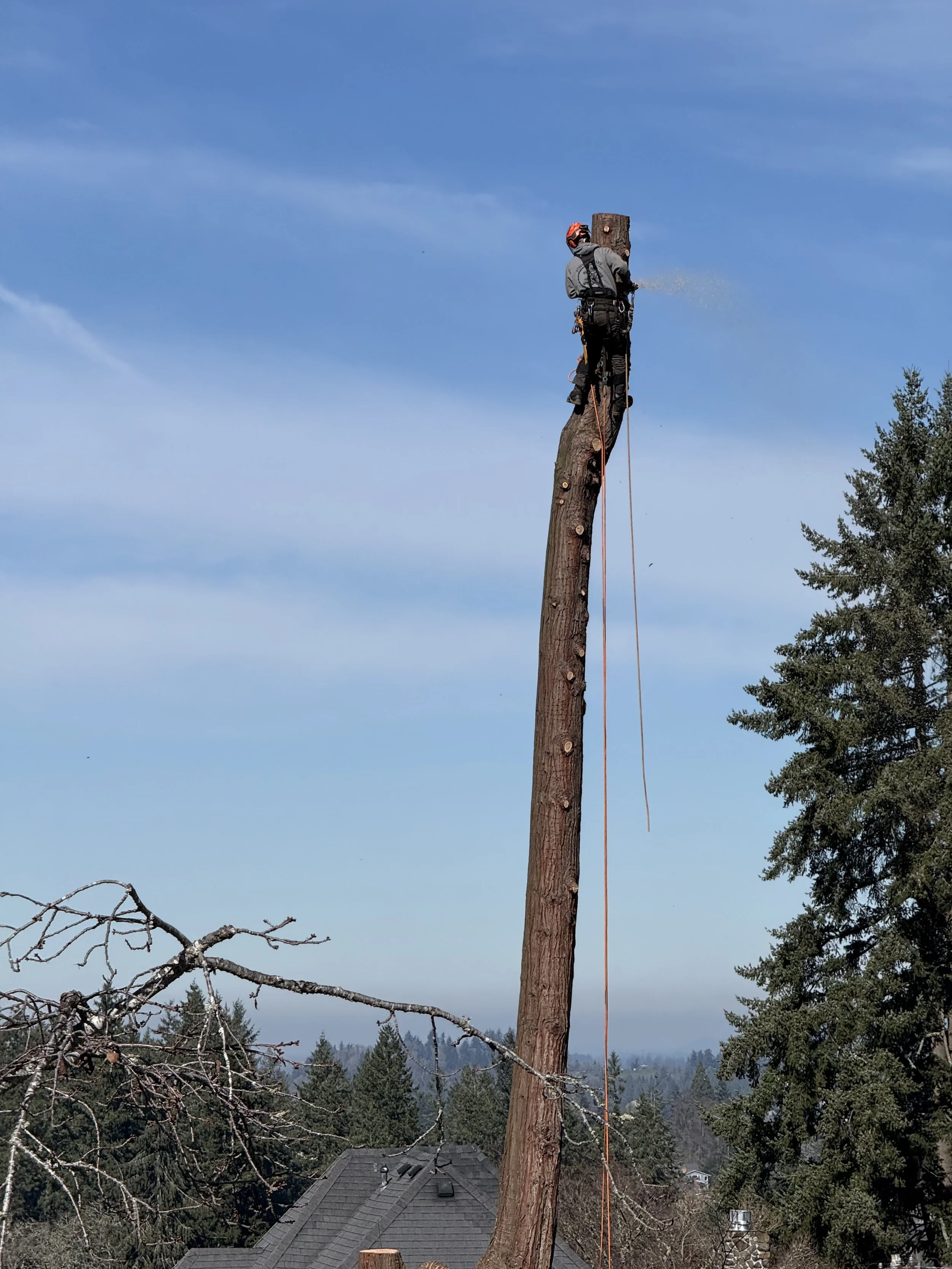
In Eugene and across the Pacific Northwest, prolonged rainfall creates consistently saturated soils—and that dramatically changes how trees behave. While trees are naturally adapted to wet winters, there’s a tipping point where soil loses its ability to hold roots securely. When that happens, even healthy-looking trees can become hazardous.
Why Wet Soil Increases Tree Failure Risk
Tree stability depends on the strength of the root-soil connection. In saturated conditions, soil particles lose cohesion, reducing friction and support. This can lead to root plate failure, where the entire root system shifts or lifts. Add wind or a heavy canopy, and the risk increases significantly.
Certain species—especially shallow-rooted conifers and fast-growing ornamentals—are more prone to failure in these conditions.
Signs Tree Removal May Be Necessary
Not every tree in wet soil needs removal, but these warning signs should be taken seriously:
Sudden lean or increasing tilt, especially after storms
Cracked or heaving soil around the base of the tree
Exposed or lifting roots on one side
Recent soil saturation combined with heavy canopy weight
Dead or declining canopy paired with instability
If you’re seeing these, the tree may no longer be structurally secure—and removal could be the safest option.
Timing Matters in Eugene’s Climate
Late fall through early spring is when Eugene soils are most saturated. During this time, even minor storms can cause failures. Trees that have been previously weakened—by improper pruning, root damage, or decay—are especially vulnerable.
This is why many hazardous trees fail not during extreme weather, but during relatively normal rainy periods.
When Removal Is the Best Option
Tree removal becomes necessary when:
The tree poses a clear risk to structures, driveways, or high-traffic areas
Root stability is compromised beyond recovery
The tree cannot be safely reduced or mitigated through pruning
There is no viable way to reduce canopy load without increasing failure risk
In tight urban or residential settings, removal is often the most responsible decision once structural integrity is compromised.
Why Professional Assessment Matters
Wet soil conditions can make tree risk harder to evaluate from the ground. A trained arborist looks at lean dynamics, soil condition, root integrity, and canopy load—not just whether the tree “looks bad.”
At Wolfpack Tree Care, we specialize in identifying these risks early and performing controlled, safe removals when necessary—especially in tight spaces where precision matters.
In Eugene’s wet climate, trees don’t always fail because they’re dead—they fail because the ground beneath them can no longer hold them in place. Recognizing the early warning signs and acting quickly can prevent serious property damage or injury.
If you’re unsure about a tree on your property, it’s always better to assess it early—before the next storm makes the decision for you.
