What Is Compartmentalization of Decay in Trees?
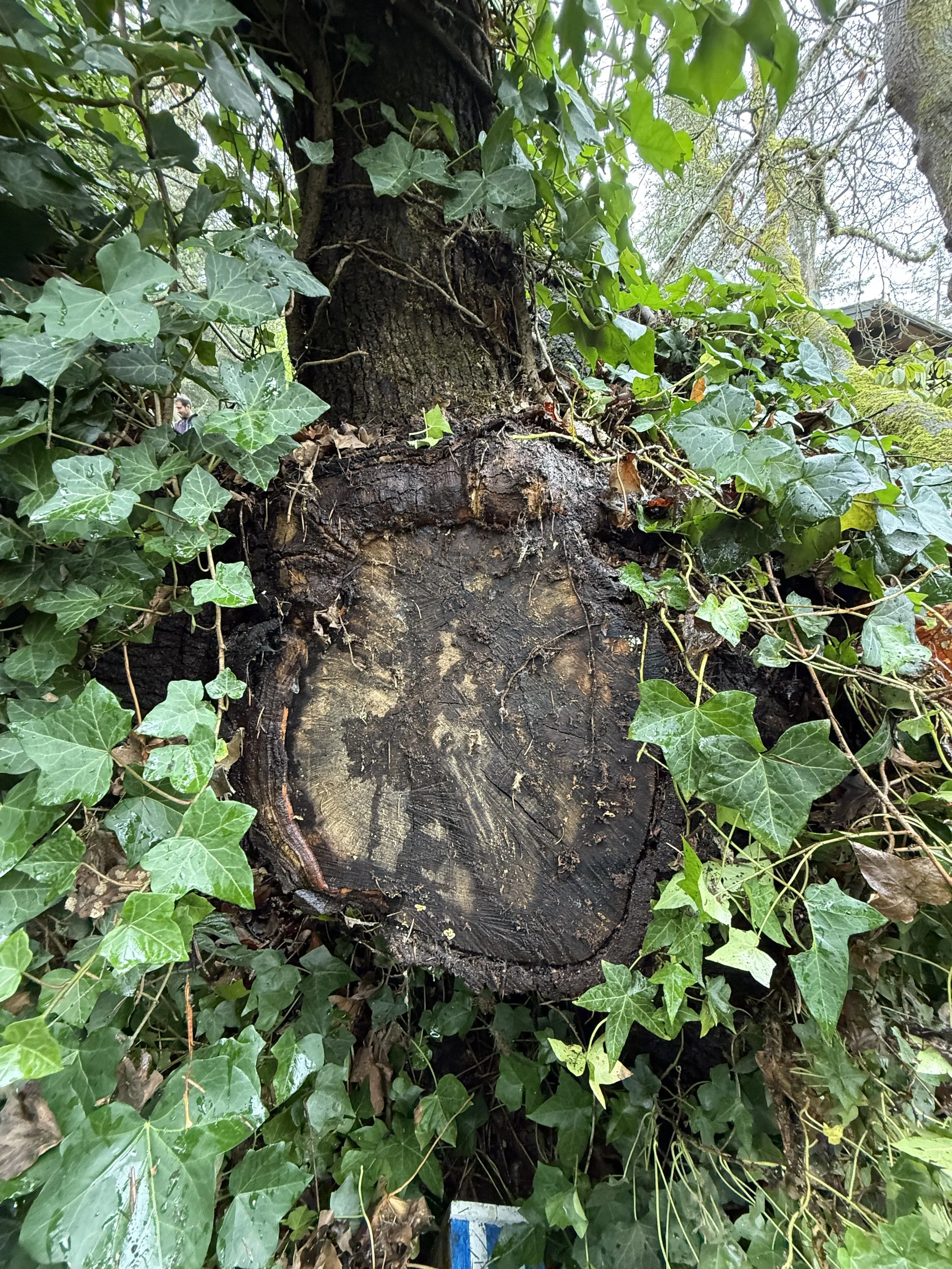
Compartmentalization of decay is the tree’s natural defense system against injury, fungi, and bacteria. When a tree is wounded—whether by pruning, storm damage, construction impact, or disease—it does not repair the damaged tissue. Instead, it walls off the affected area to prevent decay from spreading.
Think of it like bulkheads in a ship. If one compartment floods, the rest of the vessel stays afloat.
The CODIT Model: The Four Walls
Trees use four biological “walls” to contain decay. Each wall serves a different purpose and varies in strength.
Wall 1: Vertical Resistance
Slows decay from moving up and down the tree
Uses plugged vascular tissue (xylem)
Weakest wall—decay often spreads vertically first
Wall 2: Radial Resistance
Limits decay moving inward toward the center
Uses dense latewood growth rings
Stronger than Wall 1, but still vulnerable
Wall 3: Tangential Resistance
Prevents decay from spreading side-to-side
Uses ray cells that run horizontally
Often effective in containing localized damage
Wall 4: The Barrier Zone
The strongest defense
Formed by new tissue after the injury
Separates old, potentially decayed wood from new healthy growth
Wall 4 is critical—it determines whether a tree can successfully survive long-term after injury.
Why Trees Don’t “Heal” Like Humans
A common misconception is that trees heal wounds the same way people do. In reality:
Trees seal, not heal
Decayed wood remains decayed forever
New growth forms around damage instead of replacing it
This is why large pruning wounds, improper cuts, or trunk damage can have lifelong consequences for a tree’s structure and safety.
How Pruning Affects Compartmentalization
Proper pruning works with CODIT. Improper pruning works against it.
Good Pruning Practices
Make cuts just outside the branch collar
Use clean, sharp tools
Avoid excessive pruning in one season
Prune during appropriate times of year
Poor Pruning Practices
Flush cuts that remove the branch collar
Topping or lion-tailing
Leaving large stubs
Over-pruning mature trees
When the branch collar is preserved, the tree can form a strong barrier zone, drastically reducing the spread of decay.
Species Differences Matter
Not all trees compartmentalize equally.
Strong Compartmentalizers
Oaks
Maples
Douglas-fir
Madrone
Weak Compartmentalizers
Willows
Poplars
Cottonwoods
Alders
Fast-growing species often prioritize rapid growth over strong defensive walls, making proper pruning and monitoring especially important.
Decay vs. Structural Failure
A tree can look healthy on the outside while being compromised internally. Compartmentalization may successfully isolate decay—but that doesn’t always mean the tree is structurally sound.
Warning signs include:
Fungal fruiting bodies (conks or mushrooms)
Cavities or hollow trunks
Cracks or seams
Excessive lean or canopy imbalance
An arborist evaluates both decay location and compartment strength when determining risk.
Why Wound Paint Is Not Recommended
In the past, arborists used wound paints and sealants to “protect” cuts. Research has shown that these products:
Trap moisture
Encourage fungal growth
Interfere with natural compartmentalization
Healthy trees are far better at sealing wounds on their own when cuts are made correctly.
How Soil and Roots Influence CODIT
Tree defense starts below ground. Compacted soil, poor drainage, and root damage reduce a tree’s ability to compartmentalize decay.
Best practices include:
Avoiding soil compaction near roots
Mulching instead of piling soil against trunks
Protecting roots during construction
Supporting beneficial soil biology
Healthy roots mean stronger walls.
What This Means for Tree Owners
Understanding compartmentalization helps answer common questions:
“Will my tree rot inside?”
Possibly—but decay may remain isolated for decades if properly compartmentalized.“Is this tree dangerous?”
Risk depends on decay location, tree species, and structural integrity.“Should I remove this tree?”
Not always. Many trees with internal decay remain safe with proper management.
Final Thoughts
Compartmentalization of decay is one of the most elegant survival strategies in nature. Trees don’t panic when injured—they adapt, isolate, and continue growing around damage.
Proper pruning, informed tree care, and professional assessment allow trees to do what they do best: defend themselves and thrive for generations.
If you’re concerned about decay, storm damage, or structural safety, consulting a certified arborist ensures decisions are based on tree biology—not guesswork.