
Trimming Trees Near Your Roof in Oregon: Codes & Requirements
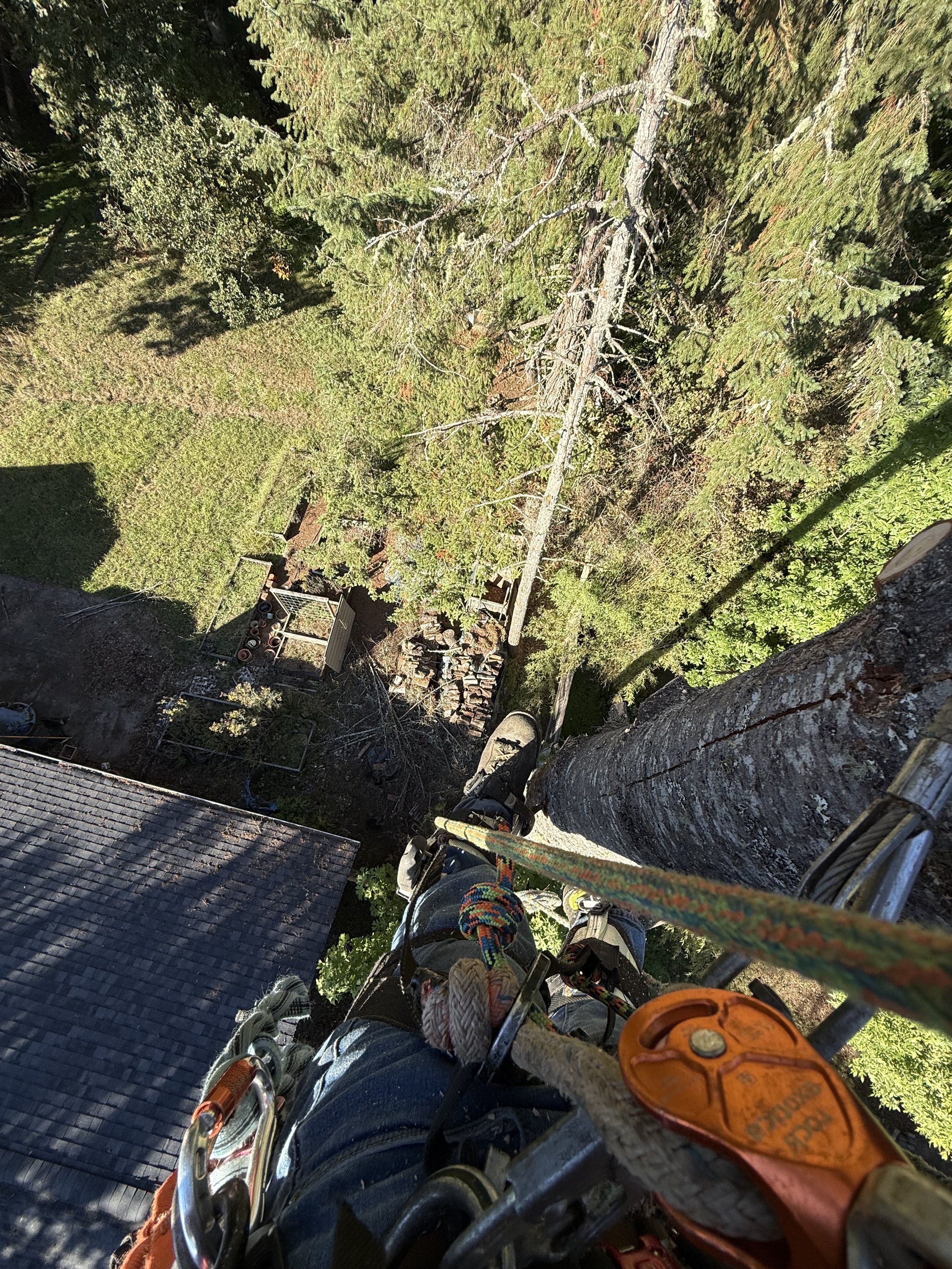
In Oregon, trimming trees away from your roof is essential for preventing moisture damage, moss buildup, pest access, and wildfire risk. While the Oregon Residential Specialty Code does not list a specific minimum roof clearance distance, property owners are responsible for maintaining structures free from conditions that create hazards or deterioration.
Under Oregon common law, homeowners may trim branches that extend across their property line, but only to the vertical boundary and without causing harm to the overall health of the tree. Damaging or killing a neighbor’s tree can result in liability.
Local ordinances may also apply. For example, the City of Portland requires permits for pruning designated Heritage Trees and certain regulated trees. Work performed without proper permits can result in fines. Similarly, the City of Ashland enforces wildfire hazard reduction standards that require vegetation management to reduce fuel loading near structures.
In wildfire-prone areas of Oregon, defensible space guidelines commonly recommend maintaining at least 10 feet of horizontal clearance between tree branches and rooflines to reduce fire risk and prevent “ladder fuels.”
Proper pruning should follow ANSI A300 standards to protect tree health while achieving clearance. Hiring a certified arborist ensures compliance with local codes and preserves long-term structural integrity of the tree and home.
