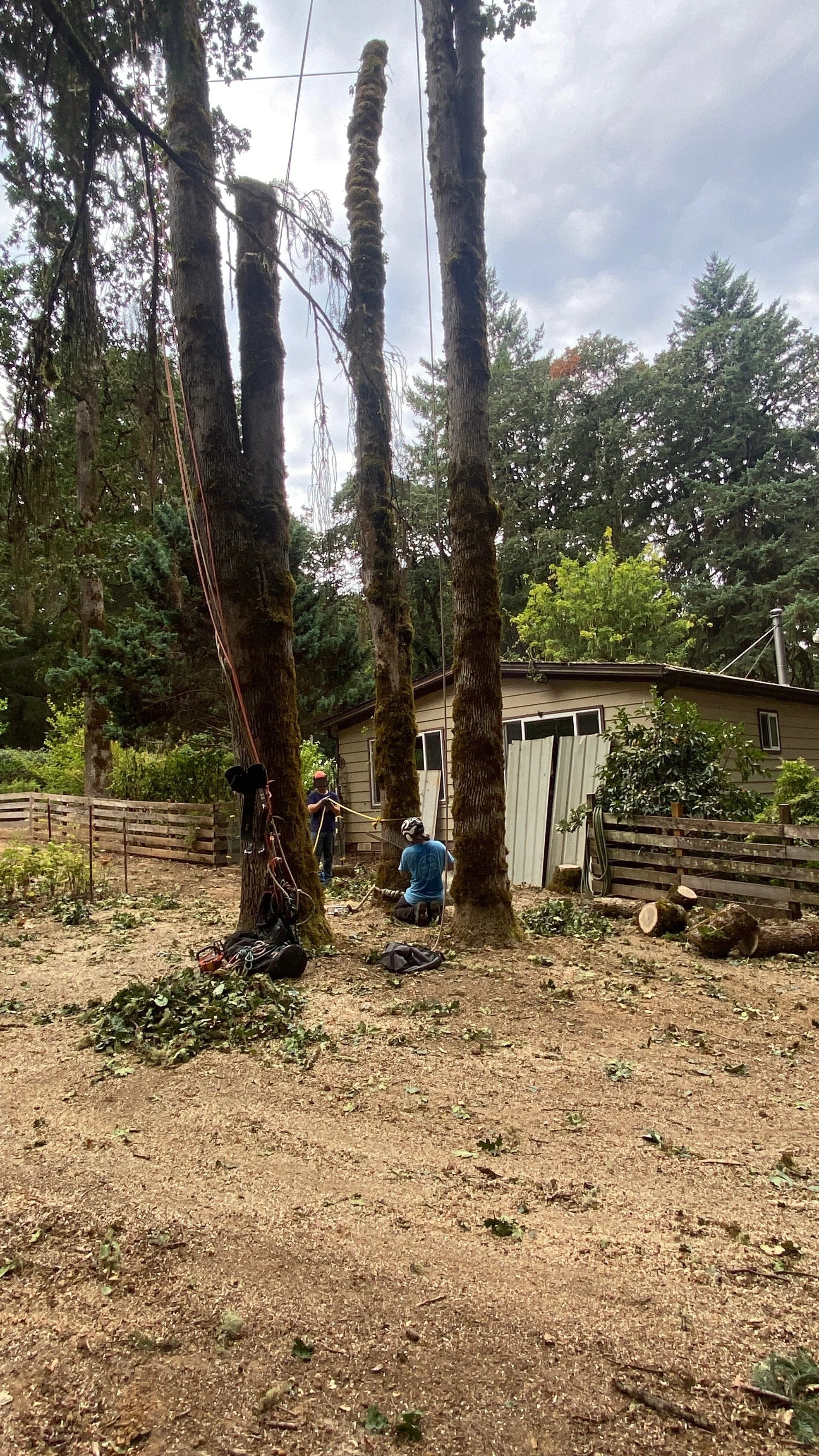
Trimming Neighbor’s Trees in Eugene & Springfield, Oregon: Rules, Rights, and Real-World Circumstances
In Eugene and Springfield, trees are more than landscaping—they’re part of the region’s identity, environmental strategy, and urban planning. Because of this, tree trimming near property lines is regulated more carefully here than in many parts of the country. If you’re dealing with overhanging branches, encroaching roots, or safety concerns from a neighbor’s tree, it’s important to understand local ordinances, not just general property law.
This guide explains how neighbor tree trimming works specifically in the Eugene–Springfield area, and when professional guidance is essential.
Tree Ownership Still Starts at the Trunk
In both Eugene and Springfield, ownership is generally determined by where the trunk meets the ground:
Entirely on one property → that owner controls the tree
Straddling a property line → typically considered a shared tree
Branches or roots crossing property lines → do not change ownership
However, what you are allowed to trim is not unlimited, especially if the tree is protected or publicly managed.
Your Right to Trim Overhanging Branches (With Limits)
Oregon common law allows property owners to trim branches or roots that extend onto their property up to the property line—but Eugene and Springfield ordinances add important constraints:
You may not harm or destabilize the tree
You cannot prune in a way that could kill or structurally weaken it
You cannot enter your neighbor’s property without permission
You may still be liable for damages if improper pruning leads to decline or failure
In other words: having the right to cut does not give the right to damage.
Street Trees Are a Separate Category (Very Important)
One of the most common mistakes homeowners make in Eugene and Springfield is assuming street-side trees belong to the adjacent property owner.
In reality:
Most street trees are regulated by the city
Permits are often required for pruning
Only approved pruning methods are allowed
Unauthorized trimming can result in fines or enforcement action
If a neighbor’s tree is located between the sidewalk and the street—or within the public right-of-way—you should never prune it yourself without confirming city approval.
Common Neighbor-Tree Situations in Eugene & Springfield
1. Branches Over Roofs or Structures
Overhanging limbs can damage roofs, gutters, and siding—especially in wet Oregon winters. Clearance pruning is often justified, but must be:
Limited to the property line
Done using proper arboricultural cuts
Avoidance of over-thinning or topping
Improper pruning can expose homeowners to liability if the tree later fails.
2. Safety Concerns and Tree Risk
If a neighbor’s tree has:
Dead or hanging limbs
Cracks or decay
Leaning after storms
Failure potential over homes, driveways, or walkways
The best practice is documentation and communication, followed by a professional risk assessment. Cities take safety seriously, but they also expect trees to be evaluated—not guessed at.
3. Light, Views, and Solar Access
Blocked sunlight is a common concern in Eugene’s dense canopy neighborhoods. However:
Loss of light alone rarely justifies aggressive pruning
Heavy reduction can violate city standards
Selective thinning may be possible if it doesn’t compromise tree health
This is one of the most frequent sources of neighbor conflict—and one where professional mediation helps.
4. Roots Affecting Sidewalks or Foundations
Root issues are particularly sensitive:
Cutting roots can destabilize trees
Sidewalk damage may involve city responsibility
Root pruning without assessment can create serious hazards
In Eugene and Springfield, root conflicts often require coordination between homeowners, arborists, and sometimes the city.
5. Storm Damage and Emergency Situations
After ice storms or wind events:
Immediate hazards may allow emergency pruning
Documentation is still critical
Permanent pruning or removal may still require permits
Emergency does not automatically override local tree protection rules.
Protected Trees and Permit Requirements
Both cities have ordinances that may protect:
Large or mature trees
Trees in environmentally sensitive areas
Trees near wetlands, waterways, or steep slopes
Trees associated with development or land-use review
Pruning that significantly alters a protected tree can require city approval, even if the tree is privately owned.
Why Hiring a Certified Arborist Matters Here
Because Eugene and Springfield place such a high value on tree preservation, how work is done matters just as much as why.
A certified arborist can:
Determine whether a tree is protected or regulated
Identify safe, compliant pruning options
Document risk appropriately
Help avoid fines, disputes, and long-term damage
Provide defensible recommendations if conflicts escalate
In many neighbor disputes, a professional arborist’s assessment is what prevents the situation from turning into a legal issue.
Best Practices for Avoiding Neighbor Disputes
Talk with your neighbor before cutting
Document concerns with photos and notes
Avoid DIY pruning on shared or regulated trees
Confirm whether permits are required
Use a qualified professional familiar with local ordinances
Final Thoughts
In Eugene and Springfield, trimming a neighbor’s tree isn’t just a matter of where the branches fall—it’s about tree health, public safety, and city regulations. Acting without understanding local rules can damage trees, strain relationships, and lead to fines or liability.
When in doubt, slow down, communicate, and get professional guidance. In a region that values its trees, careful, informed decisions protect everyone involved.