Safe Tree Removal: Protecting Structures and High-Traffic Areas from Hazardous Dead Trees
Removing dead trees near valuable structures or high-traffic areas is a critical component of responsible property management. Dead trees lose structural integrity over time, making them unpredictable and hazardous. Brittle limbs and compromised stems can fail without warning, especially during wind, rain, or ice events—posing serious risks to homes, vehicles, fences, and people.
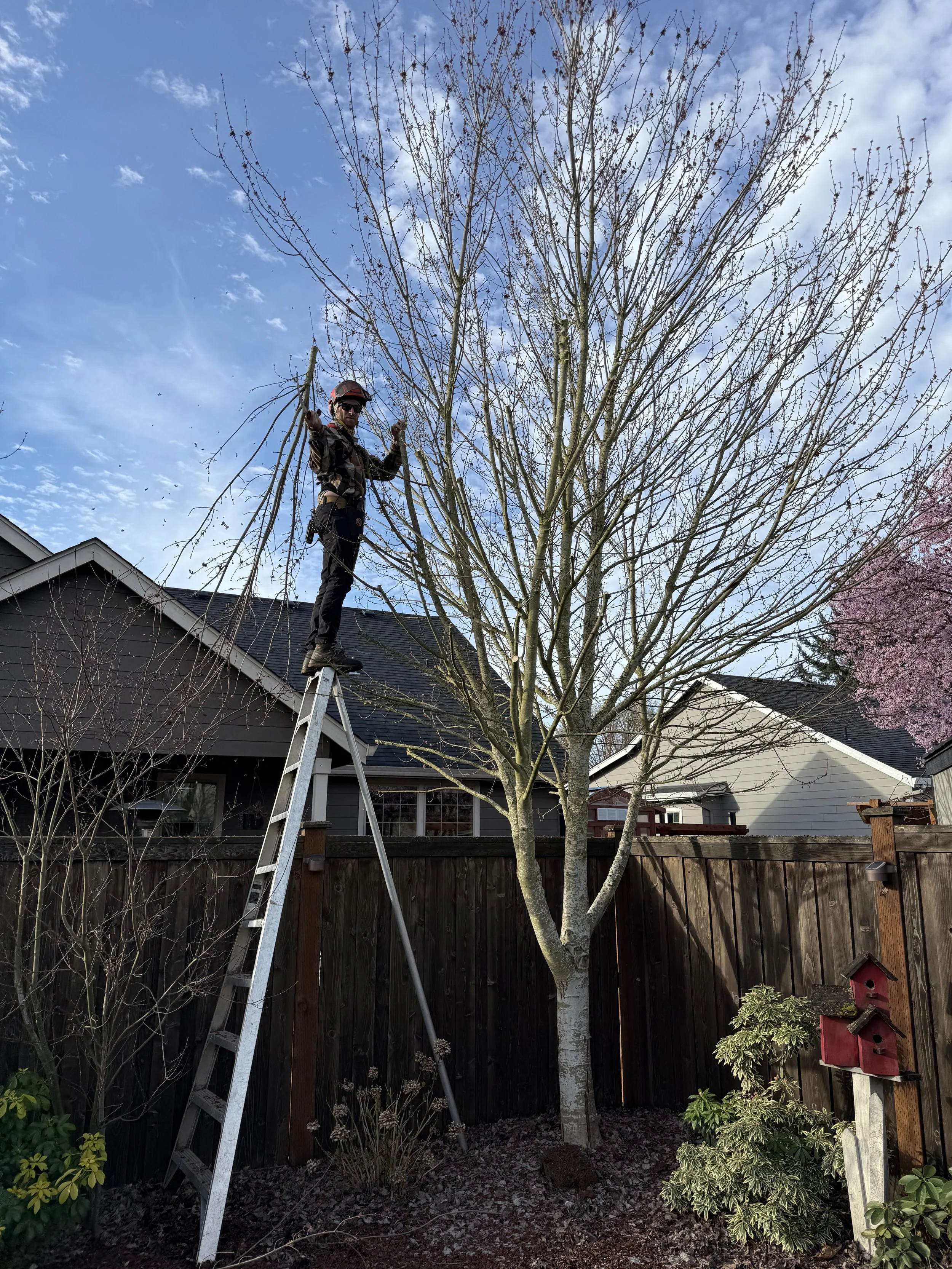
A professional arborist evaluates factors such as decay progression, lean, root stability, and target zones (what the tree could strike if it fails). In urban and residential environments, the margin for error is small. Rigging techniques, controlled dismantling, and advanced equipment like aerial lifts or cranes are often necessary to safely remove the tree in sections without causing damage.
Beyond safety, timely removal also protects surrounding trees and landscapes. Dead trees can harbor pests and pathogens that may spread to healthy vegetation. Additionally, removing hazardous trees can improve site usability, visibility, and overall property value.
Hiring a certified and insured arborist ensures the work is performed with precision and care. Experienced crews understand how to mitigate risk, protect structures, and execute removals efficiently. When it comes to dead trees in sensitive areas, proactive action isn’t just recommended—it’s essential for safety, liability reduction, and long-term property health.
