
Carpenter Ants
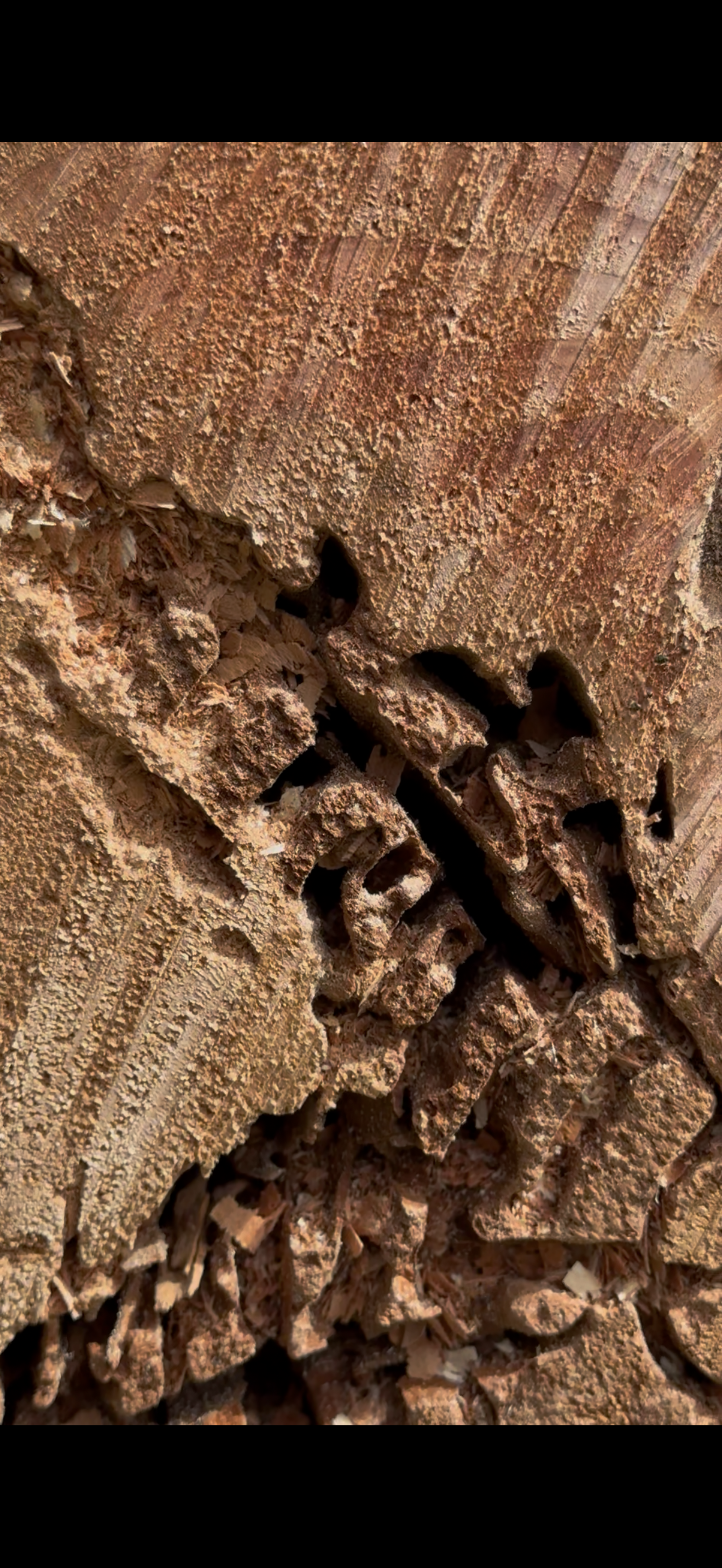
Carpenter ants commonly inhabit dead or decaying trees, where softened wood makes it easy for them to excavate galleries. Unlike termites, they don’t consume wood for nutrition—they hollow it out to build nesting chambers, accelerating structural breakdown in already compromised trees.
These infestations often go unnoticed until sawdust-like frass appears or ants begin traveling between the tree and nearby structures. Dead trees located near homes or buildings can act as a staging ground, increasing the risk of carpenter ants migrating indoors and causing damage to framing or siding.
From an arborist perspective, the presence of carpenter ants is a strong indicator of internal decay. Their activity further weakens the tree’s structural integrity, increasing the likelihood of limb or whole-tree failure—especially during storms or high winds.
Removing dead or heavily infested trees is often the safest and most proactive solution. A certified arborist can assess the level of decay, identify active colonies, and safely dismantle the tree to reduce both pest pressure and hazard risk.
