
Rainfall, Wind, and the Hidden Danger of Wind Throw
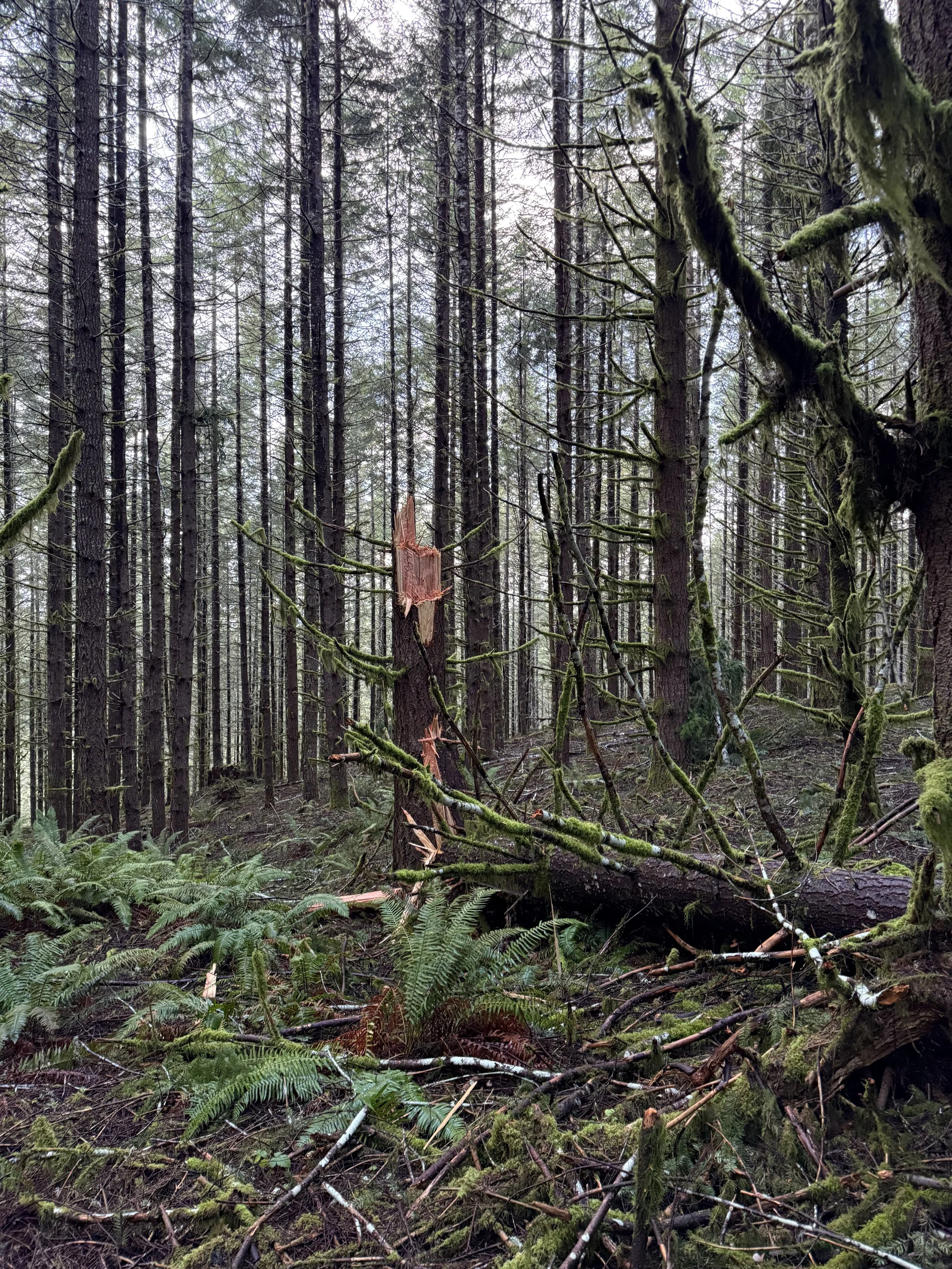
Heavy rainfall combined with strong winds creates one of the most dangerous conditions for trees: wind throw. Wind throw occurs when trees lose root stability and either lean dramatically or fail completely, often uprooting without warning. In the Pacific Northwest, saturated soils and seasonal storms make this a growing concern for homeowners and property managers alike.
Excessive rainfall weakens soil structure. When soil becomes oversaturated, it loses its ability to hold roots firmly in place. At the same time, high winds place increased force on the canopy. This combination is especially hazardous for trees with shallow root systems, compacted soils, root decay, or previous construction damage. Even healthy-looking trees can suddenly fail under these conditions.
Warning signs of wind throw include fresh soil lifting at the base, leaning trunks, cracking sounds during wind events, and sudden changes in canopy balance. Unfortunately, once these symptoms appear, failure may be imminent. This is why proactive tree trimming and tree removal are critical preventative measures before storms arrive.
Strategic tree trimming reduces wind resistance by thinning dense canopies and correcting weight distribution. In cases where structural stability is already compromised, professional tree removal may be the safest option to protect homes, vehicles, and people.
A certified arborist is trained to assess tree biomechanics, root health, and soil conditions to determine real risk—not just cosmetic appearance. Unlike untrained operators, certified arborists follow industry standards and local regulations, ensuring trees are managed safely and responsibly.
Ignoring wind throw risks can result in costly property damage, emergency removals, and irreversible loss of valuable trees. Addressing hazards early saves money, preserves the landscape, and most importantly, keeps people safe.
If your property has mature trees, recent soil saturation, or exposure to strong winds, scheduling a professional inspection now can prevent disaster later.
