Old Growth Tree
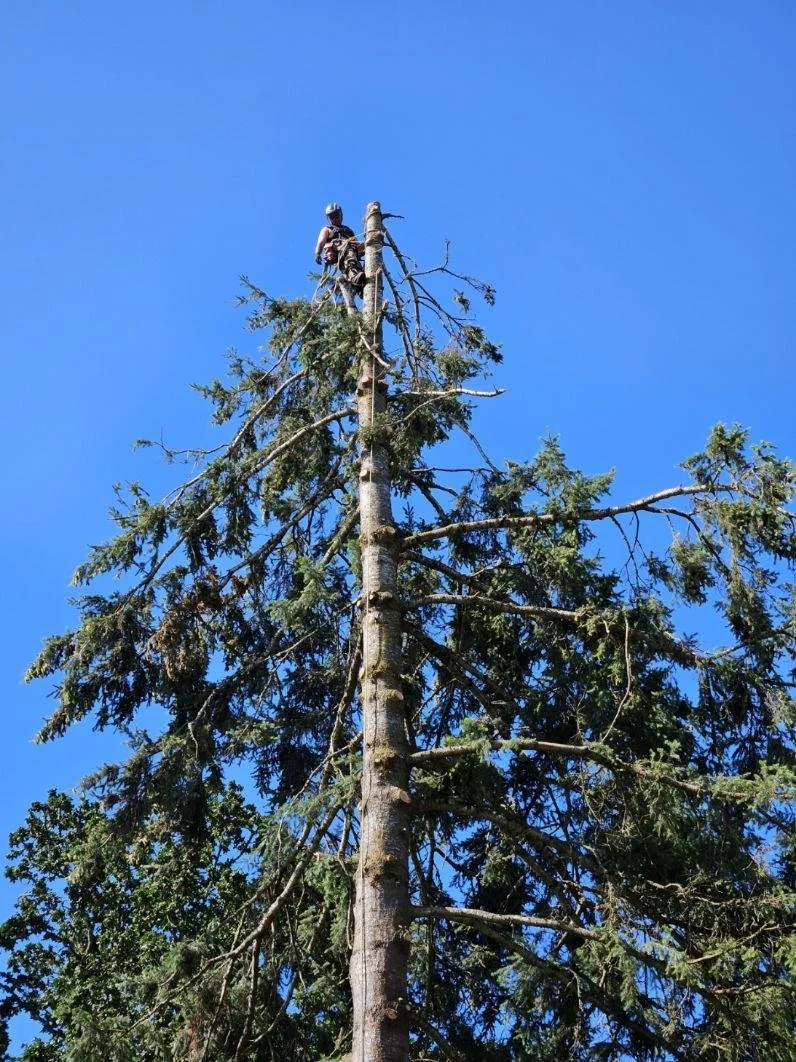
Old-growth trees are some of the most valuable and remarkable parts of our forests. In the Pacific Northwest, old-growth forests are known for massive Douglas-fir, western red cedar, hemlock, and Sitka spruce that have stood for hundreds—sometimes over a thousand—years. These trees provide far more than beauty; they create complex ecosystems that support birds, wildlife, fungi, insects, and healthy soil systems.
Unlike younger forests, old-growth stands contain multiple canopy layers, large deadwood, nurse logs, and rich biodiversity. These features improve water retention, reduce erosion, stabilize slopes, and help regulate local climate conditions. Large mature trees also store significant amounts of carbon, making them extremely important in long-term climate resilience.
In urban and residential settings, mature legacy trees can function like miniature old-growth anchors, offering shade, habitat, stormwater management, and property value benefits. Protecting large established trees whenever possible often provides greater long-term environmental value than removing and replanting.
As arborists, understanding the value of age in trees helps us make better decisions. Preservation, structural support, and thoughtful pruning are often better choices than unnecessary removal. Old growth reminds us that trees are long-term investments in both ecology and community.
