
Black Cottonwood Trees in the Willamette Valley
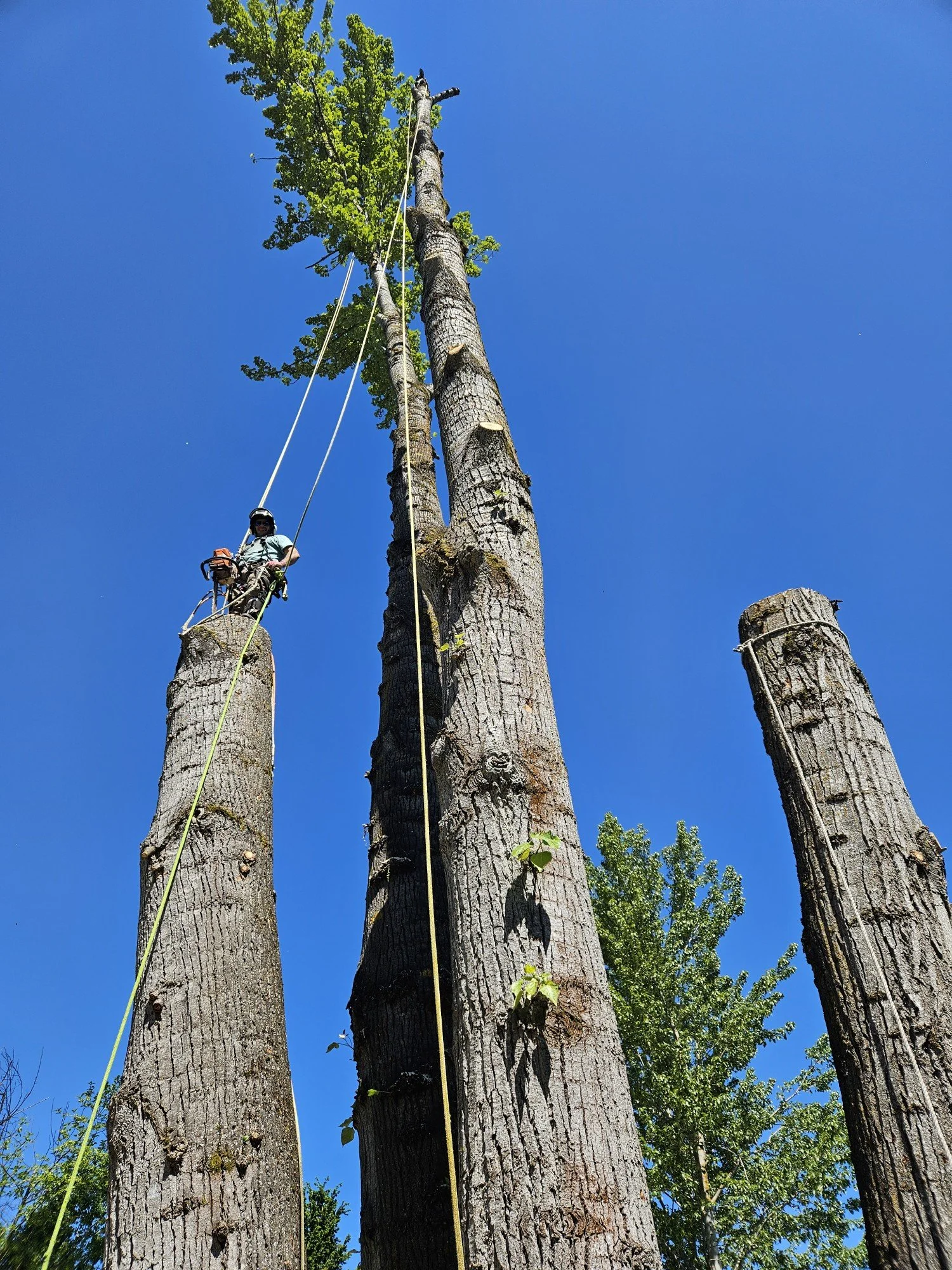
Black cottonwood (Populus trichocarpa) is one of the largest native hardwood trees in the Pacific Northwest and a familiar sight throughout the Willamette Valley. Commonly found near rivers, wetlands, and floodplains, these fast-growing trees thrive in moist soils and play an important role in local ecosystems.
Known for their broad crowns, heart-shaped leaves, and thick furrowed bark as they mature, black cottonwoods can easily reach heights of 80 to 150 feet. In spring, their seeds are released with cotton-like fluff, giving the tree its common name. They provide valuable habitat for birds, pollinators, and wildlife while helping stabilize streambanks and improve soil health.
However, black cottonwoods can become hazardous as they age. Their rapid growth often leads to brittle wood, weak branch attachments, and a higher risk of limb failure—especially during winter storms or heavy wind events common in the Willamette Valley. They are also prone to internal decay, root issues, and large deadwood formation.
Regular inspections, structural pruning, and hazard assessments by an ISA Certified Arborist are essential for managing mature black cottonwoods near homes, roads, and public spaces. Proper care helps preserve their beauty while reducing risk.
