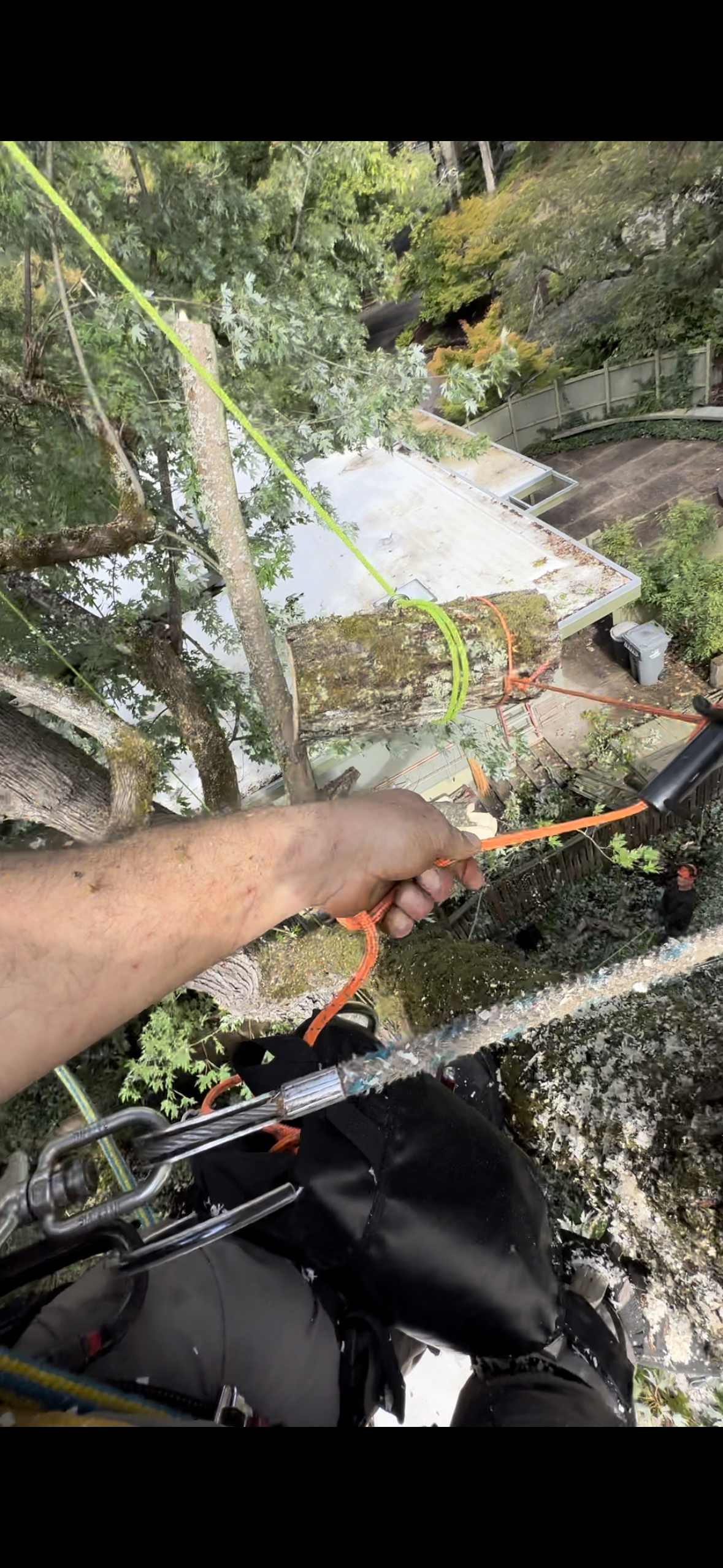
Cabling & Bracing: How We Stabilize Weak Trees
Introduction
Not all compromised trees need removal. Cabling and bracing can provide structural support that allows a tree to remain safe and healthy for many years. These techniques reinforce weak limbs or trunks while preserving the tree’s natural beauty.
What Is Cabling?
Cabling uses high-strength steel cables installed in the upper canopy to limit movement between limbs. This prevents:
Splitting
Breakage
Storm failure
Cabling is ideal for co-dominant stems or large limbs extending over structures.
What Is Bracing?
Bracing uses threaded rods installed through the trunk or major limb. This technique:
Strengthens cracked unions
Prevents further separation
Supports weak forks
Cabling + bracing are often used together.
When Trees Need Cabling or Bracing
V-shaped unions
Heavy horizontal limbs
Split trunks
Trees in high-wind areas
Valuable, mature trees worth preserving
Benefits of Support Systems
1. Extends Tree Lifespan
Support prevents catastrophic failure.
2. Reduces Liability
Strengthening weak areas protects homes and people.
3. Preserves High-Value Trees
Older trees provide shade, history, and habitat.
4. Minimal Impact Procedure
Cabling and bracing are far less invasive than removal.