Why the Risk, and the Cost Increases When a Tree Is Dying
When a tree begins to decline, the risks associated with it don’t remain static — they increase over time. What may start as minor dieback, sparse foliage, or small dead branches can quickly escalate into structural instability, property damage, and significantly higher removal costs.
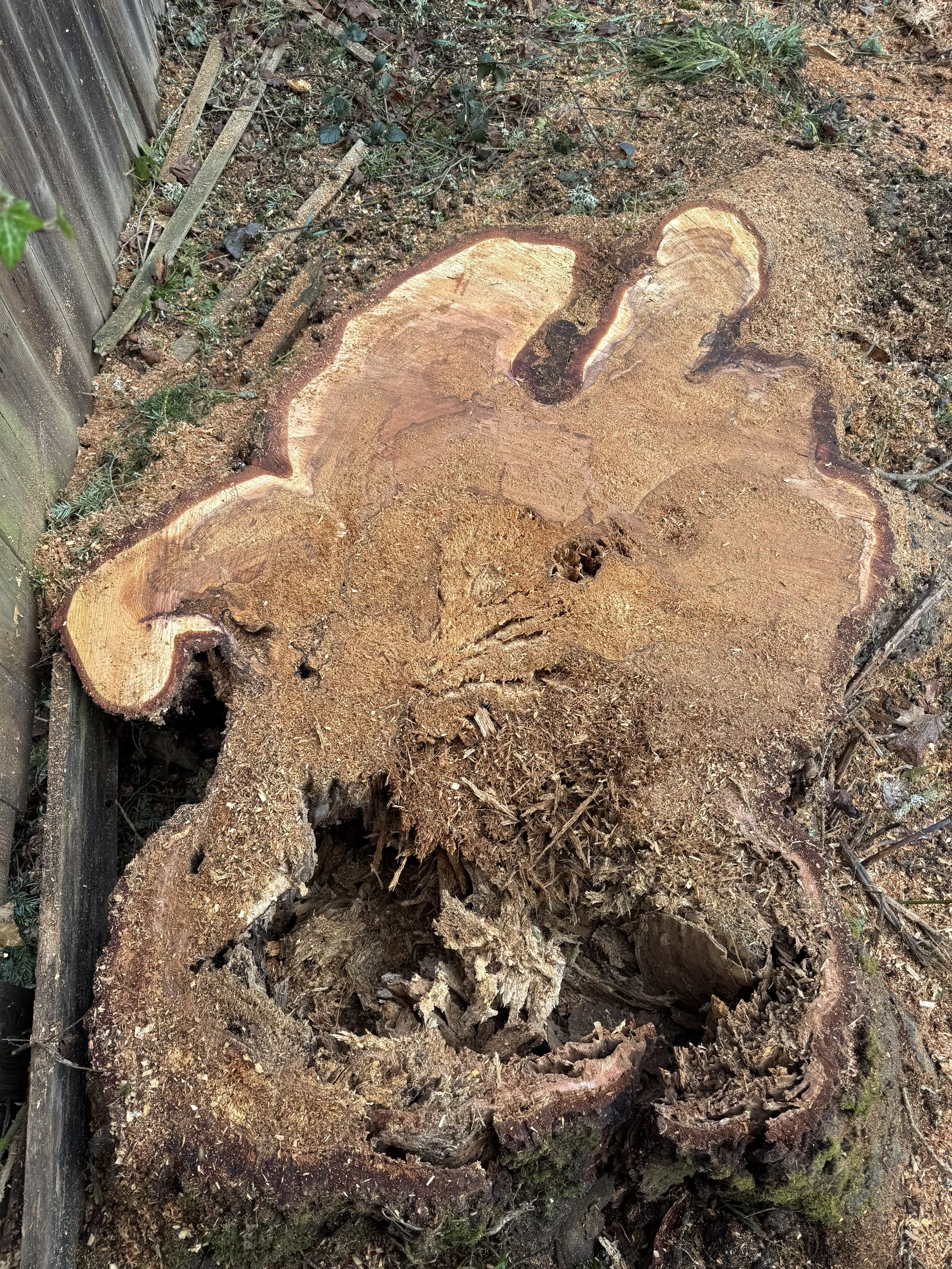
As trees lose vitality, they also lose strength. Decay fungi, root rot, and internal structural defects often progress unnoticed beneath the bark. A declining root system reduces anchorage, increasing the likelihood of failure during wind or saturated soil conditions. Dead and dying limbs become brittle and unpredictable, posing hazards to roofs, vehicles, fences, and pedestrians. In many cases, homeowners don’t recognize the severity of the issue until a storm exposes the weakness.
From a cost standpoint, early intervention is almost always less expensive than delayed action. A tree in early decline may benefit from corrective pruning, soil remediation, pest management, or structural support systems. When addressed promptly by a certified arborist, these treatments can extend the tree’s life and reduce hazard potential.
However, once a tree progresses into advanced decline or full mortality, options narrow. Dead trees are significantly more dangerous to climb and dismantle. Wood becomes brittle, increasing the risk to workers and requiring more specialized rigging, equipment, and time. In urban settings, confined spaces, proximity to structures, and limited access further drive up costs. Insurance claims, emergency removals after storms, and secondary property repairs can multiply expenses far beyond the original preventative investment.
There is also the added factor of liability. Property owners have a responsibility to mitigate known hazards. Ignoring a visibly declining tree can increase legal exposure if damage or injury occurs.
Proactive assessment and management reduce both financial and safety risks. Having trees inspected regularly allows issues to be identified early — when solutions are more affordable and outcomes are more predictable. In tree care, delay almost always increases both danger and cost.
