Why Dead Trees Near Homes Should Never Be Ignored
Dead trees near homes are one of the most overlooked yet serious property hazards. While they may appear stable at a glance, structurally they are often compromised and unpredictable. Ignoring them can lead to costly damage—or worse, personal injury.
Once a tree dies, it begins to dry out and decay. The wood loses flexibility and strength, making it brittle and prone to sudden failure. Limbs can snap without warning, even on calm days. During storms or high winds, the entire tree can fail, especially if internal decay has weakened the trunk or root system.
Dead trees also become prime habitat for pests like carpenter ants and beetles, which accelerate decomposition. Fungal decay further breaks down structural integrity from the inside out, meaning a tree that looks intact externally may be dangerously hollow.
Proximity to your home increases the risk significantly. Roofs, vehicles, fences, and powerlines are all within potential impact zones. Insurance companies may even deny claims if a known hazard—like a dead tree—was neglected.
Warning signs include missing bark, no leaf production during growing season, large dead limbs, fungal growth at the base, and visible cracks. If you notice any of these, a professional hazard assessment should be a priority.
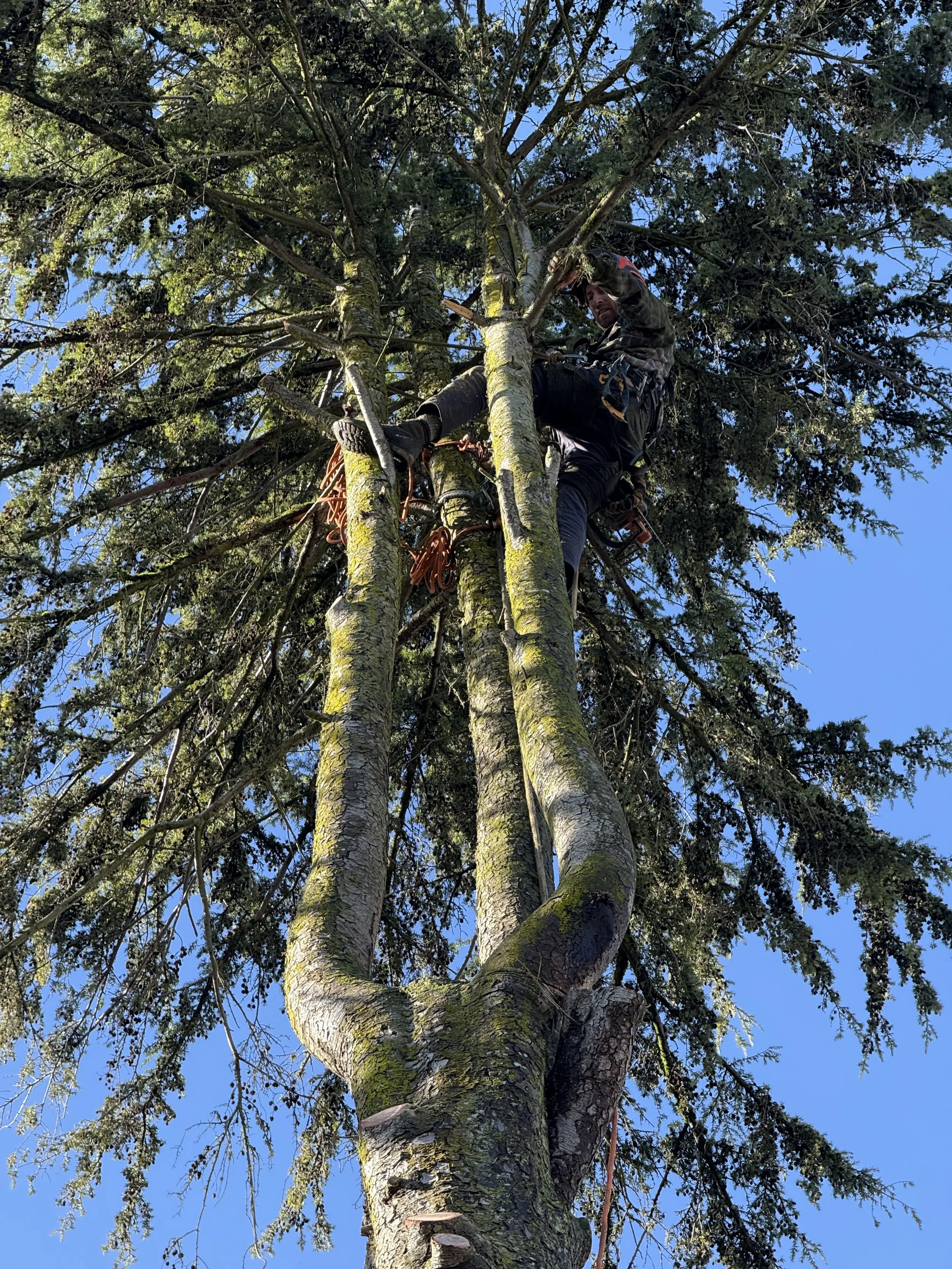
The safest course of action is timely tree removal. A certified arborist can evaluate the level of risk and safely dismantle the tree using proper rigging and equipment, minimizing impact to surrounding structures.
Dead trees don’t get better—they only become more dangerous over time. Acting early protects your property, your investment, and the people around it.
