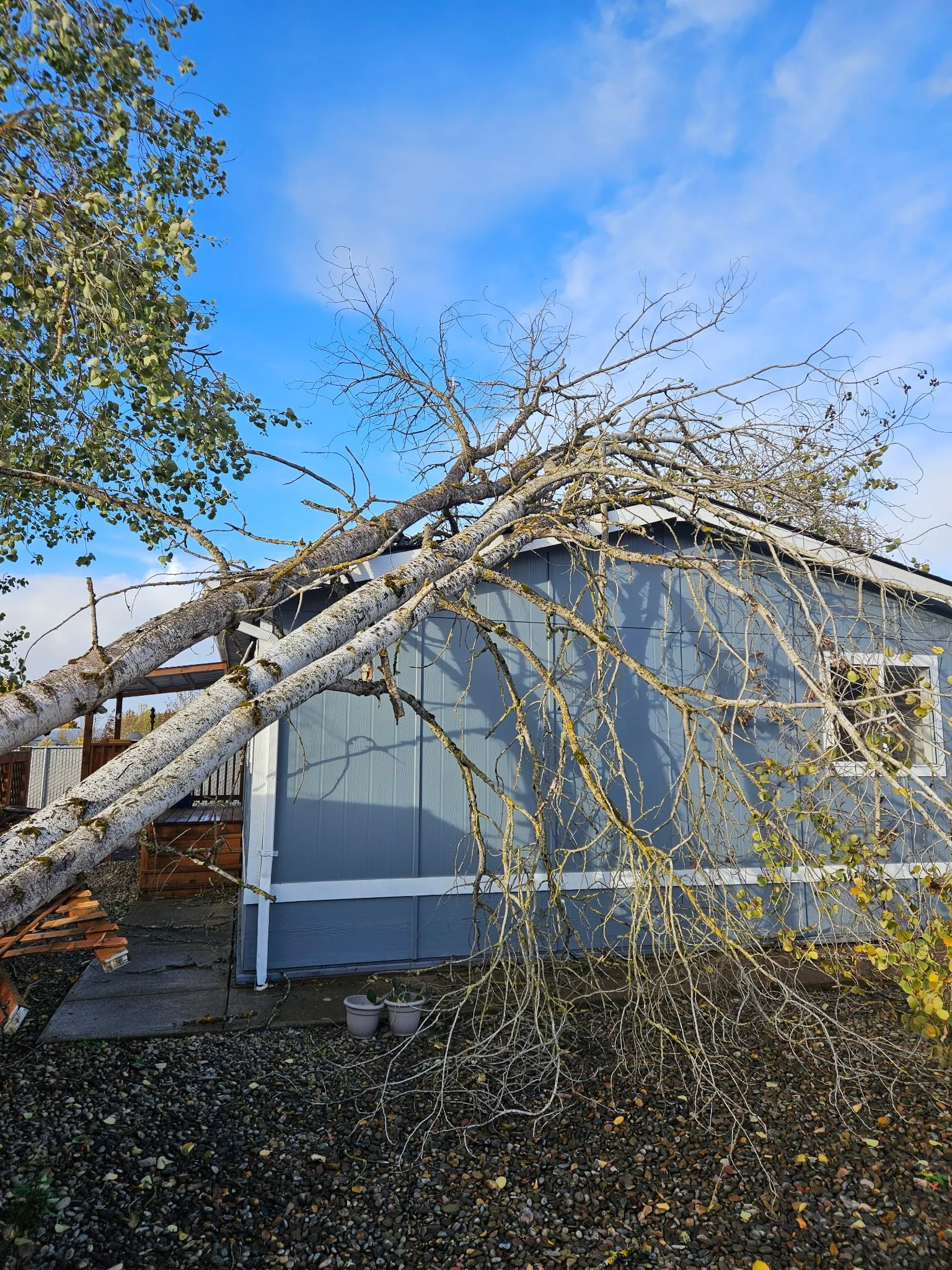
What to Do If a Tree Falls on Your Property
Introduction
A fallen tree can be stressful and dangerous. Whether caused by wind, decay, or storms, quick action is essential to protect your home and ensure your safety. This guide explains the steps every homeowner should take the moment a tree comes down—and what to avoid.
Step 1: Ensure Safety First
If a tree has fallen:
Do not approach the tree
Check for downed power lines
Evacuate the immediate area
Electric lines are extremely hazardous. Even if they appear inactive, assume they are live.
Step 2: Call Emergency Services if Needed
If a power line is down, call the utility company immediately. If the tree has trapped pets or blocked emergency exits, contact emergency responders.
Step 3: Document the Damage
Before cleanup begins, take photos for insurance purposes:
The fallen tree
Damage to structures
Damage to fences, vehicles, or landscaping
Ground heaving or root plate exposure
This documentation helps when filing claims.
Step 4: Call a Professional Tree Removal Company
Never attempt to cut or move a fallen tree yourself. Trees under tension can snap unexpectedly, causing severe injury. Licensed professionals:
Assess stability
Use proper rigging
Remove the tree safely
Prevent further damage
Wolfpack Tree Care offers 24/7 emergency service, which is crucial during storm season.
Step 5: Contact Your Insurance Company
If your homeowners’ insurance policies cover damage from fallen trees—especially when caused by storms. Insurance may cover:
Tree removal
Structural repair
Fence repair
Vehicle damage (if through auto insurance)
Your insurer will tell you what documentation they need.
Step 6: Inspect Remaining Trees
If one tree failed, others may be at risk. Ask for a property-wide hazard assessment to prevent future problems.