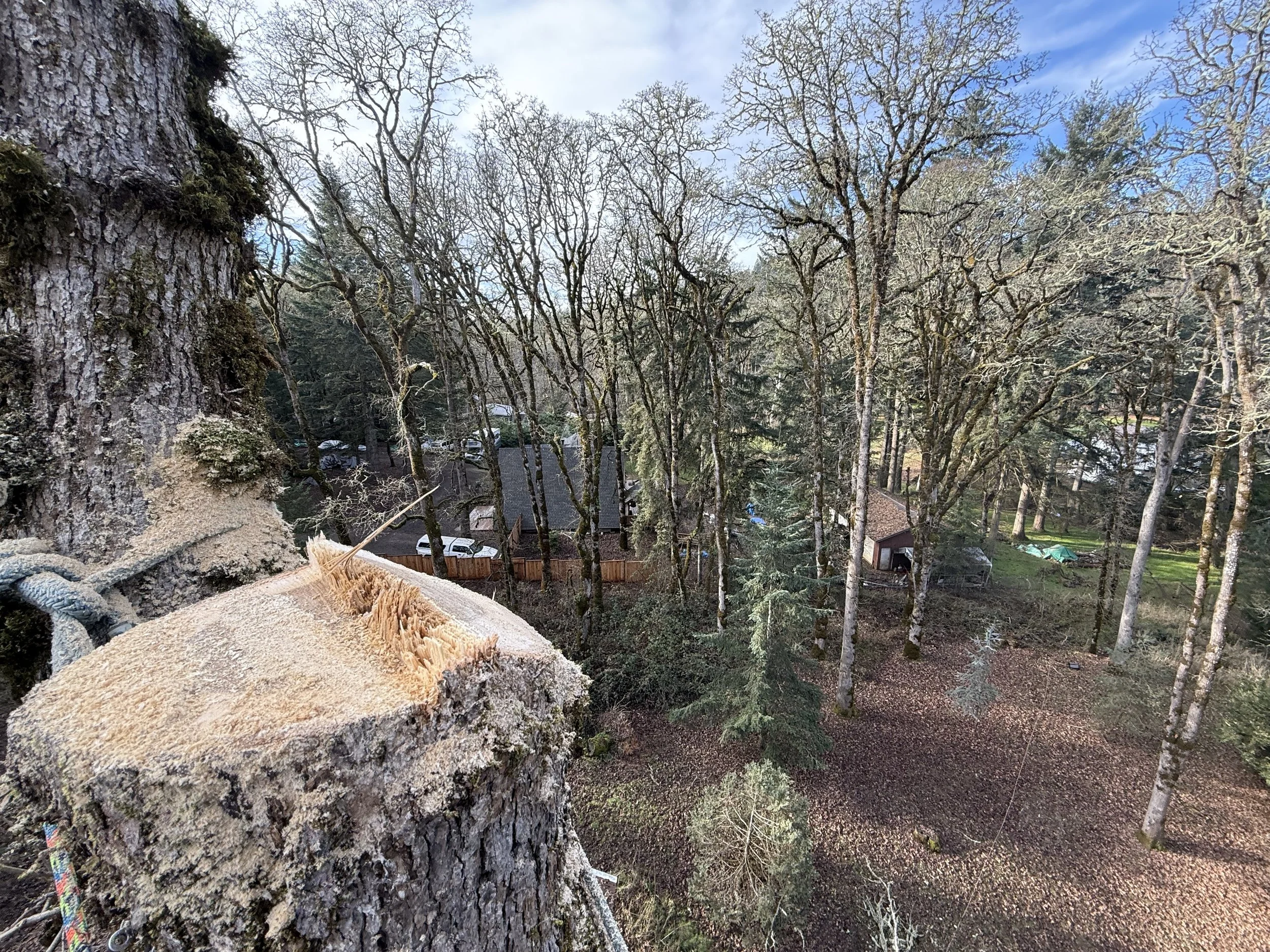
Wet Soil and Trees Falling: Why It Happens and How to Prevent It
Trees are remarkably resilient structures, but when soil becomes excessively wet, even large, healthy-looking trees can fail without warning. In regions with heavy rainfall, clay-rich soils, or poor drainage—like much of the Pacific Northwest—wet soil is one of the most common contributing factors to tree failure. Understanding why trees fall in saturated ground can help homeowners recognize risks early and take steps to prevent damage.
Why Wet Soil Causes Trees to Fall
1. Loss of Root Anchorage
Tree stability depends on friction and resistance between roots and surrounding soil. When soil becomes saturated, air pockets fill with water, dramatically reducing friction. The result is a loss of anchoring strength, especially in shallow-rooted species.
Instead of roots gripping firm soil, the entire root plate can rotate or slide, allowing the tree to uproot under its own weight or with minimal wind.
2. Shallow Root Systems in Wet Conditions
In chronically wet soils, trees adapt by developing shallow root systems because oxygen is limited deeper in the soil profile. While this allows the tree to survive day-to-day conditions, it makes the tree far more vulnerable during storms or prolonged rainfall.
Shallow roots = less leverage against tipping forces.
3. Increased Weight from Saturation
Wet soil is heavier than dry soil, and trees themselves absorb water during prolonged rain. This adds weight to both the crown and the root zone. Combined with wind, this extra mass increases stress at the root collar and can lead to sudden failure.
4. Root Decay Accelerates in Wet Soil
Excess moisture encourages fungal pathogens that cause root rot. Decayed roots lose both structural strength and nutrient uptake ability. A tree with compromised roots may look healthy above ground while being dangerously unstable below the surface.
Common warning sign: mushrooms or fungal growth near the base of the tree.
5. Wind + Wet Soil = Perfect Storm
Wind alone doesn’t usually topple trees with solid root systems. However, when soil is saturated, even moderate winds can cause trees to lean, shift, or uproot entirely. Many tree failures occur after the storm has passed, when soils are still waterlogged but winds return intermittently.
Trees Most at Risk in Wet Soil
Tall, mature trees with large canopies
Shallow-rooted species (e.g., spruce, fir, maple in wet soils)
Trees growing in compacted or clay-heavy soils
Trees on slopes or near drainage paths
Trees with visible lean or previous root damage
Warning Signs of Imminent Failure
Watch for these red flags, especially after heavy rain:
Soil heaving or cracking near the base
Sudden leaning or increased lean
Exposed or lifting roots
Canopy dieback or thinning leaves
Mushrooms or soft, spongy soil at the trunk base
If you notice these signs, the tree may already be unstable.
How to Reduce the Risk of Trees Falling
Improve Drainage
Redirect surface water away from tree root zones using grading, French drains, or swales. Avoid piling soil or mulch against the trunk, which traps moisture.
Strategic Pruning
Reducing canopy weight lowers wind resistance. Proper structural pruning—never topping—can significantly reduce leverage forces acting on the roots.
Mulch Correctly
A 2–4 inch layer of mulch helps regulate moisture, but keep mulch several inches away from the trunk to prevent rot.
Avoid Root Disturbance
Construction, trenching, and vehicle traffic compact soil and damage roots, worsening instability in wet conditions.
Professional Tree Assessment
An experienced arborist can evaluate root health, soil conditions, lean, and canopy load. In some cases, cabling, bracing, or selective removal may be the safest option.
Why Tree Failures Are Increasing
Climate shifts toward more intense rainfall events mean saturated soils are becoming more common. Trees that have stood for decades can suddenly fail when soil conditions change faster than their root systems can adapt.
Final Thoughts
Wet soil doesn’t just weaken trees—it changes the physics holding them upright. Understanding how water affects soil structure and root stability is essential for protecting homes, people, and landscapes. Proactive care, proper drainage, and timely professional evaluation can make the difference between a stable tree and a dangerous failure.
If you’re concerned about trees on your property after heavy rain, it’s best to act early—before gravity does it for you.