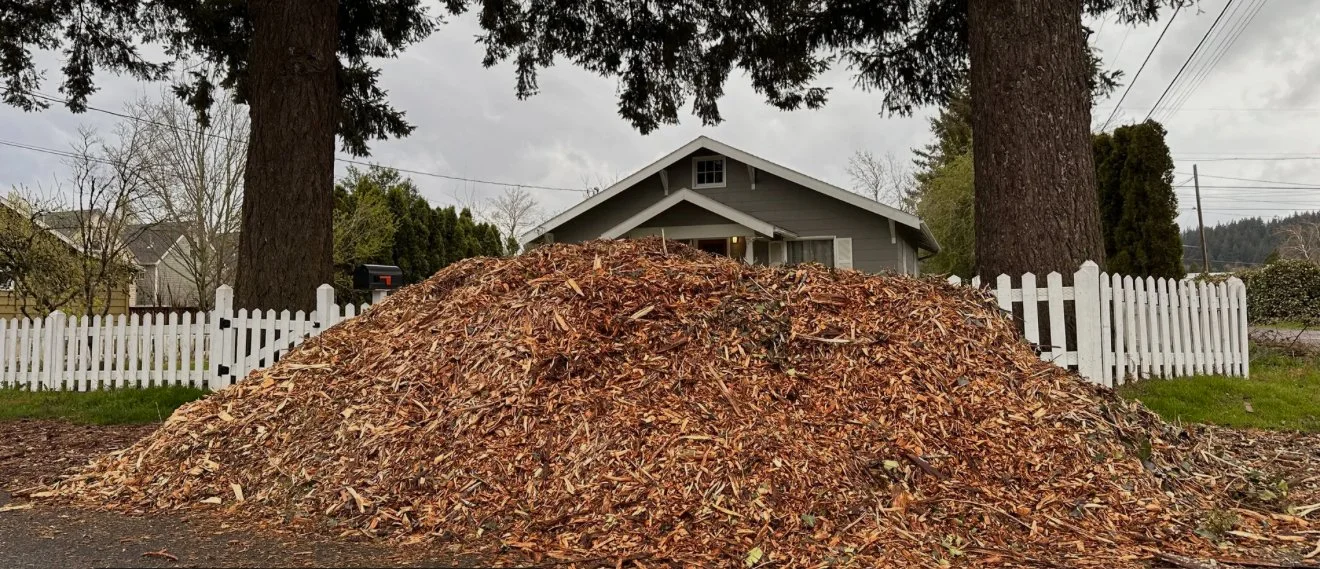
The Often-Overlooked Value of Wood Chips
Wood chips are one of the most valuable byproducts of tree work, yet they’re frequently misunderstood or discarded as waste. In reality, properly used wood chips provide long-term benefits for soil health, trees, gardens, and landscapes. Whether you’re a homeowner, gardener, or property manager, understanding the value of wood chips can save money, improve plant health, and support more sustainable land management.
Soil Health Starts at the Surface
One of the greatest benefits of wood chips is their impact on soil. When spread over bare ground, wood chips act as a protective layer that reduces erosion, moderates soil temperature, and retains moisture. This is especially important in regions with seasonal drought or heavy rainfall. By slowing evaporation and reducing soil compaction from foot traffic or rain, wood chips help create stable conditions for roots and beneficial soil organisms.
Over time, wood chips break down and feed the soil food web. Fungi, bacteria, insects, and earthworms gradually convert this organic material into humus, improving soil structure and increasing nutrient availability. This process supports healthier root systems and reduces the need for synthetic fertilizers.
Supporting Tree Health
For trees, wood chips are one of the best mulching materials available. A 2–4 inch layer of wood chips spread under the canopy—kept several inches away from the trunk—helps protect surface roots, reduce competition from turf grass, and maintain consistent soil moisture. Unlike decorative bark or gravel, wood chips mirror the natural forest floor, where trees evolved to thrive.
Wood chip mulch also encourages mycorrhizal fungi, which form symbiotic relationships with tree roots. These fungi extend the effective root system, improving water and nutrient uptake and increasing a tree’s resilience to stress, pests, and disease.
Weed Suppression and Reduced Maintenance
Wood chips are highly effective at suppressing weeds. By blocking sunlight and creating a physical barrier, they prevent many weed seeds from germinating. This means less time spent weeding, less reliance on herbicides, and a cleaner, more manageable landscape.
For property managers and homeowners alike, this translates to reduced maintenance costs and labor over time. Once established, wood-chipped areas typically require only occasional replenishment rather than constant upkeep.
Sustainability and Local Benefits
Using wood chips generated from local tree work is a sustainable practice that keeps organic material out of landfills. Instead of treating tree debris as waste, chipping and reusing it closes the loop—returning nutrients to the soil where they belong. This reduces disposal costs, fuel use, and environmental impact.
A Simple, Powerful Resource
Wood chips are not just leftovers from tree work—they’re a powerful tool for building healthier landscapes. When applied correctly, they improve soil, support trees, reduce weeds, conserve water, and promote sustainability. For anyone looking to work with nature rather than against it, wood chips are one of the simplest and most effective solutions available.