
Ponderosa Pine in Eugene: Common Diseases, Warning Signs, and Tree Care Solutions
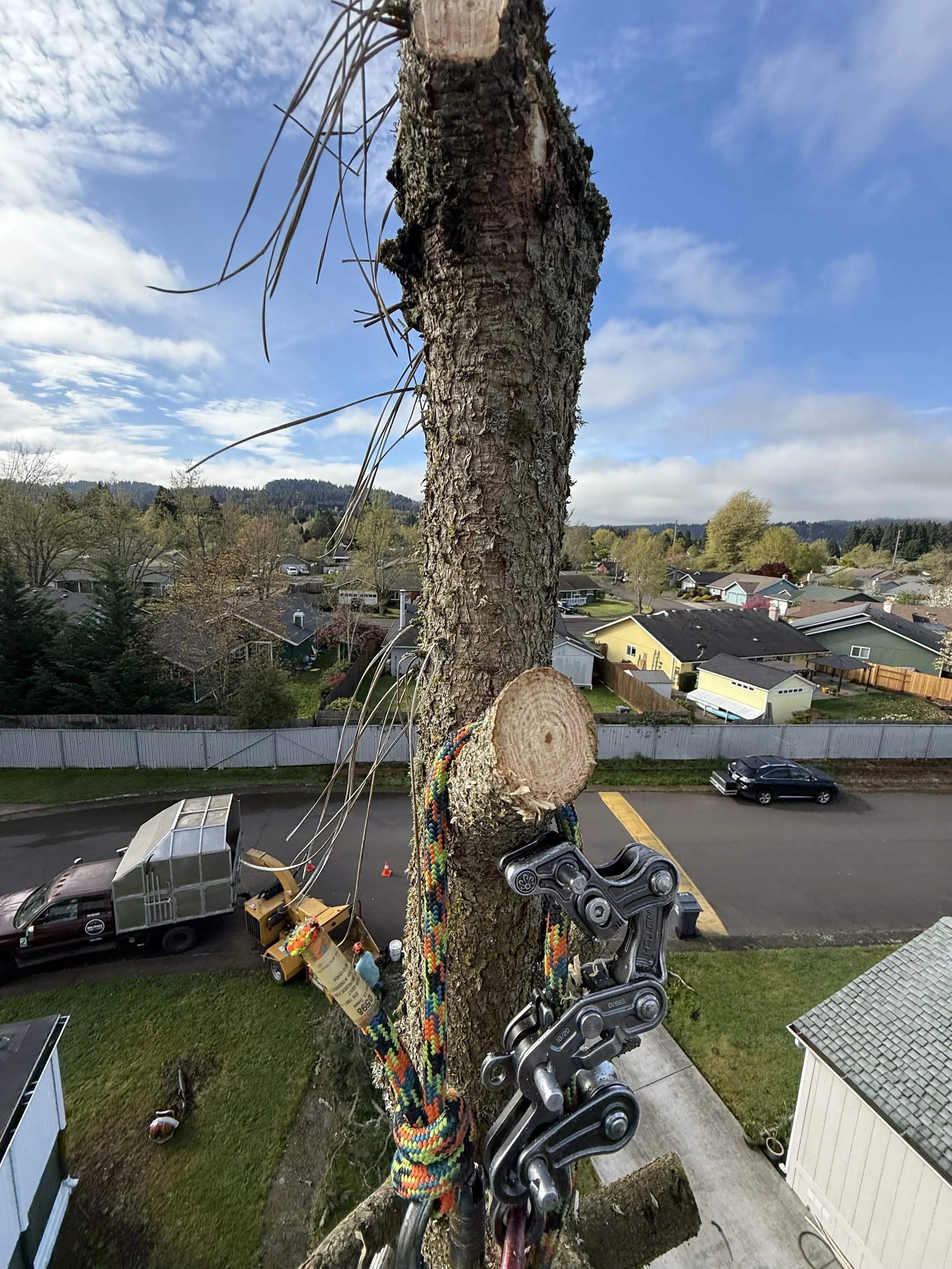
The ponderosa pine (Pinus ponderosa) is a resilient and iconic tree found throughout Oregon, including pockets of the southern Willamette Valley near Eugene. While generally durable, these trees are increasingly impacted by tree diseases, fungal infections, environmental stress, and insect infestations—especially in areas with wet winters and dry summers.
For homeowners searching for tree removal in Eugene, tree trimming services, or a certified arborist near me, recognizing early disease symptoms is critical to preventing decline, property damage, and costly emergency work.
1. Diplodia Tip Blight (Shoot Dieback)
One of the most common pine tree diseases in Oregon, Diplodia tip blight affects stressed ponderosa pines—especially older trees.
Key symptoms:
Dead or stunted new shoots (“flagging” tips)
Short, brown needles
Tiny black fungal fruiting bodies on needles and stems
This disease spreads during wet spring conditions and often enters through wounds. While it rarely kills trees outright, it weakens them and can invite bark beetles—leading to the need for hazard tree removal.
2. Dothistroma (Red Band Needle Blight)
This needle disease is increasingly seen across the Pacific Northwest and is a frequent reason for tree health assessments in Eugene.
Key symptoms:
Yellowing needle tips with distinct red bands
Needles turn brown and drop prematurely
Thinning canopy over time
Infections occur during warm, wet periods, and symptoms often show the following season.
Why it matters:
Repeated infections reduce vigor and increase the likelihood of needing tree trimming, pruning, or removal services.
3. Western Gall Rust
A common tree disease in Eugene and throughout Oregon, Western gall rust affects ponderosa pine structure and safety.
Key symptoms:
Swollen woody galls on branches or trunk
Dead branch tips beyond the gall
Structural weakness (especially if on main stem)
Severe infections can lead to branch failure over homes, driveways, or power lines, making professional tree removal or hazard pruning necessary.
4. Dwarf Mistletoe (Parasitic Plant)
One of the most damaging issues in pine tree care, dwarf mistletoe is a parasitic plant that slowly weakens trees over time.
Key symptoms:
“Witches’ brooms” (dense, abnormal branch clusters)
Reduced growth and vigor
Increased susceptibility to drought and disease
Heavily infested trees often require tree removal in Eugene due to long-term decline and increased failure risk.
5. Root Diseases (Armillaria & Heterobasidion)
Root diseases are among the most dangerous tree health problems because they are hidden underground and often go unnoticed until failure.
Key symptoms:
Thinning canopy and yellowing needles
Reduced growth
Sudden tree failure or windthrow
Clusters of dying or dead trees
These conditions frequently lead to emergency tree removal, especially during storms or saturated soil conditions.
6. Bark Beetles (Secondary but Critical)
While technically insects, bark beetles are a major driver of tree mortality in Oregon.
Attack trees already weakened by drought or disease
Cause rapid decline (entire crown turns red)
Often require immediate tree removal services to prevent spread
Why This Matters in Eugene, Oregon
Eugene’s environment creates a perfect storm for tree stress and disease:
Wet winters → fungal disease pressure
Dry summers → drought stress
Urban soil compaction → root decline
These factors increase demand for:
Tree trimming in Eugene
Tree removal near homes
Certified arborist inspections
Emergency tree services after storms
Professional Tree Care Solutions
If you’re noticing signs of decline, working with a licensed and insured tree service in Eugene is essential.
Recommended services:
Tree trimming & pruning to remove diseased or hazardous limbs
Tree health assessments by a certified arborist
Hazard tree removal for structurally compromised trees
Preventative maintenance to reduce long-term costs
When Tree Removal Is Necessary
Tree removal becomes the safest and most cost-effective option when:
Root disease is present
Structural integrity is compromised (galls, decay, lean)
Active bark beetle infestation is confirmed
The tree poses a risk to structures, vehicles, or power lines
Searching for “affordable tree removal Eugene” or “best tree service near me” often leads homeowners to act only after damage occurs—but early intervention saves money and reduces risk.
Bottom Line
Ponderosa pines in Eugene are tough—but not invincible. Most diseases don’t kill outright, but they weaken trees over time, creating serious safety hazards and liability risks.
Whether you need tree trimming, tree removal, stump grinding, or a professional arborist consultation, early detection is the key to protecting your property and avoiding emergency situations.
