
Palm Tree Trimming: Timing, Technique, and Tree Health
Even though palm trees don’t surround our area as they do in tropical regions, we still have some in the landscape that require mindful care practices.
Palm trees have a unique structure that makes pruning very different from typical shade trees. Unlike deciduous or coniferous species, palms grow from a single apical meristem (bud) at the top. That means improper trimming can permanently damage or even kill the tree. Understanding how and when to trim is critical for both appearance and long-term health.
When to Trim Palm Trees
Palm trees should be trimmed only when necessary. The best time is typically during warmer months when growth is active. Focus on removing:
Completely dead or brown fronds
Broken or hanging fronds that pose a hazard
Fruit stalks, if they create mess or attract pests
Avoid trimming during cold periods, as palms are more vulnerable to stress and disease.
What NOT to Remove
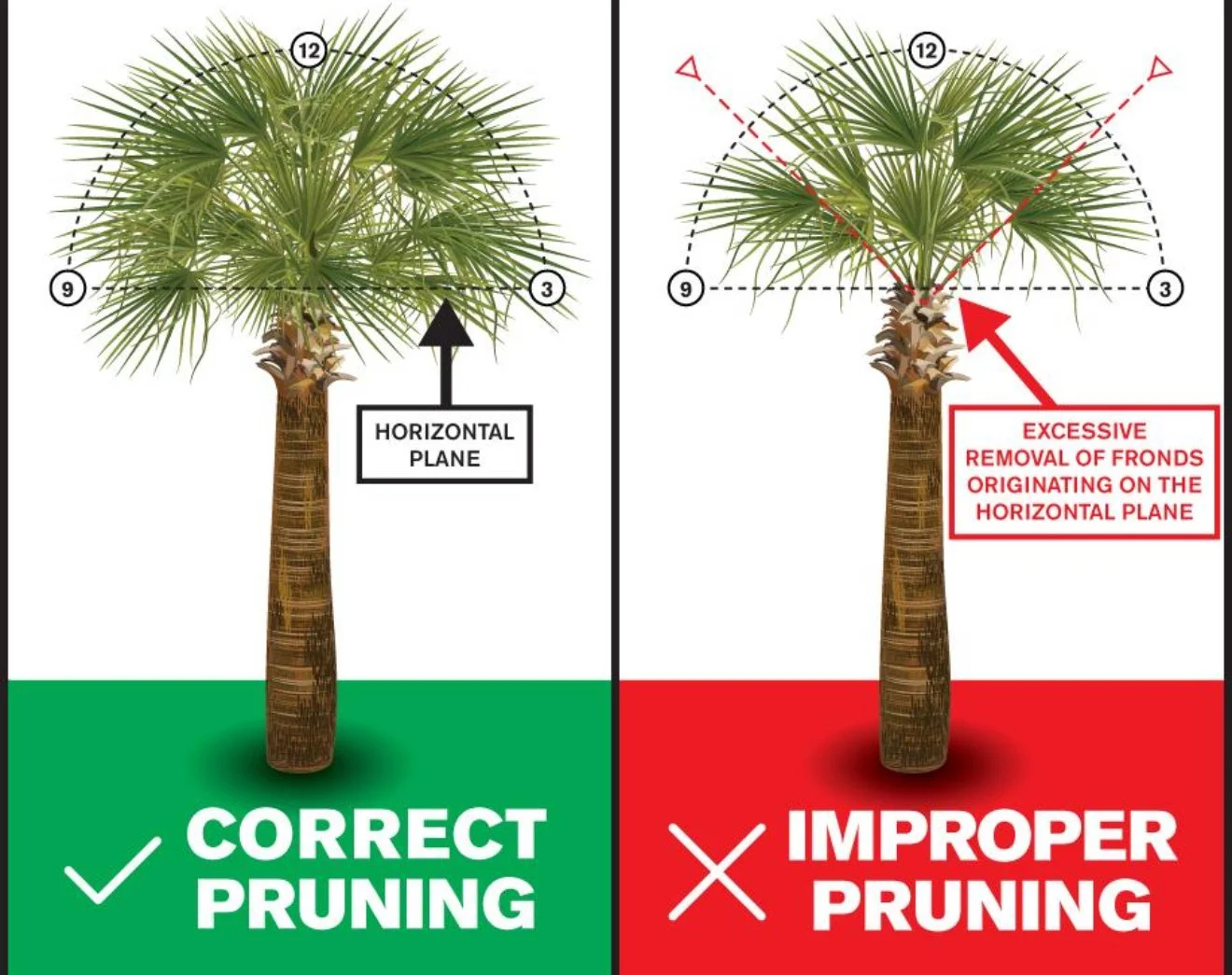
A common mistake is over-pruning—especially the so-called “hurricane cut,” where most fronds are removed, leaving only a small tuft at the top. This practice weakens the tree by:
Reducing photosynthesis
Depleting energy reserves
Increasing susceptibility to pests and disease
As a rule, never remove green, healthy fronds unless absolutely necessary for clearance or safety.
Proper Trimming Technique
Use clean, sharp tools to make smooth cuts
Remove fronds close to the trunk, but avoid damaging trunk tissue
Do not cut into the crownshaft (on species that have one)
Maintain a full, rounded canopy rather than a sparse, upright look
A properly trimmed palm should still look full and balanced—not stripped.
Safety and Structural Considerations
Dead fronds can be surprisingly heavy and may fall without warning. Regular inspection and light maintenance trimming can reduce risk, especially near homes, walkways, or parking areas.
Final Thoughts
Palm tree trimming is less about shaping and more about strategic removal. Done correctly, it improves safety and appearance without compromising health. Done poorly, it can shorten the lifespan of the tree.
For property owners, restraint is key: if it’s green, leave it alone.
