
Epicormic growth
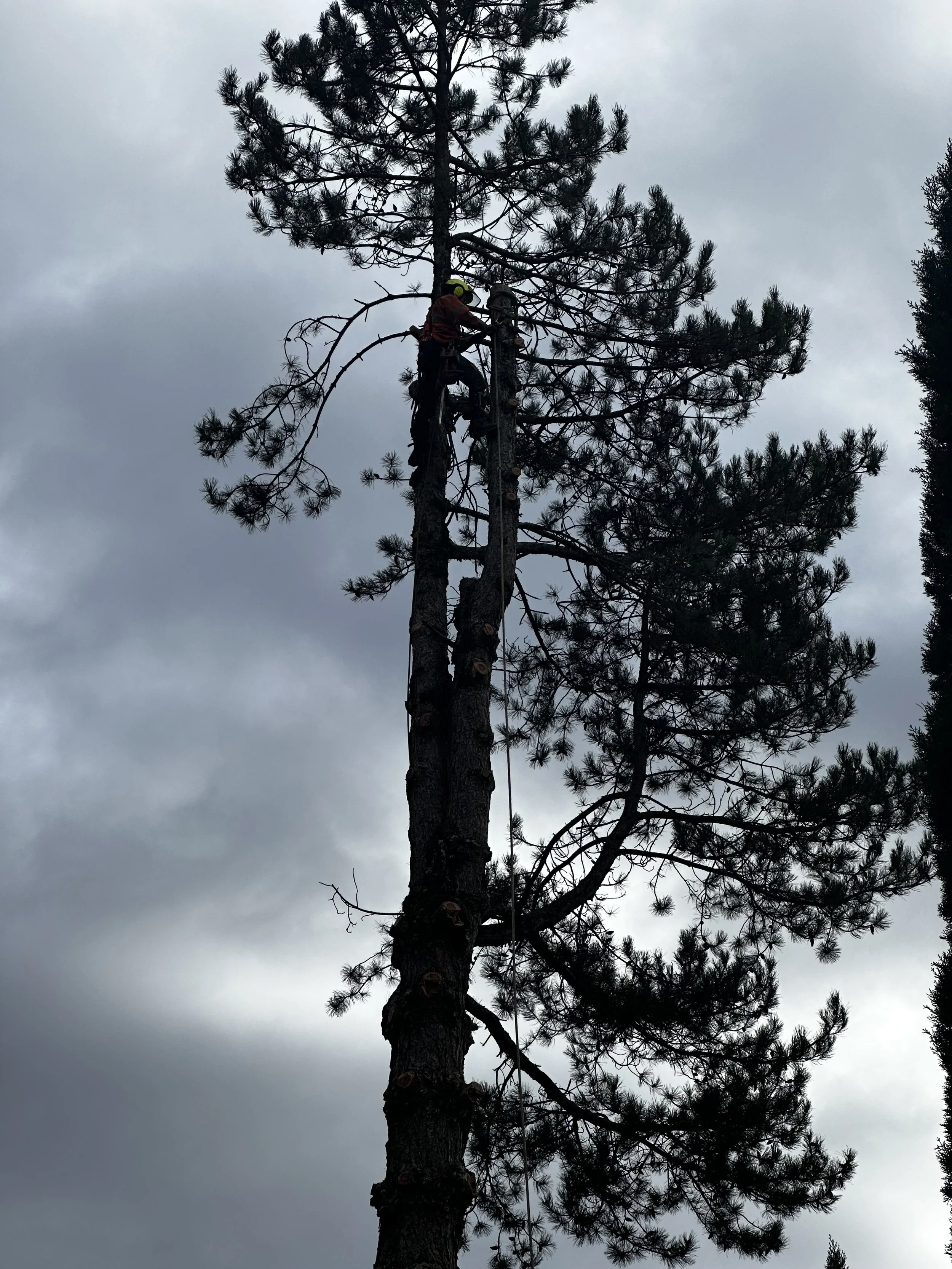
Epicormic growth is a tree’s emergency response system—an adaptive survival mechanism triggered when the canopy is stressed or compromised. These shoots emerge from dormant buds beneath the bark, often along the trunk or main scaffold limbs. epicormic growth is a key indicator that a tree is reallocating resources after disturbance.
Common triggers include heavy pruning, storm damage, drought stress, root disturbance, or sudden increases in light exposure (such as after neighboring tree removal). When a tree loses a significant portion of its canopy, it responds by rapidly producing new foliage to restore its ability to photosynthesize. While this reaction can help the tree survive short-term, it often comes at a cost.
Epicormic shoots are typically weakly attached compared to normal branch development. They originate from shallow tissue layers rather than well-formed branch unions, making them more prone to failure as they grow larger. This is especially important in urban environments where structural integrity and risk management are critical.
From a management standpoint, the presence of epicormic growth should prompt a deeper assessment rather than immediate removal. It can signal underlying stress or decline that needs to be addressed—whether that’s soil health, watering practices, or past pruning methods. In some cases, selective thinning of these shoots can help guide structure, but over-removal can further stress the tree.
Understanding epicormic growth allows arborists to read what the tree is communicating. It’s not just “messy growth”—it’s a sign the tree is working hard to survive.
