
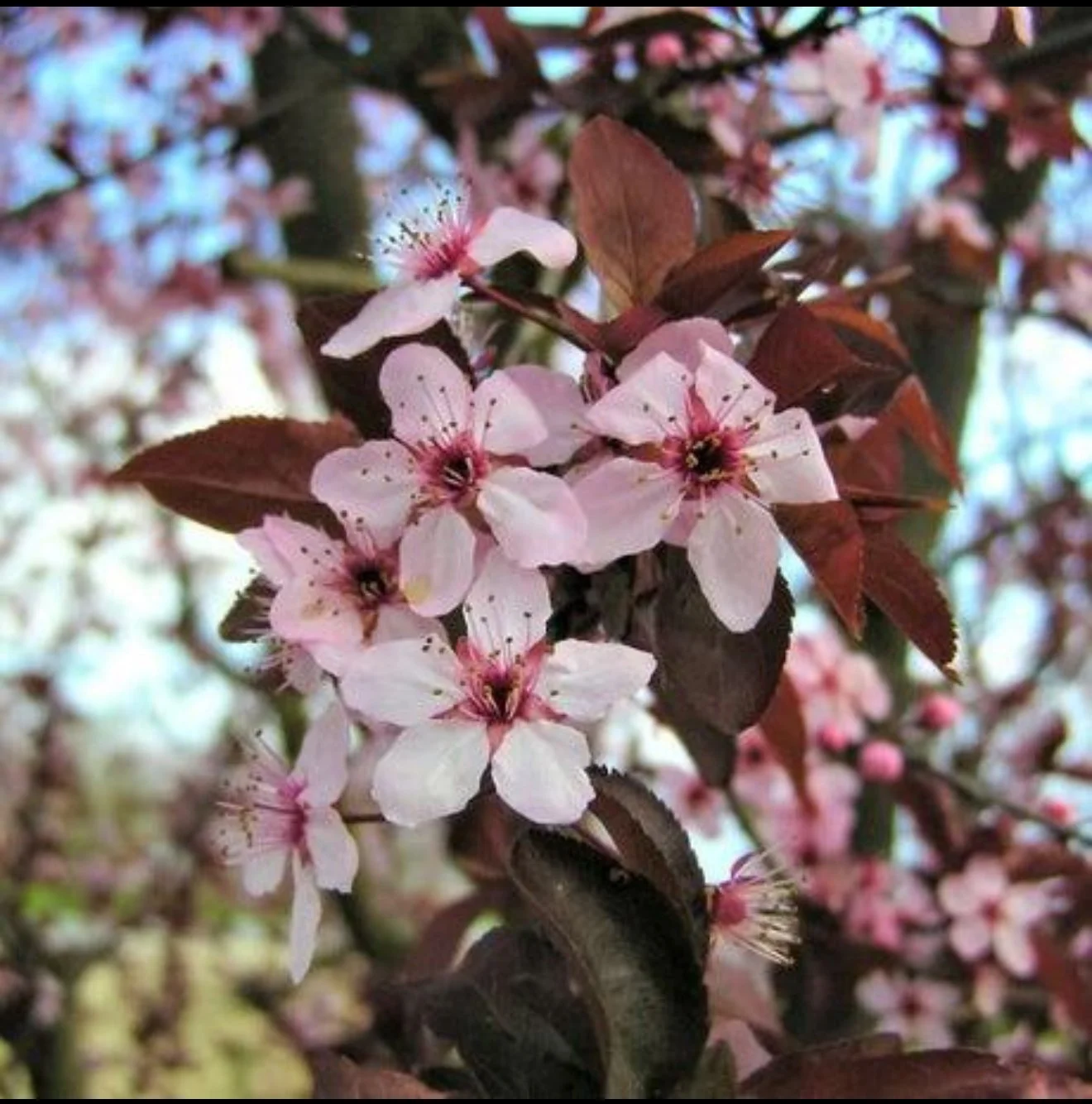
Ornamental plum trees (Prunus cerasifera) are a staple across the Central Willamette Valley, especially in Eugene and Salem. Known for vibrant spring blossoms and deep purple foliage, they’re a top choice for landscaping, curb appeal, and residential tree planting. However, they are also one of the most common species requiring tree trimming, tree removal, and hazard assessment due to their shorter lifespan and structural issues.
Ornamental plums typically live 15–25 years and often develop weak branch unions and included bark, making them prone to splitting—especially during wet winters and windstorms common in the Pacific Northwest. Combined with regional disease pressure like bacterial canker and fungal leaf spot, these trees can decline quickly and become a tree hazard near homes, driveways, and powerlines.
Proper tree care and maintenance is critical. Early structural pruning helps prevent failure by establishing strong branch spacing. As trees mature, professional tree trimming and recycle pruning reduce limb weight and improve stability. Routine deadwood removal and tree risk assessment are essential for preventing property damage and maintaining safety.
Timing is key—late summer to early fall pruning is ideal to minimize disease spread. Avoid pruning during wet seasons when pathogens are most active.
When ornamental plums begin to show major dieback, cracks, or instability, tree removal is often the safest option. Many homeowners choose to replace them with longer-lasting species better suited to the Valley.
For property owners, staying ahead with arborist services, tree pruning, and hazard tree removal ensures these trees remain an asset—not a liability.
