
Black Walnut
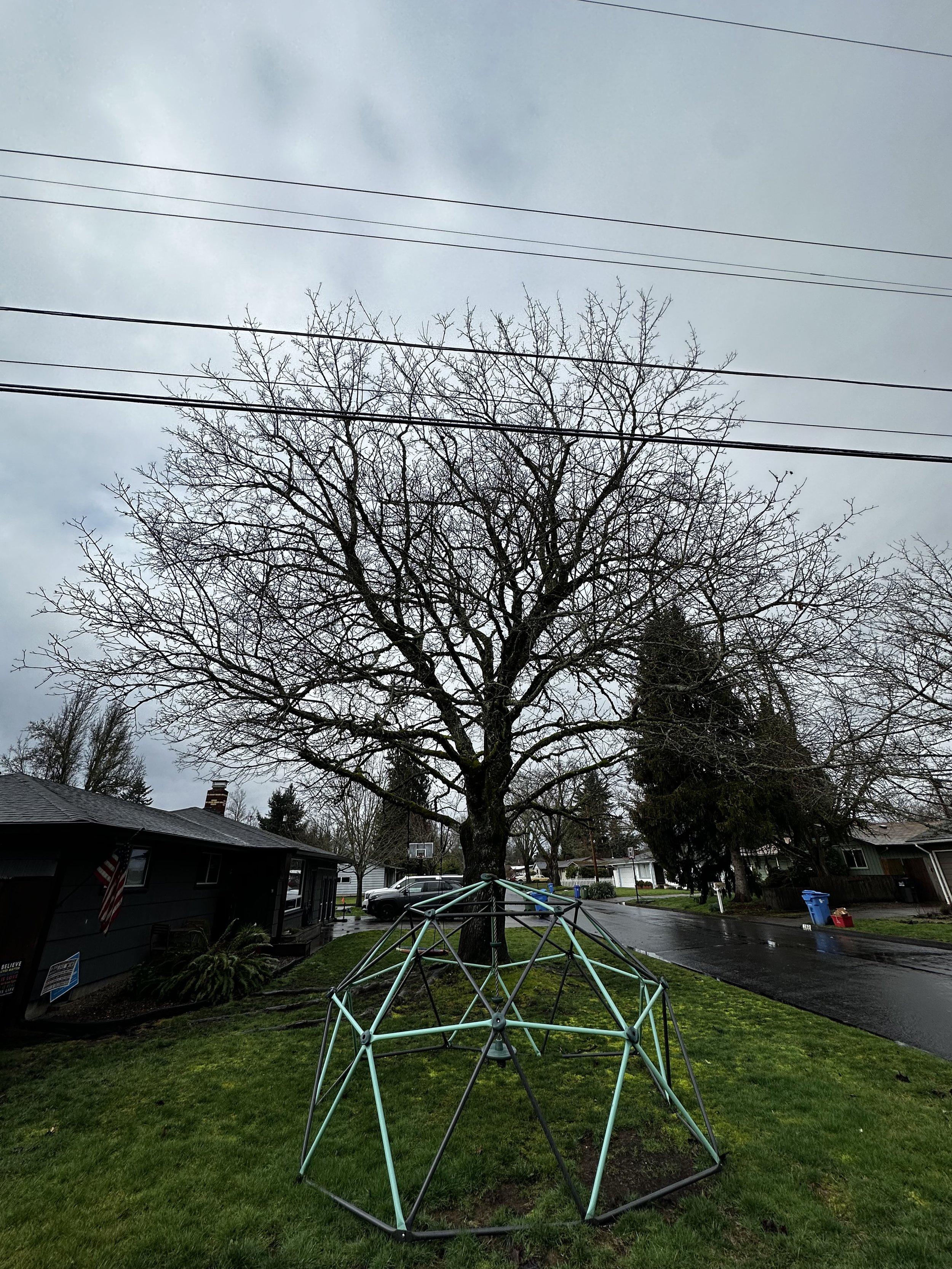
Black walnut (Juglans nigra) is a large, long-lived hardwood species known for its strong central leader and broad, rounded crown at maturity. In open-grown conditions, it develops a wide canopy with heavy lateral branching, while in forest settings it grows taller and more columnar due to competition for light. Black walnut is moderately fast-growing in its early years, especially in deep, well-drained, loamy soils with consistent moisture.
Biologically, it is well known for producing juglone, an allelopathic compound exuded through roots, leaves, and husks. Juglone inhibits the growth of many neighboring plant species, giving black walnut a competitive advantage but limiting understory diversity. The tree has a deep taproot system when young, transitioning to a more spreading root structure with age.
Its compound leaves and large nuts support wildlife, while its dense, decay-resistant wood is highly valued. Proper spacing and pruning early in development are essential to promote strong structure and long-term health.
